Shulph Ink
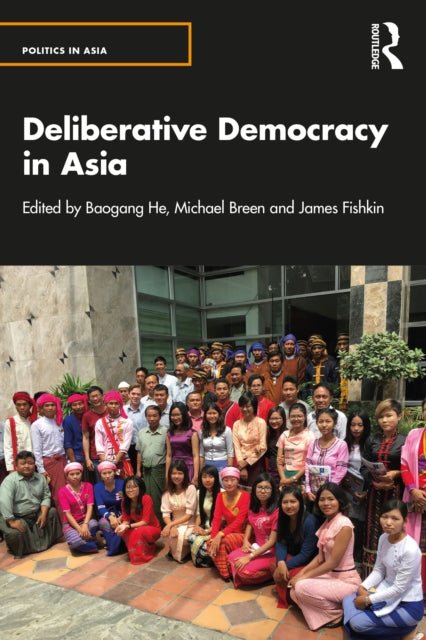
Deliberative Democracy in Asia
Deliberative Democracy in Asia
💎 Earn 202 Points (£2.02) on this item.
We can order this item for you. Delivery usually takes about 4 to 6 weeks.
This item is not held in our immediate stock. We will order it for you after checkout.
Estimated delivery: About 4 to 6 weeks
YOU SAVE £2.41
- Condition: Brand new
- UK Delivery times: Usually arrives within 2 - 3 working days
- UK Shipping: Fee starts at £3.89. Subject to product weight & dimension
Bulk ordering. Want 15 or more copies? Get a personalised quote and bigger discounts. Learn more about bulk orders.
Couldn't load pickup availability
- More about Deliberative Democracy in Asia
The authors of this book compare the different uses of public deliberation in Asia, including cases from India, China, Nepal, Japan, South Korea, Singapore, Mongolia, and Malaysia. They analyze the main motivations for introducing public deliberation in different political regimes and evaluate its effectiveness in solving problems and improving governance. It is an essential reading for students and scholars of Asian Politics and political scientists interested in deliberative democracy.
Format: Paperback / softback
Length: 226 pages
Publication date: 25 August 2021
Publisher: Taylor & Francis Ltd
Asia is a continent with a rich history of public deliberation, dating back centuries in some cases. In democratic and undemocratic settings alike, countries across the region have used public forums to engage citizens in decision-making processes. However, the use of public deliberation has evolved over time, and its motivations have varied widely.
In some countries, public deliberation has been used as a tool to contain dissent and suppress political opposition. For example, authoritarian regimes in China and North Korea have employed public deliberation to manipulate public opinion and control the narrative around important issues. These practices often involve tightly controlled forums where citizens are only allowed to express views that align with the government's agenda.
On the other hand, in other countries, public deliberation has been used with more emancipatory goals in mind. For instance, democratic governments in South Korea and Japan have used public forums to engage citizens in discussions about social and economic issues, and to promote greater transparency and accountability in government. These practices often involve open and inclusive discussions that allow citizens to express their diverse perspectives and ideas.
The contributors to this book take a comparative perspective on the emergence and evolution of deliberative practices in Asia. They analyze the main motivations for introducing public deliberation in different political regimes and the effectiveness of public deliberation in Asian countries for solving problems and improving governance. In doing so, they evaluate whether deliberative democratic tools can apply to all societies regardless of their political and cultural differences.
One of the key themes of the book is the role of institutions in promoting public deliberation. The contributors argue that the success of public deliberation depends on the existence of robust institutions that support and promote citizen participation. This includes the media, civil society organizations, and political parties, which play a crucial role in facilitating open and inclusive discussions.
Another theme of the book is the impact of technology on public deliberation. With the rise of social media and other digital platforms, citizens now have more opportunities to engage in public discussions and to share their ideas with a wider audience. However, the use of technology can also pose challenges, such as the spread of misinformation and the potential for online harassment.
The contributors to this book offer a range of insights and perspectives on the use of public deliberation in Asia. They draw on case studies from India, China, Nepal, Japan, South Korea, Singapore, Mongolia, and Malaysia, which provide a rich and diverse range of experiences and contexts. The book is essential reading for students and scholars of Asian Politics, as well as all political scientists with an interest in deliberative democracy.
In conclusion, public deliberation is a complex and multifaceted phenomenon that has evolved over time in Asia. While it has been used as a tool to contain dissent and suppress political opposition in some countries, it has also been used with more emancipatory goals in others. The contributions to this book provide a valuable comparative perspective on the emergence and evolution of deliberative practices in Asia, and their relationships with democracy. By evaluating the main motivations for introducing public deliberation in different political regimes and the effectiveness of public deliberation in Asian countries for solving problems and improving governance, the book offers insights into the potential for deliberative democratic tools to promote greater citizen participation and engagement in decision-making processes across the region.
Weight: 374g
Dimension: 154 x 235 x 23 (mm)
ISBN-13: 9780367608958
UK and International shipping information
UK and International shipping information
We deliver throughout the United Kingdom and to 128 countries and territories worldwide, including the United States, Australia, Canada, Germany, Spain and France.