SalarAbbasi
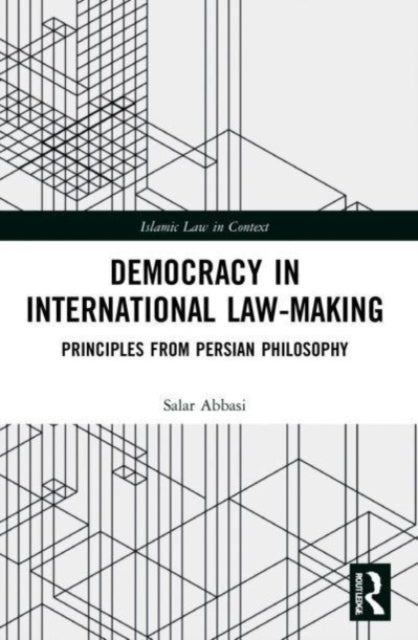
Democracy in International Law-Making: Principles from Persian Philosophy
Democracy in International Law-Making: Principles from Persian Philosophy
💎 Earn 221 Points (£2.21) on this item.
We can order this item for you. Delivery usually takes about 4 to 6 weeks.
This item is not held in our immediate stock. We will order it for you after checkout.
Estimated delivery: About 4 to 6 weeks
YOU SAVE £2.63
- Condition: Brand new
- UK Delivery times: Usually arrives within 2 - 3 working days
- UK Shipping: Fee starts at £3.89. Subject to product weight & dimension
Bulk ordering. Want 15 or more copies? Get a personalised quote and bigger discounts. Learn more about bulk orders.
Couldn't load pickup availability
- More about Democracy in International Law-Making: Principles from Persian Philosophy
This book offers an alternative to current international law-making by drawing on principles from Persian philosophers. It proposes a substantive notion of democracy to regulate international law-making mechanisms and advocates for "democratic egalitarian multilateralism" based on ideas from Suhrawardi, Mulla Sadra, and Rūmī. The book criticizes the conceptual flaws of chartered and customary sources of international law and suggests that "democratic egalitarian multilateralism" could provide a set of principles for treaty-making and customary international law-ascertainment. It will be of interest to researchers and academics in public international law, history of law, legal theory, comparative legal theory, Islamic law, and history.
Format: Paperback / softback
Length: 182 pages
Publication date: 25 September 2023
Publisher: Taylor & Francis Ltd
This book offers a critical analysis of the current process of international law-making and proposes an alternative approach based on principles derived from Persian philosophers. It conceptualizes a substantive notion of democracy to govern international law-making mechanisms, drawing from the principles developed between the twelfth and seventeenth centuries in Persia. The author's proposed framework, referred to as "democratic egalitarian multilateralism," is built upon the ideas of "egalitarian law" by Suhrawardi, "substantial motion" by Mulla Sadra, and "intercultural dialectical democracy" by Rūmī. After discussing the limitations of the chartered and customary sources of international law, the book argues that "democratic egalitarian multilateralism" could serve as a basis for a set of principles to regulate the process of international treaty-making and as a criterion for ascertaining customary international law.
Presenting an alternative perspective from a less dominant culture, this book is of significant importance for researchers and academics engaged in public international law, history of law, legal theory, comparative legal theory, Islamic law, and history. It provides a fresh and insightful perspective on international law-making, challenging the established ideas and offering a valuable contribution to the field.
Weight: 453g
Dimension: 234 x 156 (mm)
ISBN-13: 9781032127842
UK and International shipping information
UK and International shipping information
We deliver throughout the United Kingdom and to 128 countries and territories worldwide, including the United States, Australia, Canada, Germany, Spain and France.