Shulph Ink
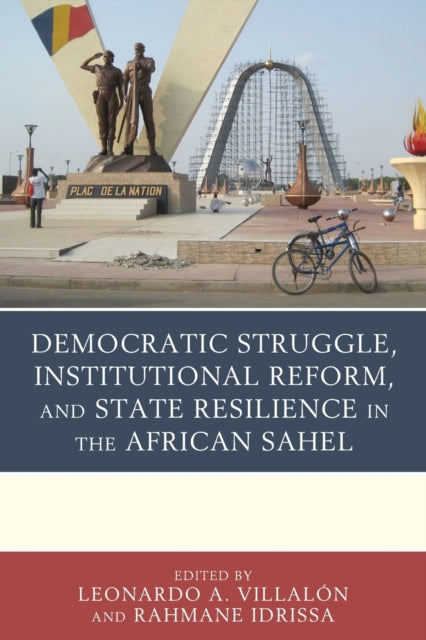
Democratic Struggle, Institutional Reform, and State Resilience in the African Sahel
Democratic Struggle, Institutional Reform, and State Resilience in the African Sahel
We can order this item for you. Delivery usually takes about 4 to 6 weeks.
This item is not held in our immediate stock. We will order it for you after checkout.
Estimated delivery: About 4 to 6 weeks
- Condition: Brand new
- UK Delivery times: Usually arrives within 2 - 3 working days
- UK Shipping: Fee starts at £3.89. Subject to product weight & dimension
Bulk ordering. Want 15 or more copies? Get a personalised quote and bigger discounts. Learn more about bulk orders.
Couldn't load pickup availability
- More about Democratic Struggle, Institutional Reform, and State Resilience in the African Sahel
The countries of the West African Sahel are at the center of global concerns over security, terrorism, migration, and conflict. This book examines how the politics of democratization have shaped processes of state-building and affected the resilience of state institutions in six francophone states: Senegal, Mauritania, Mali, Burkina Faso, Niger, and Chad.
Format: Paperback / softback
Length: 230 pages
Publication date: 02 July 2021
Publisher: Lexington Books
The countries of the West African Sahel, which have long been on the periphery of both academic research and international attention, are now at the forefront of global concerns regarding security, terrorism, migration, and conflict. Since the early 1990s, the Sahelian states have also been engaged in political struggles over the establishment of democratic institutions.
Edited by Leonardo A. Villalón and Abdourahmane Idrissa, Democratic Struggle, Institutional Reform, and State Resilience in the African Sahel delves into a crucial and relatively understudied question: How have the politics of democratization across the Francophone Sahel influenced processes of state-building, and what impact have they had on the resilience of state institutions? This book begins with the premise that variation in the politics of institution-building and institutional reform, while often justified and debated in terms of democratization, can have distinct impacts on the construction of resilient states.
To explore these processes, the book examines six francophone states of the Sahel: Senegal, Mauritania, Mali, Burkina Faso, Niger, and Chad. The contributors to this volume are distinguished scholars from across the region, many of whom have also played significant roles in the struggles they analyze.
The first chapter, authored by Leonardo A. Villalón and Abdourahmane Idrissa, provides an overview of the political context and historical background of the Sahel region. It highlights the challenges posed by climate change, desertification, and the proliferation of armed groups, which have contributed to the region's instability and fragility. The chapter also discusses the role of regional organizations, such as the Economic Community of West African States (ECOWAS) and the African Union (AU), in promoting stability and security in the Sahel.
The second chapter, by Marie-Claude Bercot, explores the dynamics of state-building in Senegal, a country that has experienced significant political and economic development in recent decades. Bercot examines the role of the military in shaping Senegal's political landscape and the challenges faced by the country in consolidating its democratic institutions. She also discusses the role of civil society organizations in promoting social and economic development and in advocating for greater political participation.
The third chapter, by Abdoulaye Maiga, examines the political dynamics in Mauritania, a country that has been plagued by instability and conflict for much of its history. Maiga explores the role of the military in Mauritania's political system and the challenges faced by the country in transitioning from a military-led regime to a democratic one. He also discusses the role of civil society organizations in promoting peace and stability and in advocating for greater political participation.
The fourth chapter, by Marie-Hélène Copti, explores the political dynamics in Mali, a country that has been affected by the conflict in neighboring Burkina Faso and by the presence of armed groups in its own territory. Copti examines the role of the military in Mali's political system and the challenges faced by the country in consolidating its democratic institutions. She also discusses the role of civil society organizations in promoting peace and stability and in advocating for greater political participation.
The fifth chapter, by Abdoulaye Mamani, examines the political dynamics in Burkina Faso, a country that has experienced significant political and economic development in recent decades. Mamani explores the role of the military in Burkina Faso's political system and the challenges faced by the country in consolidating its democratic institutions. He also discusses the role of civil society organizations in promoting social and economic development and in advocating for greater political participation.
The sixth chapter, by Abdourahmane Idrissa, examines the political dynamics in Niger, a country that has been affected by the conflict in neighboring Chad and by the presence of armed groups in its own territory. Idrissa explores the role of the military in Niger's political system and the challenges faced by the country in consolidating its democratic institutions. He also discusses the role of civil society organizations in promoting peace and stability and in advocating for greater political participation.
In conclusion, Democratic Struggle, Institutional Reform, and State Resilience in the African Sahel offers a valuable contribution to our understanding of the politics of democratization and state-building in the Sahel region. The book provides a comprehensive analysis of the challenges faced by the countries in the region and the strategies they have employed to promote stability and security. The contributions of the distinguished scholars who authored the chapters are insightful and thought-provoking, and they shed light on the complex and multifaceted nature of the political landscape in the Sahel. This book will be of interest to scholars, policymakers, and practitioners working in the fields of security, development, and politics in the region and beyond.
Weight: 358g
Dimension: 151 x 230 x 19 (mm)
ISBN-13: 9781498570015
UK and International shipping information
UK and International shipping information
We deliver throughout the United Kingdom and to 128 countries and territories worldwide, including the United States, Australia, Canada, Germany, Spain and France.