Shulph Ink
Democratization, National Identity and Foreign Policy in Asia
Democratization, National Identity and Foreign Policy in Asia
💎 Earn 202 Points (£2.02) on this item.
We can order this item for you. Delivery usually takes about 4 to 6 weeks.
This item is not held in our immediate stock. We will order it for you after checkout.
Estimated delivery: About 4 to 6 weeks
YOU SAVE £2.41
- Condition: Brand new
- UK Delivery times: Usually arrives within 2 - 3 working days
- UK Shipping: Fee starts at £3.89. Subject to product weight & dimension
Bulk ordering. Want 15 or more copies? Get a personalised quote and bigger discounts. Learn more about bulk orders.
Couldn't load pickup availability
- More about Democratization, National Identity and Foreign Policy in Asia
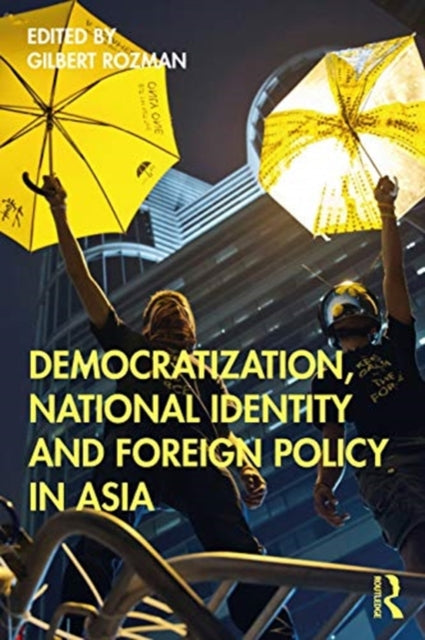
In an era of populist-nationalist backlash, democratization in Asia faces the challenge of navigating between China and the United States. East Asia has shown the way with Japan, South Korea, and Taiwan linking national identity to democratization, while nationalist governments in Southeast Asia have tended to move away from it. This book investigates how national identity can both help and hinder democratization, with examples from across Asia.
Format: Paperback / softback
Length: 200 pages
Publication date: 21 April 2021
Publisher: Taylor & Francis Ltd
In the face of populist-nationalist backlash, how can democratization progress? Numerous countries in Asia, and beyond, are navigating a delicate balance between China and the United States in a context of growing polarization in their policies related to democracy. East Asia has demonstrated a path towards democratization, with Japan, South Korea, and Taiwan successfully integrating national identity with the process. However, in other regions of Asia, particularly Southeast Asia, nationalist governments have tended to retreat from democratization, as witnessed in Hong Kong under China's influence. This book delves into the complex dynamics of national identity and its impact on democratization, using a range of examples across Asia. It serves as a valuable resource for students and scholars interested in democratization and Asian politics.
East Asia has set an example for democratization in the region, with Japan, South Korea, and Taiwan successfully linking their national identity to the process. These countries have experienced significant political and social transformations, transitioning from authoritarian regimes to democratic societies. However, the path to democratization has not been without challenges. In Southeast Asia, nationalist governments have tended to prioritize their own interests over democratic values, often suppressing dissent and limiting civil liberties. This has led to concerns about the future of democracy in the region.
One of the key challenges facing democratization in an era of populist-nationalist backlash is the need to balance national identity with democratic values. National identity is often deeply rooted in cultural, historical, and social factors, and it can be a powerful force for social cohesion and stability. However, it can also be used to justify authoritarianism and undermine democratic institutions. In order to promote democratization, it is important to find ways to reconcile national identity with democratic principles. This may involve promoting cultural diversity, promoting human rights, and fostering a sense of shared responsibility for the country's future.
Another challenge facing democratization is the role of external actors, such as the United States and China. Both countries have significant interests in the region and have been involved in promoting or suppressing democracy in different countries. The United States, for example, has supported democratic reforms in countries such as South Korea and Taiwan, while China has been accused of suppressing democracy in Hong Kong and other countries. It is important for external actors to promote democratic values and support democratic institutions, while also respecting the sovereignty of individual countries.
In conclusion, democratization faces significant challenges in an era of populist-nationalist backlash. However, by balancing national identity with democratic values, promoting cultural diversity, and fostering a sense of shared responsibility, it is possible to promote democratic development in the region. External actors, such as the United States and China, also have a role to play in promoting democratic values and supporting democratic institutions. By working together, we can help ensure that democracy continues to thrive in Asia and beyond.
Weight: 320g
Dimension: 154 x 233 x 18 (mm)
ISBN-13: 9780367634346
UK and International shipping information
UK and International shipping information
We deliver throughout the United Kingdom and to 128 countries and territories worldwide, including the United States, Australia, Canada, Germany, Spain and France.