Shulph Ink
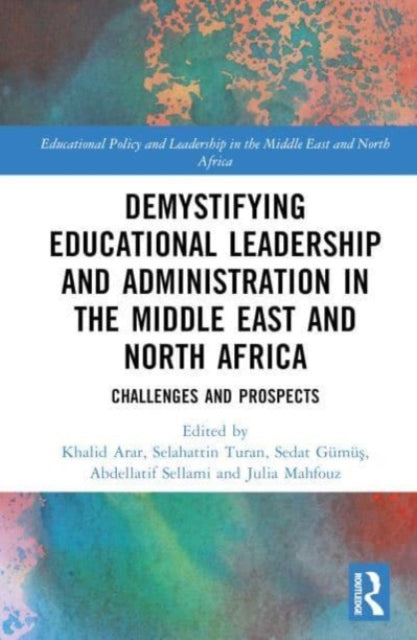
Demystifying Educational Leadership and Administration in the Middle East and North Africa: Challenges and Prospects
Demystifying Educational Leadership and Administration in the Middle East and North Africa: Challenges and Prospects
💎 Earn 811 Points (£8.11) on this item.
We can order this item for you. Delivery usually takes about 4 to 6 weeks.
This item is not held in our immediate stock. We will order it for you after checkout.
Estimated delivery: About 4 to 6 weeks
YOU SAVE £9.63
- Condition: Brand new
- UK Delivery times: Usually arrives within 2 - 3 working days
- UK Shipping: Fee starts at £3.89. Subject to product weight & dimension
Bulk ordering. Want 15 or more copies? Get a personalised quote and bigger discounts. Learn more about bulk orders.
Couldn't load pickup availability
- More about Demystifying Educational Leadership and Administration in the Middle East and North Africa: Challenges and Prospects
This volume explores how educational leadership and administration (ELA) is constructed in the Middle East and North African region (MENA) and charts the development of ELA as a discipline. It investigates issues concerned with the production and utilization of knowledge and analyzes the future of ELA in relation to educational policies and practices. Featuring a broad range of specialist contributors, the book sheds light on this little-researched area of study and will be of use to scholars, researchers, and postgraduate students.
Format: Hardback
Length: 244 pages
Publication date: 01 December 2023
Publisher: Taylor & Francis Ltd
This comprehensive volume delves into the intricate construction of educational leadership and administration (ELA) within the Middle East and North African (MENA) region, tracing its evolution as a discipline. In the context of rapid educational restructuring, reforms, policy developments, and leadership transformations, the chapters explore key issues related to knowledge production, utilization, and the future of ELA in relation to educational policies and practices in MENA countries. Drawing on the expertise of a diverse group of specialist contributors hailing from various geographical locations, the book aims to shed light on a relatively understudied area, dispelling common misconceptions and providing a deeper understanding of ELA in the MENA region.
The book is of immense value to scholars, researchers, and postgraduate students engaged in international and comparative education, higher education management, and education policy and politics. It offers valuable insights into the complex dynamics shaping ELA in this region, facilitating a better understanding of the challenges and opportunities faced by educators and policymakers alike.
The first chapter provides an overview of the historical and contextual factors that have shaped ELA in the MENA region. It explores the historical legacies of colonialism, authoritarianism, and political instability that have influenced the development of education systems and the role of educational leaders in shaping them. The chapter also highlights the regional diversity of ELA practices, with different countries adopting different models and approaches to educational leadership and administration.
The second chapter delves into the theoretical foundations of ELA, exploring the various theories and models that underpin educational leadership and administration. It examines the role of leadership in educational change, the importance of effective communication, and the challenges of managing diverse stakeholders in educational contexts. The chapter also discusses the impact of globalization on ELA, including the challenges and opportunities presented by internationalization and the need for leaders to adapt to changing global trends.
The third chapter examines the challenges and opportunities facing educational leaders in the MENA region. It explores issues such as curriculum development, teacher training and professional development, educational equity, and the role of educational leaders in promoting social and economic development. The chapter also discusses the impact of political instability, economic crises, and regional conflicts on education and the role of educational leaders in responding to these challenges.
The fourth chapter explores the future of ELA in the MENA region. It examines the trends and developments shaping the field, including the increasing importance of digital technologies, the rise of educational entrepreneurship, and the need for leaders to promote inclusive and sustainable education. The chapter also discusses the challenges and opportunities presented by the demographic changes in the region, including the growing youth population and the need for education to address social and economic inequality.
The fifth chapter focuses on the role of educational leadership in promoting educational equity and social justice in the MENA region. It explores issues such as gender equality, minority rights, and the role of educational leaders in addressing educational disparities and promoting inclusive education. The chapter also discusses the challenges and opportunities presented by the cultural and religious diversity in the region, including the need for leaders to promote intercultural understanding and respect.
The sixth chapter examines the role of educational leadership in promoting innovation and creativity in the MENA region. It explores issues such as curriculum design, teacher training and professional development, and the use of technology to enhance learning and teaching. The chapter also discusses the challenges and opportunities presented by the rapidly changing job market, including the need for leaders to prepare students for the demands of the 21st century economy.
The final chapter provides a conclusion that summarizes the key findings and implications of the book. It highlights the importance of ELA in shaping the future of education in the MENA region and the need for continued research and investment in the field. The chapter also calls for policymakers, educators, and leaders to work together to promote educational equity, social justice, and innovation in the region.
In conclusion, this comprehensive volume offers a valuable contribution to the field of educational leadership and administration in the MENA region. It provides a rich and nuanced understanding of the challenges and opportunities facing educational leaders in this region, and offers practical insights and strategies for promoting effective leadership and administration. The book will be of immense value to scholars, researchers, and practitioners in the field, and will help to shape the future of education in the MENA region.
Dimension: 234 x 156 (mm)
ISBN-13: 9781032369907
UK and International shipping information
UK and International shipping information
We deliver throughout the United Kingdom and to 128 countries and territories worldwide, including the United States, Australia, Canada, Germany, Spain and France.