Shulph Ink
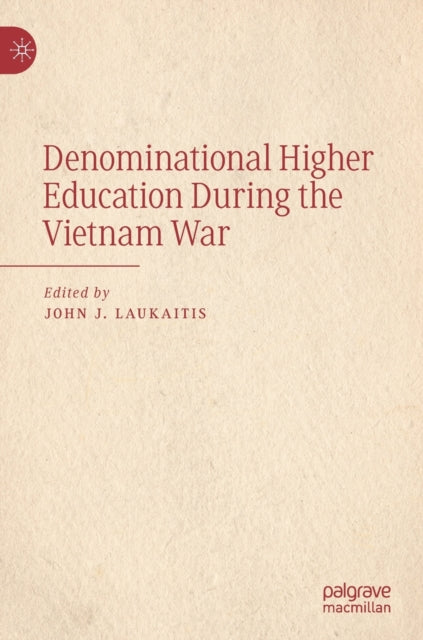
Denominational Higher Education During the Vietnam War
Denominational Higher Education During the Vietnam War
We can order this item for you. Delivery usually takes about 4 to 6 weeks.
This item is not held in our immediate stock. We will order it for you after checkout.
Estimated delivery: About 4 to 6 weeks
YOU SAVE £24.24
- Condition: Brand new
- UK Delivery times: Usually arrives within 2 - 3 working days
- UK Shipping: Fee starts at £3.89. Subject to product weight & dimension
Bulk ordering. Want 15 or more copies? Get a personalised quote and bigger discounts. Learn more about bulk orders.
Couldn't load pickup availability
- More about Denominational Higher Education During the Vietnam War
This collection explores the complexities of public reactions to the Vietnam War by examining the connections between religion, student activism, and higher education, particularly at Christian liberal arts colleges. It highlights the ways in which these institutions faced challenges in reconciling their Christian beliefs with the war and how different religious communities and student bodies responded to the conflict.
Format: Hardback
Length: 228 pages
Publication date: 04 May 2022
Publisher: Springer Nature Switzerland AG
In this captivating follow-up to Laukaitis' Denominational Higher Education During World War II (Palgrave 2018), this collection delves into the intricate web of connections between religion, student activism, and higher education, shedding light on the multifaceted public reactions to the controversies surrounding the Vietnam War. While historical accounts of the Vietnam War's impact on campuses have primarily focused on public universities like the University of California-Berkeley, Kent State, and the University of Wisconsin-Madison, this work seeks to fill a crucial gap by examining the effects of the war on Christian liberal arts colleges across the United States.
At the heart of this exploration lies the central question: How did Christian liberal arts colleges navigate the national crisis in light of their Christian tenets, and how did specific religious communities and student bodies respond to the war? To answer this, the collection employs a multi-faceted approach, drawing on a range of sources, including archival materials, interviews, and scholarly essays.
The first chapter, authored by Professor John Mark Reynolds, sets the stage by providing a historical overview of the Vietnam War and its impact on American society. Reynolds highlights the polarization of public opinion and the emergence of student activism as a powerful force in the anti-war movement. He also explores the complex relationship between religion and student activism, noting how some religious institutions supported the war while others opposed it.
The subsequent chapters delve into the experiences of individual Christian liberal arts colleges. Authors such as Professor David Lyle Boren, Professor Timothy Stanley, and Professor Andrew Walls examine how these colleges responded to the war in terms of their curriculum, campus culture, and student activism. They explore the challenges faced by these institutions as they sought to balance their religious commitments with the demands of a changing society.
One of the key themes that emerges from the collection is the tension between religious identity and social change. Many Christian liberal arts colleges faced pressure to align their curriculum and policies with the broader societal norms, particularly in the wake of the civil rights movement and the feminist movement. However, these colleges also recognized the importance of maintaining their distinctive religious identity and values.
Another notable aspect of the collection is the role of student activism in shaping the response of Christian liberal arts colleges to the war. Students at these institutions played a vital role in organizing protests, raising awareness, and advocating for a more peaceful resolution to the conflict. However, there were also tensions between students and faculty, particularly over issues of free speech and academic freedom.
The final chapter of the collection offers a broader perspective on the legacy of the Vietnam War and its impact on higher education. Authors such as Professor Michael J. Schudson and Professor David A. Hollinger examine how the war influenced the broader academic community, including the rise. They explore the changes in academic discourse, the rise of new academic disciplines, and the impact of the war on the development of higher education policy.
In conclusion, this collection is a valuable addition to the literature on higher education and religion. It provides a comprehensive and nuanced understanding of the connections between religion, student activism, and higher education during the Vietnam War era. By exploring the experiences of Christian liberal arts colleges, the collection sheds light on the complexities of public reactions to the war and highlights the enduring significance of religious identity and social change in the context of higher education.
In this captivating follow-up to Laukaitis' Denominational Higher Education During World War II (Palgrave 2018), this collection delves into the intricate web of connections between religion, student activism, and higher education, shedding light on the multifaceted public reactions to the controversies surrounding the Vietnam War. While historical accounts of the Vietnam War's impact on campuses have primarily focused on public universities like the University of California-Berkeley, Kent State, and the University of Wisconsin-Madison, this work seeks to fill a crucial gap by examining the effects of the war on Christian liberal arts colleges across the United States.
At the heart of this exploration lies the central question: How did Christian liberal arts colleges navigate the national crisis in light of their Christian tenets, and how did specific religious communities and student bodies respond to the war? To answer this, the collection employs a multi-faceted approach, drawing on a range of sources, including archival materials, interviews, and scholarly essays.
The first chapter, authored by Professor John Mark Reynolds, sets the stage by providing a historical overview of the Vietnam War and its impact on American society. Reynolds highlights the polarization of public opinion and the emergence of student activism as a powerful force in the anti-war movement. He also explores the complex relationship between religion and student activism, noting how some religious institutions supported the war while others opposed it.
The subsequent chapters delve into the experiences of individual Christian liberal arts colleges. Authors such as Professor David Lyle Boren, Professor Timothy Stanley, and Professor Andrew Walls examine how these colleges responded to the war in terms of their curriculum, campus culture, and student activism. They explore the challenges faced by these institutions as they sought to balance their religious commitments with the demands of a changing society.
One of the key themes that emerges from the collection is the tension between religious identity and social change. Many Christian liberal arts colleges faced pressure to align their curriculum and policies with the broader societal norms, particularly in the wake of the civil rights movement and the feminist movement. However, these colleges also recognized the importance of maintaining their distinctive religious identity and values.
Another notable aspect of the collection is the role of student activism in shaping the response of Christian liberal arts colleges to the war. Students at these institutions played a vital role in organizing protests, raising awareness, and advocating for a more peaceful resolution to the conflict. However, there were also tensions between students and faculty, particularly over issues of free speech and academic freedom.
The final chapter of the collection offers a broader perspective on the legacy of the Vietnam War and its impact on higher education. Authors such as Professor Michael J. Schudson and Professor David A. Hollinger examine how the war influenced the broader academic community, including the. They explore the changes in academic discourse, the rise of new academic disciplines, and the impact of the war on the development of higher education policy.
In conclusion, this collection is a valuable addition to the literature on higher education and religion. It provides a comprehensive and nuanced understanding of the connections between religion, student activism, and higher education during the Vietnam War era. By exploring the experiences of Christian liberal arts colleges, the collection sheds light on the complexities of public reactions to the war and highlights the enduring significance of religious identity and social change in the context of higher education.
Weight: 442g
Dimension: 210 x 148 (mm)
ISBN-13: 9783030986520
Edition number: 1st ed. 2022
UK and International shipping information
UK and International shipping information
We deliver throughout the United Kingdom and to 128 countries and territories worldwide, including the United States, Australia, Canada, Germany, Spain and France.