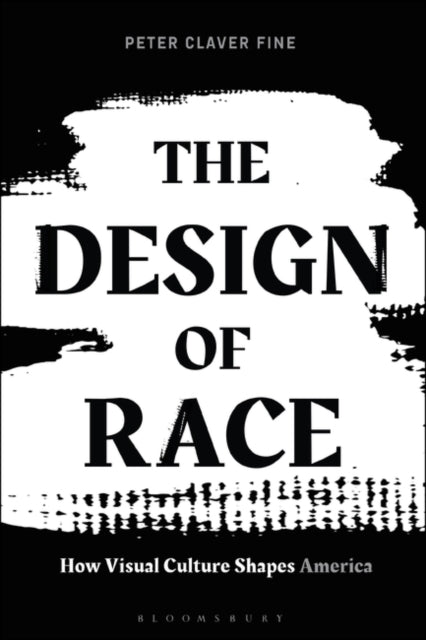
Assistant professor Peter ClaverFine
Design of Race: How Visual Culture Shapes America
Design of Race: How Visual Culture Shapes America
💎 Earn 106 Points (£1.06) on this item.
YOU SAVE £2.76
- Condition: Brand new
- UK Delivery times: Usually arrives within 2 - 3 working days
- UK Shipping: Fee starts at £2.39. Subject to product weight & dimension
Bulk ordering. Want 15 or more copies? Get a personalised quote and bigger discounts. Learn more about bulk orders.
Couldn't load pickup availability
- More about Design of Race: How Visual Culture Shapes America
Peter Fine's study explores how new visual technologies in the US embedded racialized ideas about African Americans and privileged whiteness in modernist ideals of visual form. It examines the history of typography, lithography, photography, and contemporary film and television, fine art, and digital design to understand how racialized representation has been configured and contested.
Format: Paperback / softback
Length: 216 pages
Publication date: 11 February 2021
Publisher: Bloomsbury Publishing PLC
Peter Fine's groundbreaking study delves into the evolution of a pervasive visual culture in the United States, shedding light on the significant role played by new visual technologies in perpetuating racialized notions about African Americans. At the same time, whiteness was accorded privileged status within modernist ideals of visual form. Fine's comprehensive analysis encompasses the historical trajectory of three pivotal technologies of mechanical reproduction: typography, lithography, and photography. By examining the visual and material expressions of this process, Fine intricately explores how racialized representation has been structured and challenged in contemporary film and television, fine art, and digital design.
The emergence of a mass visual culture in the United States was marked by the pervasive influence of new visual technologies, which played a crucial role in shaping and perpetuating racialized notions about African Americans. These technologies, including typography, lithography, and photography, facilitated the widespread dissemination of images and ideas, contributing to the construction of a visual narrative that reinforced stereotypes and prejudices.
In his study, Peter Fine examines the historical development of these technologies and their impact on visual representation. He explores how typography, for instance, was used to standardize and control the language of print, perpetuating the dominance of white voices and marginalizing the perspectives of marginalized communities. Lithography, on the other hand, allowed for the mass production of images, enabling the dissemination of popular culture and advertising. However, these technologies also played a role in challenging and reconfiguring racialized representation.
Fine argues that the advent of photography marked a significant turning point in the history of visual representation. With its ability to capture and reproduce images in a precise and realistic manner, photography enabled a more nuanced and complex portrayal of race and ethnicity. However, it also perpetuated the notion of the camera as an objective observer, erasing the subjective experiences and perspectives of individuals from the visual narrative.
In contemporary film and television, fine art, and digital design, racialized representation continues to be a subject of intense scrutiny and debate. Fine's study provides valuable insights into the ways in which these mediums have been used to challenge and subvert traditional narratives of race and ethnicity. For example, filmmakers have explored the complexities of racial identity through the use of diverse casting and storytelling techniques, while artists have challenged the boundaries of representation through the use of mixed media and unconventional forms.
Furthermore, Fine's analysis highlights the importance of visual literacy and critical engagement with visual media. By examining the ways in which images and symbols are constructed and interpreted, individuals can develop a more nuanced understanding of the social and cultural implications of visual representation. This understanding can then be used to promote greater diversity and inclusivity in visual media and to challenge the perpetuation of harmful stereotypes and prejudices.
In conclusion, Peter Fine's innovative study offers a comprehensive exploration of the development of a mass visual culture in the United States, highlighting the role played by new visual technologies in perpetuating racialized notions about African Americans. Through his analysis of typography, lithography, photography, and contemporary film and television, fine art, and digital design, Fine provides valuable insights into the ways in which visual representation can be used to challenge and subvert traditional narratives of race and ethnicity. By promoting visual literacy and critical engagement with visual media, individuals can contribute to a more inclusive and diverse visual culture that reflects the rich diversity of the human experience.
Weight: 346g
Dimension: 181 x 233 x 15 (mm)
ISBN-13: 9781474299572
UK and International shipping information
UK and International shipping information
UK Delivery and returns information:
- Delivery within 2 - 3 days when ordering in the UK.
- Shipping fee for UK customers from £2.39. Fully tracked shipping service available.
- Returns policy: Return within 30 days of receipt for full refund.
International deliveries:
Shulph Ink now ships to Australia, Belgium, Canada, France, Germany, Ireland, Italy, India, Luxembourg Saudi Arabia, Singapore, Spain, Netherlands, New Zealand, United Arab Emirates, United States of America.
- Delivery times: within 5 - 10 days for international orders.
- Shipping fee: charges vary for overseas orders. Only tracked services are available for most international orders. Some countries have untracked shipping options.
- Customs charges: If ordering to addresses outside the United Kingdom, you may or may not incur additional customs and duties fees during local delivery.