Shulph Ink
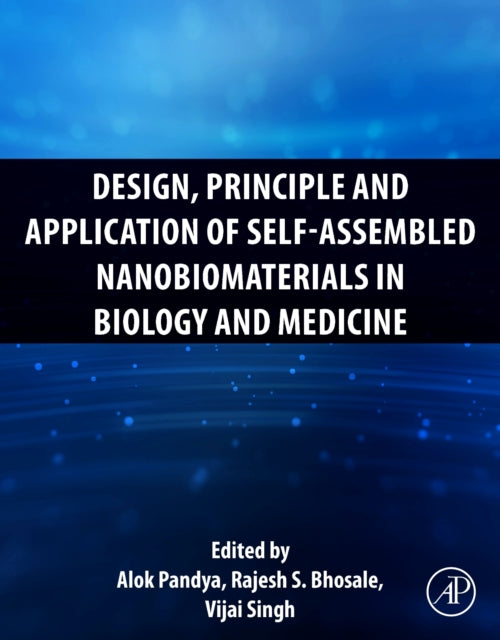
Design, Principle and Application of Self-Assembled Nanobiomaterials in Biology and Medicine
Design, Principle and Application of Self-Assembled Nanobiomaterials in Biology and Medicine
💎 Earn 581 Points (£5.81) on this item.
YOU SAVE £10.79
- Condition: Brand new
- UK Delivery times: Usually arrives within 2 - 3 working days
- UK Shipping: Fee starts at £2.39. Subject to product weight & dimension
Bulk ordering. Want 15 or more copies? Get a personalised quote and bigger discounts. Learn more about bulk orders.
Couldn't load pickup availability
- More about Design, Principle and Application of Self-Assembled Nanobiomaterials in Biology and Medicine
Design, Principle, and Application of Self-Assembled Nanobiomaterials in Biology and Medicine discusses the use of nanoscale units to combine nanotechnology with biomedical and medical fields. It involves atomic-level modification of molecular structure, draws from biological examples, and incorporates biological structures as components. These self-assembled materials are used for sensing, drug delivery, molecular recognition, tissue engineering, energy generation, and molecular tuning.
Format: Paperback / softback
Length: 314 pages
Publication date: 01 August 2022
Publisher: Elsevier Science & Technology
The captivating field of self-assembled nanobiomaterials in biology and medicine delves into the latest advancements in science and technology, harnessing the power of nanoscale units to merge nanotechnology with diverse research disciplines within the biomedical and medical realms. This innovative concept involves the intricate self-assembly of molecules, macromolecules, and polymers, offering a promising strategy for the creation of diverse desired nanofabrication in chemistry, biology, and medicine for advanced applications.
One of the key advantages of self-assembly is its ability to modify molecular structures at the atomic level through advanced techniques of synthetic chemistry. This allows for the development of complex and functional structures that draw inspiration from the vast wealth of biological examples. Moreover, self-assembly enables the direct incorporation of biological structures as components in the final systems, enhancing their functionality and adaptability. Furthermore, the target self-assembled structures must possess thermodynamic stability, with relatively minimal defects and the ability to self-heal.
In this comprehensive book, we explore a wide range of emerging self-assembled nanostructured objects, including molecular machines, nano-cars, molecular rotors, nanoparticles, nanosheets, nanotubes, nanowires, nano-flakes, nano-cubes, nano-disks, nanorings, DNA origami, transmembrane channels, and vesicles. These self-assembled materials find applications in various fields, such as sensing, drug delivery, molecular recognition, tissue engineering, energy generation, and molecular tuning.
The self-assembly process involves the spontaneous organization of molecules or particles into desired structures through non-covalent interactions, such as hydrogen bonding, π-π stacking, and electrostatic forces. This process is governed by thermodynamic principles, which determine the stability and morphology of the assembled structures. By carefully designing and manipulating the molecular components, scientists can engineer self-assembled materials with specific properties and functionalities tailored to their desired applications.
In the realm of biology, self-assembled nanobiomaterials have opened up new avenues for understanding and manipulating biological processes. For instance, molecular machines, such as nanomotors and molecular tweezers, can be designed to mimic the movements and functions of biological molecules, enabling researchers to study biological systems in unprecedented detail. Nanoparticles and nanosheets can be used for drug delivery, targeting specific cells or tissues and improving drug efficacy. Nanosensors can detect and analyze biological molecules, providing insights into disease diagnosis and treatment.
In medicine, self-assembled nanobiomaterials have the potential to revolutionize healthcare. Drug delivery systems, such as nanovesicles and liposomes, can be engineered to target specific cells or tissues, improving drug efficacy and reducing side effects. Tissue engineering using self-assembled nanobiomaterials can help repair damaged tissues and organs, promoting wound healing and regeneration. Molecular recognition systems, such as DNA origami and transmembrane channels, can be used for targeted drug delivery and gene therapy, offering personalized treatment options for patients.
Despite the numerous advantages of self-assembled nanobiomaterials, there are also challenges that need to be addressed. One of the key challenges is the scalability of the self-assembly process, as it often requires precise control over the molecular components and their interactions. Additionally, the safety and biocompatibility of self-assembled materials need to be carefully evaluated, as they may interact with biological systems in unintended ways.
In conclusion, self-assembled nanobiomaterials in biology and medicine represent a promising field with immense potential for advancing scientific research and healthcare. By harnessing the power of nanoscale units and leveraging the wealth of biological examples, scientists can engineer self-assembled materials with specific properties and functionalities tailored to their desired applications. The field is constantly evolving, and new discoveries and applications are being made every day. With continued research and development, self-assembled nanobiomaterials have the potential to transform the way we approach biology and medicine, leading to improved patient outcomes and a better understanding of the complex biological processes.
Weight: 450g
Dimension: 235 x 191 (mm)
ISBN-13: 9780323909846
This item can be found in:
UK and International shipping information
UK and International shipping information
UK Delivery and returns information:
- Delivery within 2 - 3 days when ordering in the UK.
- Shipping fee for UK customers from £2.39. Fully tracked shipping service available.
- Returns policy: Return within 30 days of receipt for full refund.
International deliveries:
Shulph Ink now ships to Australia, Belgium, Canada, France, Germany, Ireland, Italy, India, Luxembourg Saudi Arabia, Singapore, Spain, Netherlands, New Zealand, United Arab Emirates, United States of America.
- Delivery times: within 5 - 10 days for international orders.
- Shipping fee: charges vary for overseas orders. Only tracked services are available for most international orders. Some countries have untracked shipping options.
- Customs charges: If ordering to addresses outside the United Kingdom, you may or may not incur additional customs and duties fees during local delivery.