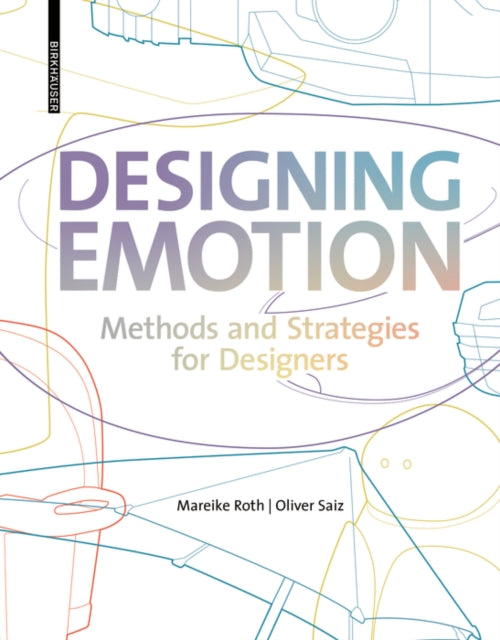
Mareike Roth, Oliver Saiz
Designing Emotion: Methods and Strategies for Designers
Designing Emotion: Methods and Strategies for Designers
💎 Earn 168 Points (£1.68) on this item.
YOU SAVE £7.77
- Condition: Brand new
- UK Delivery times: Usually arrives within 2 - 3 working days
- UK Shipping: Fee starts at £2.39. Subject to product weight & dimension
Bulk ordering. Want 15 or more copies? Get a personalised quote and bigger discounts. Learn more about bulk orders.
Couldn't load pickup availability
- More about Designing Emotion: Methods and Strategies for Designers
Das erfolgreiche Handbuch "Emotion gestalten" bietet praktische Unterstützung für die Kommunikation und Gestaltung von Gefühlswelten, basierend auf aktuellen Forschungen aus Neurowissenschaften und Psychologie. Es bietet Tools zur Analyse und Steuerung von Emotionen durch Form, Farbe und Material und enthält Fallbeispiele und Interviews zu Designpraxis erfolgreicher Unternehmen.
Format: Hardback
Length: 240 pages
Publication date: 22 August 2022
Publisher: Birkhauser
Design plays a crucial role in creating memorable and enduring experiences for users. It involves the strategic use of emotions to evoke specific feelings and connect with people on a deeper level. In this essay, we will explore how design can enhance the emotional impact of products and services. We will also discuss the role of emotions in branding and how intelligent gardening devices can be designed to elicit positive emotions. Finally, we will provide practical tips and tools for incorporating emotions into the design process.
Emotions are a fundamental aspect of human experience that can shape our perception, behavior, and decision-making. Designers can leverage emotions to create products and services that are more appealing, memorable, and effective. For example, a well-designed product can evoke feelings of joy, excitement, or satisfaction, which can increase customer loyalty and brand advocacy. Similarly, a brand that successfully connects with its target audience can create a sense of trust and familiarity, which can lead to increased sales and customer retention.
One of the key challenges in designing for emotions is understanding the emotional landscape of the target audience. This requires a deep understanding of the cultural, social, and psychological factors that influence their emotions. Designers can use a variety of research methods, such as surveys, interviews, and focus groups, to gather this information. Once they have a clear understanding of the emotional landscape, designers can use a range of design techniques to evoke specific emotions.
One of the most effective design techniques for evoking emotions is the use of color. Color can be used to create a mood, set a tone, and evoke specific emotions. For example, warm colors such as red and orange can be used to create a sense of excitement and energy, while cool colors such as blue and green can be used to create a sense of calm and relaxation. Designers can also use color to create contrast, which can draw attention to specific elements of a design and create a sense of drama.
Another design technique for evoking emotions is the use of typography. Typography can be used to create a sense of emotion by using different fonts, sizes, and styles. For example, bold fonts can be used to create a sense of urgency and excitement, while soft fonts can be used to create a sense of calm and relaxation. Designers can also use typography to create a sense of hierarchy, which can help to guide the viewer's attention and create a clear message.
Material choice is also an important aspect of designing for emotions. Designers can use a variety of materials, such as wood, metal, and plastic, to create products that are visually appealing and tactile. For example, a wooden table can be used to create a sense of warmth and comfort, while a metal chair can be used to create a sense of strength and durability. Designers can also use materials to create a sense of texture, which can add depth and interest to a design.
In addition to the use of color, typography, and material choice, designers can also use storytelling to evoke emotions. Storytelling can be used to create a sense of connection and empathy with the target audience. For example, a story about a person who overcame a challenge can be used to create a sense of inspiration and motivation. Designers can also use storytelling to create a sense of urgency and excitement, which can lead to increased sales.
However, it is important to note that designing for emotions can be challenging. Designers must balance the need to create a product or service that is effective and efficient with the need to create a product or service that is emotionally engaging. This can be particularly challenging in the digital age, where consumers are increasingly demanding personalized and immersive experiences.
To address this challenge, designers can use a range of tools and techniques. For example, designers can use data analytics to track the emotional response of users to their products and services. This can help designers to identify areas for improvement and to create more effective designs. Designers can also use virtual and augmented reality to create immersive and interactive experiences that can evoke emotions.
In conclusion, design plays a crucial role in creating memorable and enduring experiences for users. By leveraging emotions, designers can create products and services that are more appealing, memorable, and effective. Designers can use a variety of design techniques, such as color, typography, material choice, and storytelling, to evoke specific emotions. However, designing for emotions can be challenging, and designers must balance the need to create a product or service that is effective and efficient with the need to create a product or service that is emotionally engaging. By using a range of tools and techniques, designers can create products and services that will resonate with their target audience and leave a lasting impression.
Weight: 715g
Dimension: 170 x 220 (mm)
ISBN-13: 9783035623857
This item can be found in:
UK and International shipping information
UK and International shipping information
UK Delivery and returns information:
- Delivery within 2 - 3 days when ordering in the UK.
- Shipping fee for UK customers from £2.39. Fully tracked shipping service available.
- Returns policy: Return within 30 days of receipt for full refund.
International deliveries:
Shulph Ink now ships to Australia, Belgium, Canada, France, Germany, Ireland, Italy, India, Luxembourg Saudi Arabia, Singapore, Spain, Netherlands, New Zealand, United Arab Emirates, United States of America.
- Delivery times: within 5 - 10 days for international orders.
- Shipping fee: charges vary for overseas orders. Only tracked services are available for most international orders. Some countries have untracked shipping options.
- Customs charges: If ordering to addresses outside the United Kingdom, you may or may not incur additional customs and duties fees during local delivery.