Shulph Ink
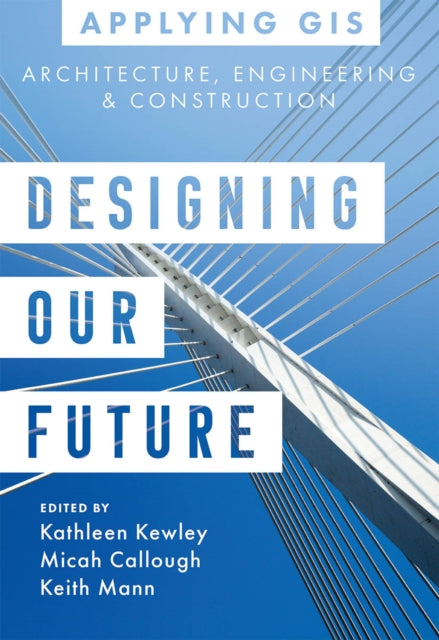
Designing Our Future: GIS for Architecture, Engineering & Construction
Designing Our Future: GIS for Architecture, Engineering & Construction
💎 Earn 68 Points (£0.68) on this item.
We can order this item for you. Delivery usually takes about 4 to 6 weeks.
This item is not held in our immediate stock. We will order it for you after checkout.
Estimated delivery: About 4 to 6 weeks
YOU SAVE £4.20
- Condition: Brand new
- UK Delivery times: Usually arrives within 2 - 3 working days
- UK Shipping: Fee starts at £2.39. Subject to product weight & dimension
Bulk ordering. Want 15 or more copies? Get a personalised quote and bigger discounts. Learn more about bulk orders.
Couldn't load pickup availability
- More about Designing Our Future: GIS for Architecture, Engineering & Construction
AEC firms use location intelligence to improve sustainability objectives and advance new ideas for creating more livable cities, workplaces, and campuses. GIS is being implemented to improve workflows, bring context to large undertakings, and increase collaboration between governments, contractors, partners, and the public. Case studies and "how to" guidance are included to help jump-start your own use of GIS.
Format: Paperback / softback
Length: 120 pages
Publication date: 25 October 2022
Publisher: ESRI Press
The architecture, engineering, and construction (AEC) industry is at the forefront of driving sustainability objectives and advancing innovative ideas for creating more livable cities, workplaces, and campuses. By leveraging advanced technologies like geographic information systems (GIS), these firms are achieving greater operational efficiency while also paving the way for better, more sustainable designs.
GIS is revolutionizing the way AEC firms work by providing a comprehensive and integrated approach to planning, designing, and constructing projects. By integrating spatial data with other relevant information such as environmental, social, and economic factors, GIS enables architects, engineers, and construction professionals to make informed decisions that prioritize sustainability and reduce environmental impact.
One of the key ways GIS is being used in the AEC industry is to improve workflows and increase collaboration. By providing a centralized platform for storing, managing, and analyzing spatial data, GIS enables teams to work more efficiently and effectively, reducing the time and resources required for project management. This also facilitates better communication and coordination between different stakeholders, including governments, contractors, partners, and the public.
GIS is also playing a crucial role in bringing context to large infrastructure projects. By visualizing spatial data in 2D and 3D formats, architects, engineers, and construction professionals can gain a better understanding of the project's surroundings, including the impact on the environment, communities, and infrastructure. This information can then be used to design projects that minimize negative impacts and maximize benefits.
For example, GIS was used in the planning and construction of a cross-country, high-speed rail project in the US. By integrating spatial data with environmental and economic factors, the project team was able to identify potential environmental impacts and develop strategies to mitigate them. GIS also helped to optimize the project's route, reducing the carbon footprint and mitigating future climate-related damage.
In addition to improving workflows and bringing context to large projects, GIS is also being used to plan maintenance for aging structures and respond to hazards from vulnerable hillsides. By using drones to capture high-resolution images and analyze spatial data, architects, engineers, and construction professionals can identify potential risks and develop targeted solutions to address them.
Another area where GIS is making a significant impact is in the documentation of all above and below-ground assets such as utility services, electric, gas, surface water, and sewer drainage. By integrating GIS with asset management systems, AEC firms can improve the efficiency of their operations and reduce the risk of asset damage.
In conclusion, the AEC industry is leveraging GIS to drive sustainability objectives and advance innovative ideas for creating more livable cities, workplaces, and campuses. By improving workflows, bringing context to large projects, and enabling better collaboration, GIS is helping AEC firms to achieve greater operational efficiency and reduce environmental impact. As the technology continues to evolve, it is likely to play an even more significant role in shaping the future of the industry.
Weight: 178g
Dimension: 140 x 203 x 11 (mm)
ISBN-13: 9781589487239
This item can be found in:
UK and International shipping information
UK and International shipping information
UK Delivery and returns information:
- Delivery within 2 - 3 days when ordering in the UK.
- Shipping fee for UK customers from £2.39. Fully tracked shipping service available.
- Returns policy: Return within 30 days of receipt for full refund.
International deliveries:
Shulph Ink now ships to Australia, Belgium, Canada, France, Germany, Ireland, Italy, India, Luxembourg Saudi Arabia, Singapore, Spain, Netherlands, New Zealand, United Arab Emirates, United States of America.
- Delivery times: within 5 - 10 days for international orders.
- Shipping fee: charges vary for overseas orders. Only tracked services are available for most international orders. Some countries have untracked shipping options.
- Customs charges: If ordering to addresses outside the United Kingdom, you may or may not incur additional customs and duties fees during local delivery.