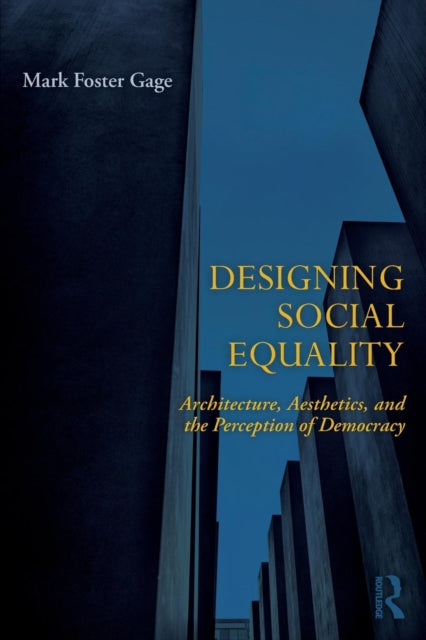
Mark Foster Gage
Designing Social Equality: Architecture, Aesthetics, and the Perception of Democracy
Designing Social Equality: Architecture, Aesthetics, and the Perception of Democracy
💎 Earn 207 Points (£2.07) on this item.
We can order this item for you. Delivery usually takes about 4 to 6 weeks.
This item is not held in our immediate stock. We will order it for you after checkout.
Estimated delivery: About 4 to 6 weeks
YOU SAVE £2.47
- Condition: Brand new
- UK Delivery times: Usually arrives within 2 - 3 working days
- UK Shipping: Fee starts at £2.39. Subject to product weight & dimension
Bulk ordering. Want 15 or more copies? Get a personalised quote and bigger discounts. Learn more about bulk orders.
Couldn't load pickup availability
- More about Designing Social Equality: Architecture, Aesthetics, and the Perception of Democracy
Mark Foster Gage's Designing Social Equality proposes a new social theory for perceiving reality and designing the built environment more justly.
Format: Paperback / softback
Length: 132 pages
Publication date: 20 December 2018
Publisher: Taylor & Francis Inc
Designing Social Equality: Mark Foster Gage's Vision for a More Just World
Mark Foster Gage's Designing Social Equality is a groundbreaking work that proposes a radical realignment between aesthetic thought, politics, social equality, and the design of our physical world. By reexamining historical concepts from aesthetic philosophy and integrating them with emerging intellectual perspectives from diverse disciplines, Gage aims to create a more comprehensive social theory that explores how humanity perceives its reality and how it can work towards a more just definition of that reality through innovative approaches to the built environment.
Aesthetic Thought and Social Equality:
Gage begins by examining the relationship between aesthetic thought and social equality. He argues that aesthetic experiences are deeply intertwined with social structures and that they can either reinforce or challenge existing power dynamics. For example, he notes that the design of public spaces can either promote inclusivity and diversity or exclude certain groups based on their race, gender, or socioeconomic status.
Gage proposes that designers should be more conscious of the social implications of their work and should strive to create spaces that are accessible, inclusive, and equitable. He suggests that this can be achieved by incorporating principles of universal design, which ensure that buildings and spaces are accessible to people of all abilities and backgrounds.
Political Implications of Aesthetic Thought:
Gage also explores the political implications of aesthetic thought. He argues that aesthetic experiences can be used as a tool for social change and that they can help to challenge dominant ideologies and power structures. For example, he notes that the design of monuments and memorials can be used to commemorate historical events and to promote a particular political agenda.
However, Gage also warns that aesthetic experiences can be manipulated for political gain and that they can be used to perpetuate harmful ideologies. He suggests that designers should be aware of the potential for manipulation and should work to create spaces that are transparent and accountable.
Social Equality and the Built Environment:
Gage argues that the built environment plays a critical role in shaping social equality. He notes that the design of buildings and spaces can either promote or hinder social mobility and that it can have a significant impact on the quality of life for individuals and communities.
Gage proposes that designers should be more conscious of the social implications of their work and should strive to create spaces that are accessible, inclusive, and equitable. He suggests that this can be achieved by incorporating principles of universal design, which ensure that buildings and spaces are accessible to people of all abilities and backgrounds.
In addition, Gage suggests that designers should be more aware of the environmental impact of their work and should strive to create spaces that are sustainable and environmentally friendly. He notes that the built environment is a major contributor to climate change and that it is important to take action to reduce our carbon footprint.
Conclusion:
Designing Social Equality is a groundbreaking work that proposes a radical realignment between aesthetic thought, politics, social equality, and the design of our physical world. By reexamining historical concepts from aesthetic philosophy and integrating them with emerging intellectual perspectives from diverse disciplines, Gage aims to create a more comprehensive social theory that explores how humanity perceives its reality and how it can work towards a more just definition of that reality through innovative approaches to the built environment. While there are many challenges to achieving social equality, Gage's work provides a framework for designers to work towards a more just and sustainable future.
Weight: 224g
Dimension: 158 x 232 x 8 (mm)
ISBN-13: 9780815369752
UK and International shipping information
UK and International shipping information
UK Delivery and returns information:
- Delivery within 2 - 3 days when ordering in the UK.
- Shipping fee for UK customers from £2.39. Fully tracked shipping service available.
- Returns policy: Return within 30 days of receipt for full refund.
International deliveries:
Shulph Ink now ships to Australia, Belgium, Canada, France, Germany, Ireland, Italy, India, Luxembourg Saudi Arabia, Singapore, Spain, Netherlands, New Zealand, United Arab Emirates, United States of America.
- Delivery times: within 5 - 10 days for international orders.
- Shipping fee: charges vary for overseas orders. Only tracked services are available for most international orders. Some countries have untracked shipping options.
- Customs charges: If ordering to addresses outside the United Kingdom, you may or may not incur additional customs and duties fees during local delivery.