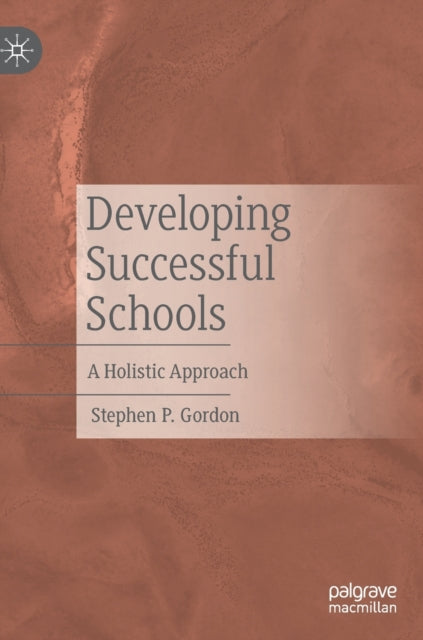
Stephen P. Gordon
Developing Successful Schools: A Holistic Approach
Developing Successful Schools: A Holistic Approach
💎 Earn 522 Points (£5.22) on this item.
YOU SAVE £15.46
- Condition: Brand new
- UK Delivery times: Usually arrives within 2 - 3 working days
- UK Shipping: Fee starts at £2.39. Subject to product weight & dimension
Bulk ordering. Want 15 or more copies? Get a personalised quote and bigger discounts. Learn more about bulk orders.
Couldn't load pickup availability
- More about Developing Successful Schools: A Holistic Approach
The book emphasizes the need for a holistic approach to school improvement that focuses on the development of the whole child and the relationships among student, family, and community. It argues that PK-12 education should shift its focus from measuring student and school performance to holistic qualities that reflect a moral approach to education and improve academic performance.
Format: Hardback
Length: 277 pages
Publication date: 22 July 2022
Publisher: Springer International Publishing AG
The importance of a holistic approach to school improvement cannot be overstated, as it encompasses the development of the whole child and the nurturing of strong relationships among students, families, and communities. In recent years, the primary focus of PK-12 education in the United States has been on measuring student and school performance through high-stakes achievement tests, leading to a narrowed curriculum that prioritizes lower-level cognitive learning at the expense of the moral, social, and creative development of students, families, and communities. This book makes a compelling argument that PK-12 education must shift its focus to holistic qualities that reflect a moral rather than a technical approach to education, while also improving students' academic performance.
One of the key aspects of a holistic approach is the recognition of the interconnectedness of all aspects of a child's development. This includes not only academic skills but also emotional, social, and physical well-being. By prioritizing these holistic qualities, schools can create an environment that supports the growth and development of all students, regardless of their background or abilities.
One of the challenges facing PK-12 education is the need to balance the demands of standardized testing with the broader goals of education. While high-stakes achievement tests can provide valuable information about student performance, they often focus solely on cognitive skills and do not adequately measure the moral, social, and creative development of students. This can lead to a narrow curriculum that fails to engage students and promote their full potential.
To address this issue, the book suggests that PK-12 education should shift its focus to a more comprehensive approach that includes a range of learning experiences and opportunities. This includes promoting student-centered learning, which emphasizes the active participation and engagement of students in their learning. It also involves providing a well-rounded curriculum that incorporates a variety of subjects, including the arts, sciences, humanities, and physical education, to promote the development of multiple skills and interests.
In addition to promoting a holistic approach to education, the book also emphasizes the importance of building strong relationships among students, families, and communities. This includes creating a sense of belonging and community within the school, as well as fostering partnerships with local organizations and community members to provide additional resources and support. By working together, schools can create a supportive environment that promotes student success and well-being.
Another key aspect of a holistic approach to school improvement is the recognition of the role that parents and families play in their children's education. Parents and families are the primary caregivers and educators of their children, and they play a critical role in promoting their child's academic and social development. By working closely with parents and families, schools can create a partnership that supports student learning and promotes family engagement.
In conclusion, the book argues that PK-12 education needs to shift its focus to holistic qualities that reflect a moral rather than a technical approach to education, while also improving students' academic performance. By prioritizing the development of the whole child and nurturing strong relationships among students, families, and communities, schools can create an environment that supports student success and promotes lifelong learning. While there are challenges to achieving this shift, it is essential to work towards a more comprehensive and equitable education system that prepares students for the challenges of the 21st century.
Weight: 524g
Dimension: 210 x 148 (mm)
ISBN-13: 9783031069154
Edition number: 1st ed. 2022
This item can be found in:
UK and International shipping information
UK and International shipping information
UK Delivery and returns information:
- Delivery within 2 - 3 days when ordering in the UK.
- Shipping fee for UK customers from £2.39. Fully tracked shipping service available.
- Returns policy: Return within 30 days of receipt for full refund.
International deliveries:
Shulph Ink now ships to Australia, Belgium, Canada, France, Germany, Ireland, Italy, India, Luxembourg Saudi Arabia, Singapore, Spain, Netherlands, New Zealand, United Arab Emirates, United States of America.
- Delivery times: within 5 - 10 days for international orders.
- Shipping fee: charges vary for overseas orders. Only tracked services are available for most international orders. Some countries have untracked shipping options.
- Customs charges: If ordering to addresses outside the United Kingdom, you may or may not incur additional customs and duties fees during local delivery.