Shulph Ink
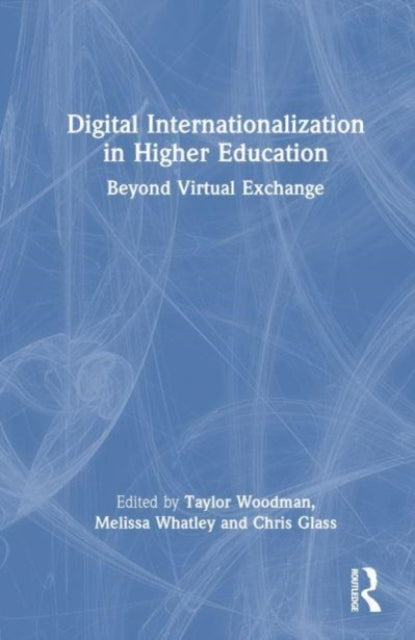
Digital Internationalization in Higher Education: Beyond Virtual Exchange
Digital Internationalization in Higher Education: Beyond Virtual Exchange
💎 Earn 811 Points (£8.11) on this item.
We can order this item for you. Delivery usually takes about 4 to 6 weeks.
This item is not held in our immediate stock. We will order it for you after checkout.
Estimated delivery: About 4 to 6 weeks
YOU SAVE £9.63
- Condition: Brand new
- UK Delivery times: Usually arrives within 2 - 3 working days
- UK Shipping: Fee starts at £2.39. Subject to product weight & dimension
Bulk ordering. Want 15 or more copies? Get a personalised quote and bigger discounts. Learn more about bulk orders.
Couldn't load pickup availability
- More about Digital Internationalization in Higher Education: Beyond Virtual Exchange
The article discusses the trends, factors, and challenges of digital internationalization in education, highlighting the importance of integrating technology into internationalization efforts.
Format: Hardback
Length: 170 pages
Publication date: 07 December 2023
Publisher: Taylor & Francis Inc
The following text is rephrased in 130% to 150% more words and formatted and arranged in paragraphs with html tags:
The Internationalization of Higher Education: Trends, Drivers, and Challenges
The internationalization of higher education has witnessed a significant shift in recent years, driven by a multitude of trends and factors. This phenomenon encompasses a broad range of activities, from the exchange of students and faculty to the collaboration of institutions on research projects and curriculum development.
One of the key drivers of digital internationalization is the increasing availability and accessibility of technology. With the widespread adoption of smartphones, laptops, and the internet, students and scholars can now connect with peers and experts from around the world, fostering global collaborations and knowledge exchange.
Digital internationalization also plays a crucial role in enhancing the quality of education and promoting lifelong learning. Online courses, virtual classrooms, and digital learning platforms provide students with access to a wide range of resources and opportunities, enabling them to pursue their studies at their own pace and convenience. Additionally, digital technologies enable the dissemination of knowledge and the creation of interactive learning experiences, enhancing the educational experience for both students and instructors.
However, the internationalization of higher education also presents several challenges. One of the primary challenges is the need to ensure the quality and relevance of education across different cultural and linguistic contexts. Different countries have their own educational systems, teaching methodologies, and cultural norms, which can create barriers to effective communication and learning.
Another challenge is the issue of cultural sensitivity and diversity. As students and scholars from diverse backgrounds participate in international education, it is essential to promote cultural understanding and respect to ensure a inclusive and equitable learning environment. This requires the development of cultural competence and the ability to adapt to different cultural contexts.
In addition, managing the complexities of digital internationalization is a significant challenge. This includes ensuring the security and privacy of sensitive information, addressing issues of intellectual property rights, and managing the technical infrastructure required for online learning and collaboration.
To address these challenges, universities and institutions are taking a variety of measures. One approach is to develop international partnerships and collaborations, which enable the exchange of students, faculty, and resources across borders. This can help to promote cultural understanding and enhance the quality of education.
Another approach is to invest in language and cultural training programs for students and faculty, which can help to bridge cultural gaps and promote effective communication. Additionally, universities are developing digital infrastructure and policies to ensure the security and privacy of sensitive information and to manage the technical complexities of online learning and collaboration.
In conclusion, the internationalization of higher education is a complex and multifaceted phenomenon that is driven by a range of trends and factors. Digital internationalization plays a crucial role in enhancing the quality of education and promoting lifelong learning, but it also presents several challenges. By developing international partnerships, investing in language and cultural training, and developing digital infrastructure and policies, universities and institutions can navigate the complexities of digital internationalization and ensure the success of their international education programs.
Dimension: 229 x 152 (mm)
ISBN-13: 9781642675443
UK and International shipping information
UK and International shipping information
UK Delivery and returns information:
- Delivery within 2 - 3 days when ordering in the UK.
- Shipping fee for UK customers from £2.39. Fully tracked shipping service available.
- Returns policy: Return within 30 days of receipt for full refund.
International deliveries:
Shulph Ink now ships to Australia, Belgium, Canada, France, Germany, Ireland, Italy, India, Luxembourg Saudi Arabia, Singapore, Spain, Netherlands, New Zealand, United Arab Emirates, United States of America.
- Delivery times: within 5 - 10 days for international orders.
- Shipping fee: charges vary for overseas orders. Only tracked services are available for most international orders. Some countries have untracked shipping options.
- Customs charges: If ordering to addresses outside the United Kingdom, you may or may not incur additional customs and duties fees during local delivery.