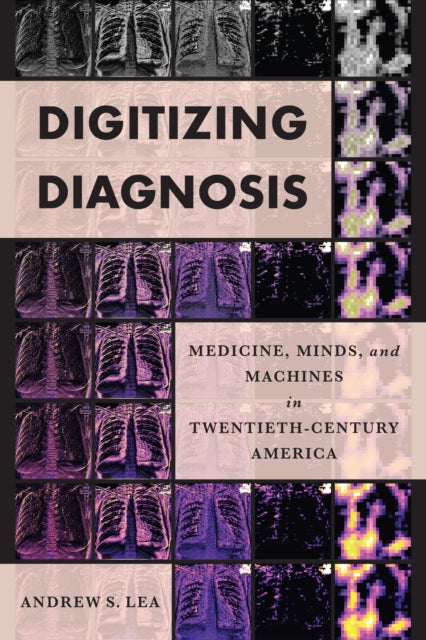
Andrew S.Lea
Digitizing Diagnosis: Medicine, Minds, and Machines in Twentieth-Century America
Digitizing Diagnosis: Medicine, Minds, and Machines in Twentieth-Century America
💎 Earn 188 Points (£1.88) on this item.
YOU SAVE £4.88
- Condition: Brand new
- UK Delivery times: Usually arrives within 2 - 3 working days
- UK Shipping: Fee starts at £2.39. Subject to product weight & dimension
Bulk ordering. Want 15 or more copies? Get a personalised quote and bigger discounts. Learn more about bulk orders.
Couldn't load pickup availability
- More about Digitizing Diagnosis: Medicine, Minds, and Machines in Twentieth-Century America
In the 1950s, interdisciplinary teams of physicians, engineers, mathematicians, and philosophers explored the application of digital technology to medical diagnosis, reconfiguring patient, disease, and physician identities. Debates about medical reasoning, disease definitions, and physician authority emerged. The introduction of computers to medical diagnosis raised fundamental moral and philosophical questions about how doctors should classify diseases, whether humans can understand machine decision-making, and how computerized systems can circumvent or exacerbate bias. These questions continue to be grappled with today as medical algorithms become more deeply integrated into clinical care.
Format: Hardback
Length: 256 pages
Publication date: 25 July 2023
Publisher: Johns Hopkins University Press
Beginning in the 1950s, interdisciplinary teams of physicians, engineers, mathematicians, and philosophers embarked on a groundbreaking endeavor to explore the potential application of a novel digital technology to one of the most critical and complex tasks in medicine: diagnosis. In his book, Digitizing Diagnosis, Andrew Lea delves into these endeavors, shedding light on the broader questions, debates, and transformations that emerged in their wake. While surveying the enduring connections between the analog and digital realms of medicine, Lea uncovers how the introduction of computers to medical diagnosis reconfigured the identities of patients, diseases, and physicians.
These debates, he demonstrates, were driven by larger concerns about the nature of medical reasoning, the definitions of disease, and the authority and identity of physicians and patients. In their quest to digitize diagnosis, these interdisciplinary groups of researchers encountered fundamental moral and philosophical dilemmas. How should doctors classify diseases? Could humans comprehend and trust the opaque decision-making processes of machines? And how might computerized systems mitigate or exacerbate bias? As medical algorithms become increasingly integrated into clinical care, researchers, clinicians, and caregivers continue to grapple with these critical questions today.
The journey to digitize diagnosis was marked by a series of pioneering efforts, driven by a shared vision of harnessing technology to improve medical outcomes. These early pioneers faced numerous challenges, including the need for accurate and reliable data, the development of appropriate algorithms, and the integration of computer systems into clinical practice. Despite these obstacles, they made significant strides in developing diagnostic tools that could analyze large amounts of data, identify patterns, and make informed decisions.
One of the most notable achievements in this field was the development of the electronic health record (EHR), which has become an essential tool in modern healthcare. The EHR allows healthcare providers to access patient information in real-time, making it easier to track medical histories, diagnose conditions, and manage care. By digitizing medical records, healthcare providers can reduce errors, improve efficiency, and enhance patient safety.
Another important development was the use of artificial intelligence (AI) in medical diagnosis. AI algorithms can analyze vast amounts of data, identify patterns, and make predictions based on historical data. This has led to the development of diagnostic tools that can assist physicians in making more accurate and timely diagnoses, particularly in complex and challenging cases.
However, the digitization of diagnosis has also raised concerns about privacy, security, and bias. As medical data becomes increasingly digitized, there is a risk of unauthorized access, data breaches, and the misuse of personal information. Additionally, the use of AI algorithms in diagnosis can perpetuate biases and discrimination, as they may be trained on data that reflects societal norms and stereotypes.
To address these concerns, there has been a growing emphasis on developing ethical guidelines and regulations for the use of digital technology in healthcare. These guidelines aim to ensure that the benefits of digital technology are maximized while minimizing the risks and harms associated with its use.
In conclusion, the history of the first attempts to computerize medical diagnosis is a testament to the power of innovation and collaboration. By leveraging digital technology, interdisciplinary teams of physicians, engineers, mathematicians, and philosophers have made significant strides in improving medical diagnosis. However, the journey to digitize diagnosis has also raised important ethical and philosophical questions that require careful consideration and attention. As we continue to navigate the digital landscape of healthcare, it is essential to prioritize the well-being and privacy of patients, ensure the accuracy and reliability of diagnostic tools, and promote the responsible and ethical use of digital technology.
Weight: 558g
Dimension: 161 x 238 x 26 (mm)
ISBN-13: 9781421446813
This item can be found in:
UK and International shipping information
UK and International shipping information
UK Delivery and returns information:
- Delivery within 2 - 3 days when ordering in the UK.
- Shipping fee for UK customers from £2.39. Fully tracked shipping service available.
- Returns policy: Return within 30 days of receipt for full refund.
International deliveries:
Shulph Ink now ships to Australia, Belgium, Canada, France, Germany, Ireland, Italy, India, Luxembourg Saudi Arabia, Singapore, Spain, Netherlands, New Zealand, United Arab Emirates, United States of America.
- Delivery times: within 5 - 10 days for international orders.
- Shipping fee: charges vary for overseas orders. Only tracked services are available for most international orders. Some countries have untracked shipping options.
- Customs charges: If ordering to addresses outside the United Kingdom, you may or may not incur additional customs and duties fees during local delivery.