William Ayers,Therese Quinn
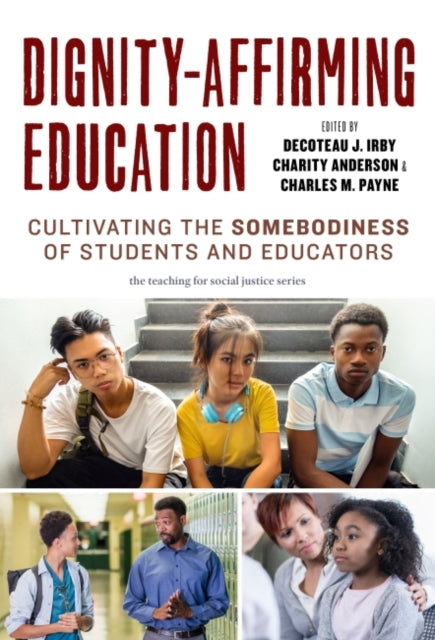
Dignity-Affirming Education: Cultivating the Somebodiness of Students and Educators
Dignity-Affirming Education: Cultivating the Somebodiness of Students and Educators
💎 Earn 444 Points (£4.44) on this item.
YOU SAVE £2.18
- Condition: Brand new
- UK Delivery times: Usually arrives within 2 - 3 working days
- UK Shipping: Fee starts at £2.39. Subject to product weight & dimension
Bulk ordering. Want 15 or more copies? Get a personalised quote and bigger discounts. Learn more about bulk orders.
Couldn't load pickup availability
- More about Dignity-Affirming Education: Cultivating the Somebodiness of Students and Educators
The book "Dignity-Affirming Education" presents a powerful approach to education that reminds people of their somebodiness and the potential for oppressed communities to recognize their potential. It synthesizes research for educators, school leaders, and educational activists to help them make sense of what they are working for and against: dignity and the numerous affronts to it. It offers vivid portraits of what dignity-affirming education can be for a variety of settings and contributes to a new vocabulary for seeing educational processes as students experience them.
Format: Hardback
Length: 256 pages
Publication date: 13 May 2022
Publisher: Teachers' College Press
Dignity-Affirming Education is a groundbreaking book that explores the concept of dignity in education and its impact on students. Written by authors with diverse expertise, the book presents a powerful approach to education that emphasizes the inherent worth and potential of each student. By bringing together a collection of chapters, the book synthesizes research for educators, school leaders, and educational activists to help them make sense of what they are working for and against: dignity and the numerous affronts to it.
One of the key themes of the book is that dignity is not typically used in education, yet it is at the core of strong pedagogy. The authors argue that education should be centered on students' dignity, which means recognizing their intellectual acumen and creative resources and allowing them to pursue development on their own terms. This approach challenges the traditional notion of education as a one-size-fits-all system and recognizes the unique needs and experiences of each student.
The book provides a clear picture of how educators can affirm students' dignity in their everyday practice. It outlines an approach to social-emotional learning (SEL) that takes social processes such as stigma, exclusion, and marginalization into account. It also offers vivid portraits of what dignity-affirming education can be for a variety of settings, including schools, community organizations, and online learning platforms.
One of the most significant contributions of the book is its rigorous research. The authors have conducted extensive research on the impact of dignity-affirming education on students, including studies on academic achievement, social-emotional development, and mental health. They have found that dignity-affirming education can have a positive impact on students' academic performance, social relationships, and overall well-being.
The book also presents a new vocabulary for seeing educational processes as students experience them. It challenges the traditional notion of education as a linear process and recognizes the importance of student agency and self-determination. It emphasizes the importance of creating a learning environment that is inclusive, supportive, and respectful of all students.
In addition to its academic contributions, Dignity-Affirming Education is also a practical guide for educators and school leaders. It provides strategies for creating a culture of dignity in the classroom, including promoting student voice and choice, providing opportunities for student leadership, and addressing issues of equity and inclusion. It also offers guidance on how to respond to incidents of disrespect and discrimination, and how to create a safe and supportive learning environment for all students.
One of the challenges that educators face in promoting dignity-affirming education is the prevalence of stigma and discrimination. The authors argue that these issues can be addressed by creating a culture of empathy and understanding. They suggest that educators should work to build relationships with students and their families, and to provide opportunities for students to share their experiences and perspectives.
Another challenge is the lack of resources and support for educators who are working to promote dignity-affirming education. The authors argue that this is a critical issue that needs to be addressed by policymakers and educational institutions. They suggest that schools should provide training and support for educators to help them develop their skills and knowledge in this area, and that they should also provide resources such as books, videos, and online resources to support students' learning.
Despite these challenges, Dignity-Affirming Education is a book that has the potential to make a significant impact on education. It provides a clear picture of how educators can affirm students' dignity in their everyday practice, and it offers a new vocabulary for seeing educational processes as students experience them. It is a practical guide for educators and school leaders, and it is a book that should be read by anyone who works with students of any age.
In conclusion, Dignity-Affirming Education is a groundbreaking book that explores the concept of dignity in education and its impact on students. Written by authors with diverse expertise, the book presents a powerful approach to education that emphasizes the inherent worth and potential of each student. By bringing together a collection of chapters, the book synthesizes research for educators, school leaders, and educational activists to help them make sense of what they are working for and against: dignity and the numerous affronts to it. It provides a clear picture of how educators can affirm students' dignity in their everyday practice, and it offers a new vocabulary for seeing educational processes as students experience them. It is a practical guide for educators and school leaders, and it is a book that should be read by anyone who works with students of any age.
Dimension: 229 x 152 (mm)
ISBN-13: 9780807766538
This item can be found in:
UK and International shipping information
UK and International shipping information
UK Delivery and returns information:
- Delivery within 2 - 3 days when ordering in the UK.
- Shipping fee for UK customers from £2.39. Fully tracked shipping service available.
- Returns policy: Return within 30 days of receipt for full refund.
International deliveries:
Shulph Ink now ships to Australia, Belgium, Canada, France, Germany, Ireland, Italy, India, Luxembourg Saudi Arabia, Singapore, Spain, Netherlands, New Zealand, United Arab Emirates, United States of America.
- Delivery times: within 5 - 10 days for international orders.
- Shipping fee: charges vary for overseas orders. Only tracked services are available for most international orders. Some countries have untracked shipping options.
- Customs charges: If ordering to addresses outside the United Kingdom, you may or may not incur additional customs and duties fees during local delivery.