Shulph Ink
Dimensions of Phonological Stress
Dimensions of Phonological Stress
We can order this item for you. Delivery usually takes about 4 to 6 weeks.
This item is not held in our immediate stock. We will order it for you after checkout.
Estimated delivery: About 4 to 6 weeks
YOU SAVE £2.99
- Condition: Brand new
- UK Delivery times: Usually arrives within 2 - 3 working days
- UK Shipping: Fee starts at £3.89. Subject to product weight & dimension
Bulk ordering. Want 15 or more copies? Get a personalised quote and bigger discounts. Learn more about bulk orders.
Couldn't load pickup availability
- More about Dimensions of Phonological Stress
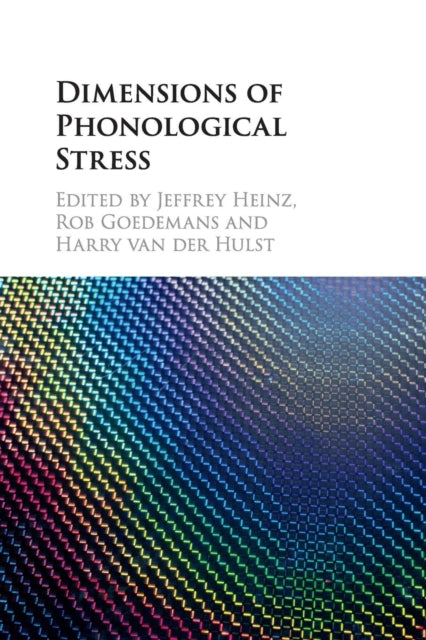
Stress and accent are essential components of grammar, but their exact nature is still a matter of debate. This book explores the representation and acquisition of stress and accent patterns across different dimensions, including theoretical linguistics, speech science, and computational and experimental research.
Format: Paperback / softback
Length: 343 pages
Publication date: 28 March 2019
Publisher: Cambridge University Press
Stress and accent are fundamental elements of grammar that play a crucial role in organizing language. However, their precise nature remains a subject of mystery and wonder. These issues become particularly prominent during the acquisition process, where the interplay between abstract mental representations and concrete physical manifestations of stress and accent is intricately reflected. By gaining a deeper understanding of the representations of stress and accent patterns and the mechanisms through which they are learned, we can unravel the intricacies of linguistic theory and language acquisition.
Representation and acquisition are two central themes that form the backbone of this book. Each theme is explored in depth, considering the position of accent or stress within various prosodic domains and the acoustic dimensions along which stress and accent can vary. The research presented in this book is multidisciplinary, drawing upon theoretical linguistics, speech science, and computational and experimental research.
The study of stress and accent involves exploring the cognitive processes that underlie their production and perception. Theoretical linguistics provides insights into the mental representations of stress and accent, while speech science examines the physical aspects of speech production, including the acoustic properties of different sounds. Computational and experimental research involves using advanced technologies to analyze and model the production and perception of stress and accent.
One of the key challenges in the study of stress and accent is the distinction between phonetic and phonological representations. Phonetic representations refer to the actual sounds that are produced, while phonological representations capture the abstract patterns of stress and accent. Phonetic representations are often more accessible to perception and production, while phonological representations are more abstract and can be more challenging to comprehend.
Another important aspect of the study of stress and accent is the role of learning. Children learn to produce and perceive stress and accent through exposure to the language and through interactions with their caregivers. The acquisition process involves a combination of cognitive, perceptual, and motor skills, as children learn to map the abstract phonological representations onto the physical sounds of their language.
The research presented in this book explores various aspects of stress and accent, including the position of accent or stress within different prosodic domains, such as syllables, words, and phrases. It also examines the acoustic dimensions along which stress and accent can vary, such as pitch, intensity, and duration. The book discusses different theories and models of stress and accent acquisition, including cognitive, perceptual, and motor theories, as well as models that incorporate neural and genetic factors.
In conclusion, stress and accent are central organizing features of grammar
Stress and accent are central organizing features of grammar that play a crucial role in organizing language. However, their precise nature remains a subject of mystery and wonder. These issues become particularly prominent during the acquisition process, where the interplay between abstract mental representations and concrete physical manifestations of stress and accent is intricately reflected. By gaining a deeper understanding of the representations of stress and accent patterns and the mechanisms through which they are learned, we can unravel the intricacies of linguistic theory and language acquisition.
Representation and acquisition are two central themes that form the backbone of this book. Each theme is explored in depth, considering the position of accent or stress within various prosodic domains and the acoustic dimensions along which stress and accent can vary. The research presented in this book is multidisciplinary, drawing upon theoretical linguistics, speech science, and computational and experimental research.
The study of stress and accent involves exploring the cognitive processes that underlie their production and perception. Theoretical linguistics provides insights into the mental representations of stress and accent, while speech science examines the physical aspects of speech production, including the acoustic properties of different sounds. Computational and experimental research involves using advanced technologies to analyze and model the production and perception of stress and accent.
One of the key challenges in the study of stress and accent is the distinction between phonetic and phonological representations. Phonetic representations refer to the actual sounds that are produced, while phonological representations capture the abstract patterns of stress and accent. Phonetic representations are often more accessible to perception and production, while phonological representations are more abstract and can be more challenging to comprehend.
Another important aspect of the study of stress and accent is the role of learning. Children learn to produce and perceive stress and accent through exposure to the language and through interactions with their caregivers. The acquisition process involves a combination of cognitive, perceptual, and motor skills, as children learn to map the abstract phonological representations onto the physical sounds of their language.
The research presented in this book explores various aspects of stress and accent, including the position of accent or stress within different prosodic domains, such as syllables, words, and phrases. It also examines the acoustic dimensions along which stress and accent can vary, such as pitch, intensity, and duration. The book discusses different theories and models of stress and accent acquisition, including cognitive, perceptual, and motor theories, as well as models that incorporate neural and genetic factors.
In conclusion, stress and accent are central organizing features of grammar that play a crucial role in organizing language. However, their precise nature remains a subject of mystery and wonder. These issues become particularly prominent during the acquisition process, where the interplay of abstract mental representations and concrete physical manifestations of stress and accent is intricately reflected. By gaining a deeper understanding of the representations of stress and accent patterns and the mechanisms through which they are learned, we can unravel the intricacies of linguistic theory and language acquisition.
Representation and Acquisition
Stress and accent are fundamental elements of grammar that play a crucial role in organizing language. However, their precise nature remains a subject of mystery and wonder. These issues become particularly prominent during the acquisition process, where the interplay between abstract mental representations and concrete physical manifestations of stress and accent is intricately reflected. By gaining a deeper understanding of the representations of stress and accent patterns and the mechanisms through which they are learned, we can unravel the intricacies of linguistic theory and language acquisition.
Representation and acquisition are two central themes that form the backbone of this book. Each theme is explored in depth, considering the position of accent or stress within various prosodic domains and the acoustic dimensions along which stress and accent can vary. The research presented in this book is multidisciplinary, drawing upon theoretical linguistics, speech science, and computational and experimental research.
The study of stress and accent involves exploring the cognitive processes that underlie their production and perception. Theoretical linguistics provides insights into the mental representations of stress and accent, while speech science examines the physical aspects of speech production, including the acoustic properties of different sounds. Computational and experimental research involves using advanced technologies to analyze and model the production and perception of stress and accent.
One of the key challenges in the study of stress and accent is the distinction between phonetic and phonological representations. Phonetic representations refer to the actual sounds that are produced, while phonological representations capture the abstract patterns of stress and accent. Phonetic representations are often more accessible to perception and production, while phonological representations are more abstract and can be more challenging to comprehend.
Another important aspect of the study of stress and accent is the role of learning. Children learn to produce and perceive stress and accent through exposure to the language and through interactions with their caregivers. The acquisition process involves a combination of cognitive, perceptual, and motor skills, as children learn to map the abstract phonological representations onto the physical sounds of their language.
The research presented in this book explores various aspects of stress and accent, including the position of accent or stress within different prosodic domains, such as syllables, words, and phrases. It also examines the acoustic dimensions along which stress and accent can vary, such as pitch, intensity, and duration. The book discusses different theories and models of stress and accent acquisition, including cognitive, perceptual, and motor theories, as well as models that incorporate neural and genetic factors.
In conclusion, stress and accent are central organizing features of grammar that play a crucial role in organizing language. However, their precise nature remains a subject of mystery and wonder. These issues become particularly prominent during the acquisition process, where the interplay
Weight: 510g
Dimension: 166 x 228 x 20 (mm)
ISBN-13: 9781107501140
UK and International shipping information
UK and International shipping information
We deliver throughout the United Kingdom and to 128 countries and territories worldwide, including the United States, Australia, Canada, Germany, Spain and France.