Shulph Ink
Diversity, Inclusion, and Decolonization: Practical Tools for Improving Teaching, Research, and Scholarship
Diversity, Inclusion, and Decolonization: Practical Tools for Improving Teaching, Research, and Scholarship
YOU SAVE £6.06
- Condition: Brand new
- UK Delivery times: Usually arrives within 2 - 3 working days
- UK Shipping: Fee starts at £3.89. Subject to product weight & dimension
Bulk ordering. Want 15 or more copies? Get a personalised quote and bigger discounts. Learn more about bulk orders.
Couldn't load pickup availability
- More about Diversity, Inclusion, and Decolonization: Practical Tools for Improving Teaching, Research, and Scholarship
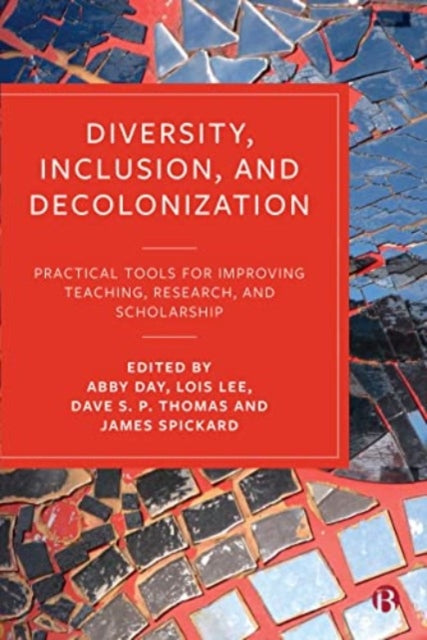
The Western higher education system is still largely dominated by scholars from the privileged classes of the Global North. This book offers examples of efforts to diversify points of view, include previously excluded people, and decolonize curricula and provides a practical guide to 'doing diversity in the social sciences and humanities and decolonizing higher education as a whole.
Format: Paperback / softback
Length: 284 pages
Publication date: 10 November 2023
Publisher: Bristol University Press
Despite significant advancements, the Western higher education system remains predominantly controlled by scholars from the privileged classes of the Global North. This book offers insightful examples of initiatives aimed at diversifying perspectives, inclusively engaging previously marginalized individuals, and decolonizing curricula. It explores the effectiveness of these efforts and identifies areas for improvement. Furthermore, it presents visionary ideas for creating a more democratic and equitable academic environment for all. Compiled by scholars from diverse disciplines, countries, and backgrounds, this book serves as a globally relevant and practical guide to implementing diversity in the social sciences and humanities and decolonizing higher education.
Introduction:
The Western higher education system has made progress in recent years in terms of diversity and inclusion. However, it is still largely dominated by scholars from the Global North, who hold privileged positions in academia and have access to resources and opportunities that are not available to others. This book aims to explore the challenges and opportunities associated with diversifying perspectives, including previously excluded groups, and decolonizing curricula in the Western higher education system.
Diversifying Perspectives:
One of the key challenges facing the Western higher education system is the lack of diversity in academic staff and faculty. Studies have shown that women, people of color, and individuals from marginalized communities are underrepresented in higher education. This lack of diversity can lead to a narrow range of perspectives and ideas being presented in the classroom, which can hinder the development of critical thinking skills and a broader understanding of complex issues.
To address this challenge, there have been efforts to diversify the academic workforce. For example, universities have implemented affirmative action policies to increase the representation of women and people of color in faculty positions. They have also established programs to support the career development of underrepresented scholars, such as mentorship programs and research grants.
However, even with these efforts, there is still a significant gap between the representation of marginalized communities in higher education and the broader population. This suggests that more needs to be done to promote diversity and inclusion in the academic workforce.
Inclusively Engaging Previously Excluded Individuals:
Another challenge facing the Western higher education system is the exclusion of previously marginalized individuals from academic opportunities. This can be due to a variety of factors, such as discrimination, lack of access to education, and cultural barriers.
To address this challenge, there have been efforts to create inclusive learning environments that are accessible to all individuals. For example, universities have implemented policies to promote diversity and inclusion, such as providing accommodations for students with disabilities and offering language support for international students. They have also established programs to support the academic success of underrepresented students, such as tutoring and academic advising.
However, even with these efforts, there is still a significant gap between the academic success of underrepresented students and their peers from privileged backgrounds. This suggests that more needs to be done to promote inclusivity and equity in higher education.
Decolonizing Curricula:
Another challenge facing the Western higher education system is the colonial legacy that continues to shape curricula and teaching practices. This legacy can be seen in the way that Western knowledge is presented as universal and superior to other cultures and traditions.
To address this challenge, there have been efforts to decolonize curricula and teaching practices. For example, universities have introduced courses that focus on the history and perspectives of marginalized communities, such as African American studies and Native American studies. They have also established programs to promote cultural sensitivity and understanding among students and faculty.
However, even with these efforts, there is still a significant gap between the way that Western knowledge is presented and the way that other cultures and traditions are represented. This suggests that more needs to be done to promote decolonization in higher education.
Conclusion:
Despite the challenges facing the Western higher education system, there have been efforts to diversify perspectives, inclusively engage previously excluded individuals, and decolonize curricula. These efforts have shown some success in promoting diversity and inclusion in higher education. However, there is still much work to be done to create a more democratic and just academic life for all.
In conclusion, the Western higher education system remains largely dominated by scholars from the privileged classes of the Global North. However, there have been efforts to diversify perspectives, inclusively engage previously excluded individuals, and decolonize curricula. These efforts have shown some success in promoting diversity and inclusion in higher education. However, there is still much work to be done to create a more democratic and just academic life for all. By continuing to promote diversity and inclusion in higher education, we can create a more equitable and prosperous academic community for all.
ISBN-13: 9781529216653
UK and International shipping information
UK and International shipping information
We deliver throughout the United Kingdom and to 128 countries and territories worldwide, including the United States, Australia, Canada, Germany, Spain and France.