MiguelVatter
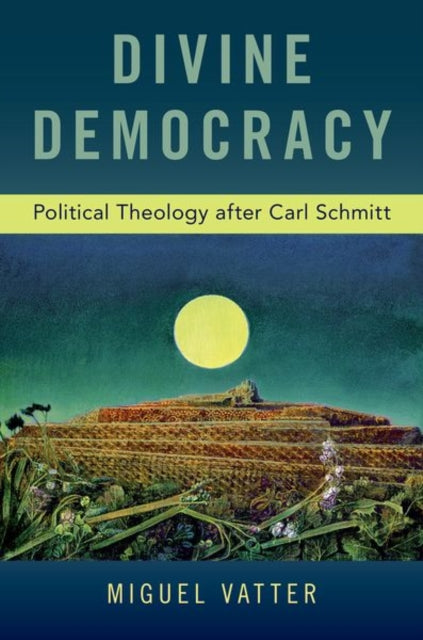
Divine Democracy: Political Theology after Carl Schmitt
Divine Democracy: Political Theology after Carl Schmitt
💎 Earn 165 Points (£1.65) on this item.
We can order this item for you. Delivery usually takes about 4 to 6 weeks.
This item is not held in our immediate stock. We will order it for you after checkout.
Estimated delivery: About 4 to 6 weeks
YOU SAVE £1.96
- Condition: Brand new
- UK Delivery times: Usually arrives within 2 - 3 working days
- UK Shipping: Fee starts at £2.39. Subject to product weight & dimension
Bulk ordering. Want 15 or more copies? Get a personalised quote and bigger discounts. Learn more about bulk orders.
Couldn't load pickup availability
- More about Divine Democracy: Political Theology after Carl Schmitt
The book "Political Theology in the 20th Century" by Miguel Vatter explores how anti-Schmittian thinkers adopted and repurposed the discourse of political theology to bolster the legitimacy of liberal democratic government. It shows how crucial political concepts for liberal democracy are transformed when they become part of a discourse on political theology, revealing the overdetermined role that religion plays in contemporary democratic political and legal theory as an ultimate source of legitimacy for government and as wellspring for revolutionary aspirations.
Format: Paperback / softback
Length: 304 pages
Publication date: 09 December 2020
Publisher: Oxford University Press Inc
The concepts of liberal democracy are deeply intertwined with secularism, a philosophical and political ideology that promotes the separation of religion and state. While liberal democracies have historically been influenced by religious traditions, they are designed to ensure that government decisions are made based on secular principles rather than religious beliefs.
The term "political theology" was first coined by Carl Schmitt in the 1920s to describe the relationship between modern Western jurisprudence and political science and Christian theological discourse. Schmitt argued that these fields were dependent on each other and that liberal institutions claimed to be religiously neutral, but in reality, they were deeply influenced by Christian values.
Miguel Vatter's book, "Political Theology in the 20th Century," explores how and why the discourse of political theology was adopted and repurposed by anti-Schmittian thinkers, including Eric Voegelin, Jacques Maritain, Ernst Kantorowicz, and Jürgen Habermas. These thinkers used political theology to bolster the legitimacy of liberal democratic government and to address the challenges posed by totalitarianism and fascism.
Vatter's book traces the way in which crucial political concepts for liberal democracy, such as sovereignty, representation, government, constitutionalism, human rights, and public reason, are transformed when they become part of a discourse on political theology. He argues that these concepts are not neutral or apolitical, but are deeply influenced by religious traditions and values.
For example, sovereignty is often understood as the ultimate authority of the state, but in a political theology context, it is also seen as a divine power that is granted to the state by God. Similarly, representation is seen as a means of ensuring that the voices of the people are heard in government, but in a political theology context, it is also seen as a way of representing the interests of God.
Vatter's study reveals the overdetermined role that religion plays in contemporary democratic political and legal theory as an ultimate source of legitimacy for government and as wellspring for revolutionary aspirations. He argues that while secularism is important for ensuring that government decisions are made based on secular principles, it cannot fully explain the origins and motivations of political movements.
In conclusion, the concepts of liberal democracy are deeply intertwined with secularism, a philosophical and political ideology that promotes the separation of religion and state. While liberal democracies have historically been influenced by religious traditions, they are designed to ensure that government decisions are made based on secular principles rather than religious beliefs. The discourse of political theology has played a significant role in shaping the political and legal concepts that underpin liberal democracy, but it is important to recognize the overdetermined role that religion plays in contemporary democratic political and legal theory.
Weight: 438g
Dimension: 156 x 236 x 21 (mm)
ISBN-13: 9780190942366
UK and International shipping information
UK and International shipping information
UK Delivery and returns information:
- Delivery within 2 - 3 days when ordering in the UK.
- Shipping fee for UK customers from £2.39. Fully tracked shipping service available.
- Returns policy: Return within 30 days of receipt for full refund.
International deliveries:
Shulph Ink now ships to Australia, Belgium, Canada, France, Germany, Ireland, Italy, India, Luxembourg Saudi Arabia, Singapore, Spain, Netherlands, New Zealand, United Arab Emirates, United States of America.
- Delivery times: within 5 - 10 days for international orders.
- Shipping fee: charges vary for overseas orders. Only tracked services are available for most international orders. Some countries have untracked shipping options.
- Customs charges: If ordering to addresses outside the United Kingdom, you may or may not incur additional customs and duties fees during local delivery.