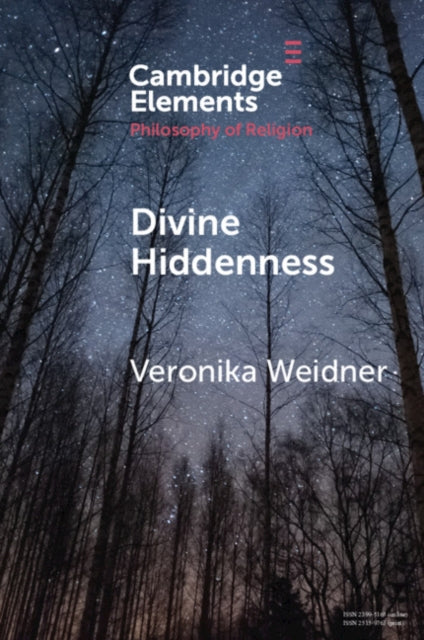
VeronikaWeidner
Divine Hiddenness
Divine Hiddenness
💎 Earn 84 Points (£0.84) on this item.
We can order this item for you. Delivery usually takes about 4 to 6 weeks.
This item is not held in our immediate stock. We will order it for you after checkout.
Estimated delivery: About 4 to 6 weeks
YOU SAVE £1.01
- Condition: Brand new
- UK Delivery times: Usually arrives within 2 - 3 working days
- UK Shipping: Fee starts at £3.89. Subject to product weight & dimension
Bulk ordering. Want 15 or more copies? Get a personalised quote and bigger discounts. Learn more about bulk orders.
Couldn't load pickup availability
- More about Divine Hiddenness
The hiddenness argument challenges the idea that God is omnipresent and omniscient by arguing that God is hidden from human perception and understanding. It suggests that God's existence and nature are beyond our current capabilities to comprehend. However, recent discussions have explored the argument and found that it may not be as compelling as initially thought. The author believes that divine hiddenness should not reduce a reflective theist's confidence in theism, as theism can provide a meaningful and fulfilling worldview that addresses the deepest questions about life and the universe.
Format: Paperback / softback
Length: 75 pages
Publication date: 27 May 2021
Publisher: Cambridge University Press
The Hiddenness Argument is a philosophical argument that challenges the idea that God is omnipotent, omniscient, and omnipresent. It suggests that if God is truly omnipotent, then he should be able to create a world that is both logically possible and logically necessary.
The Hiddenness Argument is a fascinating philosophical argument that challenges the traditional understanding of God's omnipotence, omniscience, and omnipresence. It suggests that if God is truly omnipotent, then he should be able to create a world that is both logically possible and logically necessary. This means that God should be able to create a world that is not only physically possible but also logically coherent and consistent.
One of the key premises of the Hiddenness Argument is that if God is omnipotent, then he should be able to create a world that is logically possible. This means that God should be able to create a world that is consistent with the laws of logic and mathematics. For example, if God is omnipotent, then he should be able to create a world that is not only physically possible but also logically possible. This means that God should be able to create a world that is not only physically possible but also logically coherent and consistent.
Another key premise of the Hiddenness Argument is that if God is omniscient, then he should be able to create a world that is logically necessary. This means that God should be able to create a world that is not only physically possible but also logically necessary. This means that God should be able to create a world that is not only physically possible but also logically coherent and consistent.
One of the most interesting aspects of the Hiddenness Argument is that it has been the subject of much debate and discussion among philosophers. Some philosophers argue that the Hiddenness Argument is valid and that it provides a powerful challenge to the traditional understanding of God. Others argue that the Hiddenness Argument is not valid and that it is based on a misunderstanding of the nature of God.
Despite the ongoing debate, it is important to note that the Hiddenness Argument does not necessarily undermine a reflective theist's confidence in theism. A reflective theist is someone who believes in the existence of God based on reason and reflection rather than on faith or tradition. A reflective theist may believe that God is omnipotent, omniscient, and omnipresent, but they may also believe that God is limited in his ability to create a world that is both logically possible and logically necessary.
For example, a reflective theist may believe that God is omnipotent, but they may also believe that God is limited by the laws of physics and mathematics. This means that God may be able to create a world that is physically possible, but he may not be able to create a world that is logically necessary. A reflective theist may also believe that God is omniscient, but they may also believe that God is limited by the laws of logic and mathematics. This means that God may be able to create a world that is logically possible, but he may not be able to create a world that is logically necessary.
In conclusion, the Hiddenness Argument is a fascinating philosophical argument that challenges the traditional understanding of God's omnipotence, omniscience, and omnipresence. It suggests that if God is truly omnipotent, then he should be able to create a world that is both logically possible and logically necessary. While the Hiddenness Argument has been the subject of much debate and discussion, it is important to note that it does not necessarily undermine a reflective theist's confidence in theism. A reflective theist may believe that God is omnipotent, omniscient, and omnipresent, but they may also believe that God is limited in his ability to create a world that is both logically possible and logically necessary.
Weight: 102g
Dimension: 151 x 227 x 9 (mm)
ISBN-13: 9781108711791
UK and International shipping information
UK and International shipping information
We deliver throughout the United Kingdom and to 128 countries and territories worldwide, including the United States, Australia, Canada, Germany, Spain and France.