Cecile Benoist
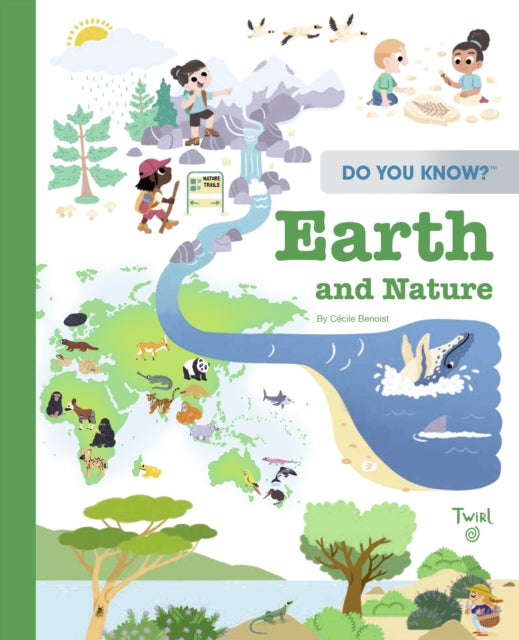
Do You Know?: Earth and Nature
Do You Know?: Earth and Nature
💎 Earn 45 Points (£0.45) on this item.
YOU SAVE £3.80
- Condition: Brand new
- UK Delivery times: Usually arrives within 2 - 3 working days
- UK Shipping: Fee starts at £2.39. Subject to product weight & dimension
Bulk ordering. Want 15 or more copies? Get a personalised quote and bigger discounts. Learn more about bulk orders.
Couldn't load pickup availability
- More about Do You Know?: Earth and Nature
The Earth's surface is made up of various natural resources, some of which are renewable. The time is not the same everywhere due to factors such as time zones and daylight saving time. The "Do You Know?"(TM) series is a collection of educational books for children that provide in-depth answers to popular questions about a wide range of subjects, including science, history, and culture.
Format: Hardback
Length: 96 pages
Publication date: 29 March 2022
Publisher: Tourbillon
The Earth's surface is a complex and fascinating blend of various elements, each contributing to its unique characteristics and composition. At the forefront, we find the solid crust, which forms the outer layer of the Earth and is composed primarily of silicate minerals such as quartz and feldspar. Beneath the crust lies a molten layer known as the mantle, which is responsible for the Earth's magnetic field and the movement of tectonic plates.
Moving deeper into the Earth, we encounter the core, a hot and dense region composed primarily of iron and nickel. The core plays a crucial role in generating the Earth's magnetic field and generating heat through radioactive decay.
In addition to these major components, the Earth's surface is also adorned with a diverse array of natural resources, including minerals, metals, and fossil fuels. These resources have been formed over millions of years through geological processes and are essential for human civilization and economic development.
One of the most significant renewable natural resources on Earth is water. Water is essential for all life forms and is replenished through a complex cycle of precipitation, evaporation, and runoff. However, human activities such as deforestation, pollution, and overuse of water resources have led to concerns about water scarcity and the sustainability of our water supply.
Another important renewable resource is solar energy. Solar panels can convert sunlight into electricity, providing a clean and renewable source of energy for homes, businesses, and communities. Solar energy is also becoming increasingly affordable and efficient, making it a viable alternative to traditional fossil fuels.
Despite the abundance of renewable natural resources on Earth, there are still challenges to overcome. One of the most significant is climate change, which is caused by human activities such as burning fossil fuels and deforestation. Climate change has led to rising temperatures, melting glaciers, and more frequent and severe natural disasters.
To address these challenges, it is essential to promote sustainable practices and reduce our reliance on non-renewable resources. This can include investing in renewable energy technologies, reducing waste and pollution, and promoting sustainable agriculture and forestry practices.
In conclusion, the Earth's surface is made up of a complex blend of elements, including the crust, mantle, core, and natural resources. Renewable natural resources such as water, solar energy, and minerals are essential for human civilization and economic development, but they must be managed sustainably to ensure their long-term availability. Climate change is a significant challenge that requires urgent action to promote sustainable practices and reduce our reliance on non-renewable resources. By working together, we can create a more sustainable and prosperous future for generations to come.
Earth's Surface Composition:
The Earth's surface is a complex and fascinating blend of various elements, each contributing to its unique characteristics and composition. At the forefront, we find the solid crust, which forms the outer layer of the Earth and is composed primarily of silicate minerals such as quartz and feldspar. Beneath the crust lies a molten layer known as the mantle, which is responsible for the Earth's magnetic field and the movement of tectonic plates.
Moving deeper into the Earth, we encounter the core, a hot and dense region composed primarily of iron and nickel. The core plays a crucial role in generating the Earth's magnetic field and generating heat through radioactive decay.
In addition to these major components, the Earth's surface is also adorned with a diverse array of natural resources, including minerals, metals, and fossil fuels. These resources have been formed over millions of years through geological processes and are essential for human civilization and economic development.
One of the most significant renewable natural resources on Earth is water. Water is essential for all life forms and is replenished through a complex cycle of precipitation, evaporation, and runoff. However, human activities such as deforestation, pollution, and overuse of water resources have led to concerns about water scarcity and the sustainability of our water supply.
Another important renewable resource is solar energy. Solar panels can convert sunlight into electricity, providing a clean and renewable source of energy for homes, businesses, and communities. Solar energy is also becoming increasingly affordable and efficient, making it a viable alternative to traditional fossil fuels.
Despite the abundance of renewable natural resources on Earth, there are still challenges to overcome. One of the most significant is climate change, which is caused by human activities such as burning fossil fuels and deforestation. Climate change has led to rising temperatures, melting glaciers, and more frequent and severe natural disasters.
To address these challenges, it is essential to promote sustainable practices and reduce our reliance on non-renewable resources. This can include investing in renewable energy technologies, reducing waste and pollution, and promoting sustainable agriculture and forestry practices.
In conclusion, the Earth's surface is made up of a complex blend of elements, including the crust, mantle, core, and natural resources. Renewable natural resources such as water, solar energy, and minerals are essential for human civilization and economic development, but they must be managed sustainably to ensure their long-term availability. Climate change is a significant challenge that requires urgent action to promote sustainable practices and reduce our reliance on non-renewable resources. By working together, we can create a more sustainable and prosperous future for generations to come.
Dimension: 241 x 203 (mm)
ISBN-13: 9782408033576
UK and International shipping information
UK and International shipping information
UK Delivery and returns information:
- Delivery within 2 - 3 days when ordering in the UK.
- Shipping fee for UK customers from £2.39. Fully tracked shipping service available.
- Returns policy: Return within 30 days of receipt for full refund.
International deliveries:
Shulph Ink now ships to Australia, Belgium, Canada, France, Germany, Ireland, Italy, India, Luxembourg Saudi Arabia, Singapore, Spain, Netherlands, New Zealand, United Arab Emirates, United States of America.
- Delivery times: within 5 - 10 days for international orders.
- Shipping fee: charges vary for overseas orders. Only tracked services are available for most international orders. Some countries have untracked shipping options.
- Customs charges: If ordering to addresses outside the United Kingdom, you may or may not incur additional customs and duties fees during local delivery.