Dr Shirly Bahar
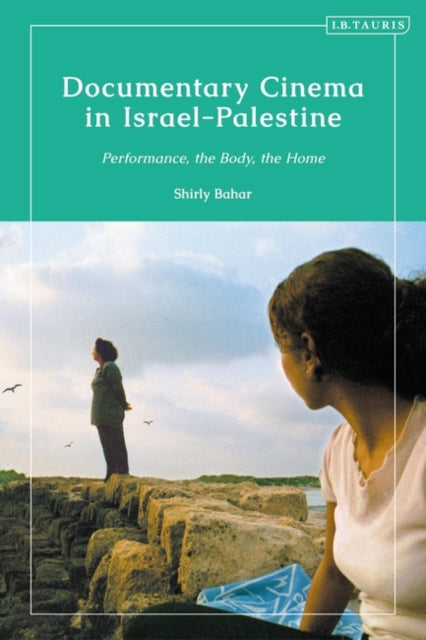
Documentary Cinema in Israel-Palestine: Performance, the Body, the Home
Documentary Cinema in Israel-Palestine: Performance, the Body, the Home
We can order this item for you. Delivery usually takes about 4 to 6 weeks.
This item is not held in our immediate stock. We will order it for you after checkout.
Estimated delivery: About 4 to 6 weeks
- Condition: Brand new
- UK Delivery times: Usually arrives within 2 - 3 working days
- UK Shipping: Fee starts at £3.89. Subject to product weight & dimension
Bulk ordering. Want 15 or more copies? Get a personalised quote and bigger discounts. Learn more about bulk orders.
Couldn't load pickup availability
- More about Documentary Cinema in Israel-Palestine: Performance, the Body, the Home
Shirly Bahar's book explores how Palestinians and Mizrahim perform their long-endured pain on screen, challenging the systemic removal of self-represented Palestinian and Mizrahi pain from mainstream media and the public realm. It analyzes key documentary films from the first decade of the 2000s, focusing on the relational nature of pain and inviting reconnection.
Format: Hardback
Length: 248 pages
Publication date: 29 July 2021
Publisher: Bloomsbury Publishing PLC
Alongside the surge in violence that accompanied the collapse of the Oslo era in the early 2000s, a new wave of documentaries emerged that focused on the historical and lived experiences of pain and oppression experienced by Palestinians and Mizrahims (Jews of Middle Eastern descent) across Israel-Palestine and beyond. These documentaries challenge the systematic exclusion of self-represented Palestinian and Mizrahi pain from mainstream media and the public realm dominated by Israel.
This book delves into how Palestinians and Mizrahim portray their long-endured pain on screen. By analyzing key documentary films from the first decade of the 2000s, Shirly Bahar offers a nuanced interpretation of the cinematic documentary corpus emerging from Israel-Palestine, as well as the distinct and unequal yet interconnected forms of oppression and racialization experienced by Palestinians and Mizrahim under Israeli rule. While pain sets them apart, the documentary representations of pain experienced by Palestinians and Mizrahim invite us to consider reconnection by emphasizing the relational nature of pain.
The Oslo era, which began in the late 1990s, was a period of hope and optimism for the future of Israel-Palestine. However, it was also marked by a rise in violence and instability, particularly in the West Bank and Gaza Strip. The collapse of the Oslo agreements in 2000 led to the emergence of a new political landscape, with the formation of the Palestinian Authority and the election of Mahmoud Abbas as the first Palestinian president.
However, the Oslo era also saw the emergence of a new wave of documentaries that focused on the experiences of Palestinians and Mizrahim. These documentaries challenged the dominant narrative of Israel as a victim of terrorism and the Palestinians as the oppressed and victimized people. They sought to provide a more nuanced and complex understanding of the conflict, highlighting the experiences of Palestinians and Mizrahim as well as their contributions to the history and culture of Israel.
One of the key themes of these documentaries was the experience of pain and oppression. Palestinians and Mizrahim had been subjected to decades of discrimination, violence, and displacement, and their pain was often ignored or marginalized by the mainstream media and the Israeli government. These documentaries sought to bring attention to the experiences of Palestinians and Mizrahim and to challenge the systemic removal of their pain from the public realm.
One of the most notable documentaries of this era was "The Road to Jenin," which was released in 2005. Directed by Israeli filmmaker Yael Hersonski, the film follows the journey of a Palestinian family as they attempt to escape the violence and oppression of the Israeli occupation in the West Bank. The film provides a powerful and emotional portrayal of the experiences of Palestinians and Mizrahim, highlighting the daily struggles and hardships they face as well as the resilience and determination they exhibit in the face of adversity.
Another notable documentary of this era was "The Law in These Parts," which was released in 2007. Directed by Israeli filmmaker Amos Gitai, the film follows the story of a Palestinian lawyer who is trying to defend a group of Palestinian prisoners who are accused of committing a terrorist attack. The film provides a nuanced and complex portrayal of the Israeli legal system and the ways in which it is used to oppress and marginalize Palestinians.
These documentaries were not without their critics, however. Some critics argued that they were too one-sided and that they did not provide a balanced or comprehensive understanding of the conflict. Others argued that they were too sympathetic to the Palestinians and that they ignored the contributions of Israelis to the conflict.
Despite these criticisms, the documentaries of the Oslo era were a significant milestone in the history of Israeli cinema. They challenged the dominant narrative of the conflict and provided a platform for the voices of Palestinians and Mizrahim to be heard. They also helped to promote a more nuanced and complex understanding of the conflict, which is essential for the hope of achieving a peaceful resolution.
In conclusion, the documentaries of the Oslo era were a powerful and important contribution to the history of Israeli cinema. They challenged the dominant narrative of the conflict and provided a platform for the voices of Palestinians and Mizrahim to be heard. They also helped to promote a more nuanced and complex understanding of the conflict, which is essential for the hope of achieving a peaceful resolution.
Weight: 540g
Dimension: 164 x 242 x 22 (mm)
ISBN-13: 9781838606824
UK and International shipping information
UK and International shipping information
We deliver throughout the United Kingdom and to 128 countries and territories worldwide, including the United States, Australia, Canada, Germany, Spain and France.