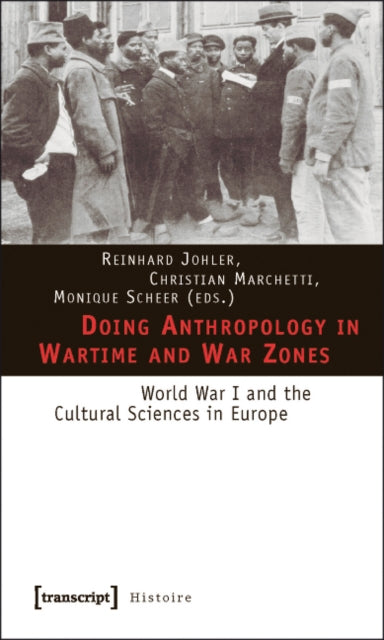
Reinhard Johler,Gina Marchetti,Monique Scheer
Doing Anthropology in Wartime and War Zones - World War I and the Cultural Sciences in Europe
Doing Anthropology in Wartime and War Zones - World War I and the Cultural Sciences in Europe
We can order this item for you. Delivery usually takes about 4 to 6 weeks.
This item is not held in our immediate stock. We will order it for you after checkout.
Estimated delivery: About 4 to 6 weeks
YOU SAVE £8.88
- Condition: Brand new
- UK Delivery times: Usually arrives within 2 - 3 working days
- UK Shipping: Fee starts at £3.89. Subject to product weight & dimension
Bulk ordering. Want 15 or more copies? Get a personalised quote and bigger discounts. Learn more about bulk orders.
Couldn't load pickup availability
- More about Doing Anthropology in Wartime and War Zones - World War I and the Cultural Sciences in Europe
This volume explores the impact of World War I on anthropology in Europe, including the emergence of distinct national traditions, collaborations with the military, and the use of war zones to access informants. It also examines how anthropologists contributed to interpretations of the war as a struggle between races and assessed the warlike nature of the Balkan region.
Format: Paperback / softback
Length: 392 pages
Publication date: 08 December 2021
Publisher: Transcript Verlag
Anthropology experienced a significant turning point during World War I, and this volume is the first to explore the diverse manifestations it took in Europe. As a result of partnerships with the military, distinct national traditions emerged, and institutes were established. Cultural scientists utilized war zones to gain access to informants, including prisoner-of-war and refugee camps, occupied territories, and even the front lines. Anthropologists tailored their inquiries to support the war effort, contributed to interpretations of the war as a conflict between races, and assessed the warlike nature of the Balkan region, which played a pivotal role in the outbreak of the Great War.
The war had a profound impact on anthropology, leading to the development of new fields and methodologies. One of the most significant developments was the use of fieldwork and participant observation, which allowed anthropologists to gain a deeper understanding of the cultures they studied. This approach was particularly useful in war zones, where anthropologists could observe the effects of war on people and communities firsthand.
Another important development was the rise of cultural relativism, which emphasized the importance of understanding and respecting the cultural practices and beliefs of different societies. This approach was particularly relevant in the context of World War I, where different nations were fighting each other based on their cultural differences. Anthropologists used their knowledge of different cultures to help negotiate peace agreements and promote understanding between the warring parties.
The war also led to the development of new theories and frameworks for analyzing culture. One of the most influential was the theory of cultural evolution, which proposed that cultures evolve through a process of natural selection. This theory was used by anthropologists to explain the differences between different cultures and to predict how they would evolve in the future.
In addition to these theoretical developments, the war also had a significant impact on the practice of anthropology. Many anthropologists were recruited by the military to conduct research on the cultures of the enemy countries. This work was often dangerous and difficult, but it provided valuable insights into the cultures and societies of the warring parties.
Overall, World War I was a transformative period for anthropology, leading to the development of new fields, methodologies, and theories. It also had a significant impact on the practice of anthropology, with many anthropologists being recruited by the military to conduct research on the cultures of the enemy countries. The war continues to be a topic of study for anthropologists today, as it provides a unique window into the complex and multifaceted nature of human societies.
Weight: 1250g
Dimension: 226 x 135 x 15 (mm)
ISBN-13: 9783837614220
UK and International shipping information
UK and International shipping information
We deliver throughout the United Kingdom and to 128 countries and territories worldwide, including the United States, Australia, Canada, Germany, Spain and France.