DanielAlati
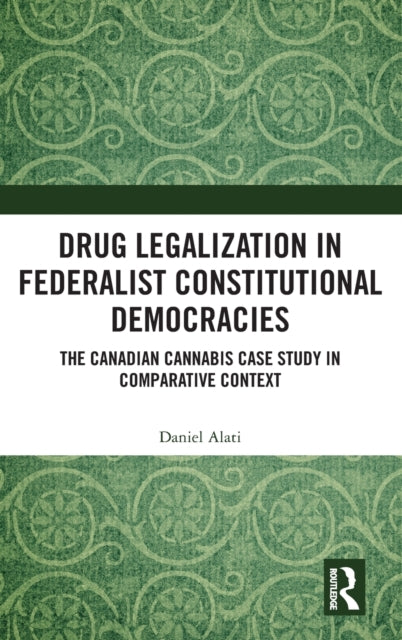
Drug Legalization in Federalist Constitutional Democracies: The Canadian Cannabis Case Study in Comparative Context
Drug Legalization in Federalist Constitutional Democracies: The Canadian Cannabis Case Study in Comparative Context
💎 Earn 811 Points (£8.11) on this item.
We can order this item for you. Delivery usually takes about 4 to 6 weeks.
This item is not held in our immediate stock. We will order it for you after checkout.
Estimated delivery: About 4 to 6 weeks
YOU SAVE £9.63
- Condition: Brand new
- UK Delivery times: Usually arrives within 2 - 3 working days
- UK Shipping: Fee starts at £2.39. Subject to product weight & dimension
Bulk ordering. Want 15 or more copies? Get a personalised quote and bigger discounts. Learn more about bulk orders.
Couldn't load pickup availability
- More about Drug Legalization in Federalist Constitutional Democracies: The Canadian Cannabis Case Study in Comparative Context
This book examines the Canadian cannabis legalization experiment, analyzing its historical context and international perspective. It provides a comprehensive history of Canada's federal drug policy and engages in a critical appraisal of its provincial implementation. It also presents a significant international and comparative component, analyzing the status of drug legalization in other federalist constitutional democracies. Readers will gain a comprehensive knowledge of drug legalization in federalist constitutional democracies and better understand the political and cultural factors that impact differential implementation of federal law.
Format: Hardback
Length: 200 pages
Publication date: 19 September 2022
Publisher: Taylor & Francis Ltd
This book delves into the Canadian cannabis legalization experiment, examining its historical context within the broader framework of drug criminalization in Canada and its significance on a global scale. Through a socio-legal, interdisciplinary approach, it offers a comprehensive history of Canada's federal drug policy, engaging in a critical appraisal of its provincial implementation. Moreover, it incorporates a significant international and comparative dimension, exploring the status of drug legalization in other federalist constitutional democracies. By providing readers with a comprehensive understanding of drug legalization in federalist constitutional democracies, the book aims to shed light on the political and cultural factors that influence the differential implementation of federal law across jurisdictions. It also analyzes and explains the future challenges and lessons to be learned for states considering federal drug legalization. This resource is invaluable for students, academics, and policy-makers in the fields of Criminal Law, Constitutional Law, Criminology, Socio-Legal Studies, Indigenous Studies, and Drug and Health Policy Studies.
The Canadian cannabis legalization experiment serves as a valuable case study, providing insights into the complex dynamics of federal law implementation within federalist constitutional democracies. By analyzing the experiment within the historical context of wider drug criminalization in Canada, the book offers a comprehensive examination of the lessons learned and challenges encountered during the process.
The book begins by exploring the historical background of drug criminalization in Canada, tracing its roots back to the 19th century when opium was introduced as a recreational drug. Over time, the government's response to drug use evolved, leading to the establishment of harsh laws and policies that targeted drug users and suppliers. The introduction of the Controlled Drugs and Substances Act in 1976 marked a significant milestone in Canada's drug policy, as it introduced a comprehensive regulatory framework for the production, distribution, and possession of controlled substances.
However, the experiment with cannabis legalization in Canada represents a departure from this traditional approach. In 2015, the federal government legalized recreational cannabis, making it the first country in the world to do so. The decision was driven by a variety of factors, including public support for legalization, medical evidence of its therapeutic benefits, and the desire to reduce the criminalization of drug users.
The book delves into the details of the Canadian cannabis legalization experiment, examining the regulatory framework established by the federal government and the provincial governments' responses to it. It explores the challenges and opportunities that emerged during the implementation process, including the need for education and awareness-raising, the potential for revenue generation, and the impact on public health and safety.
One of the key findings of the book is that the implementation of federal law in Canada has been influenced by a range of political and cultural factors. The legacy of racism and stigmatization of drug use has played a significant role in shaping the country's drug policy, leading to disparities in the enforcement of drug laws across different jurisdictions. The book also highlights the importance of recognizing and addressing these historical legacies in order to promote equity and fairness in the implementation of federal law.
Another important aspect of the book is its comparative analysis of the status of drug legalization in other federalist constitutional democracies. The author examines the experiences of countries such as the United States, Germany, and Australia, which have also legalized recreational cannabis or are considering doing so. The book explores the similarities and differences in the approaches taken by these countries, highlighting the factors that have influenced their decision-making processes and the challenges they have faced during the implementation process.
The book concludes by offering insights into the future challenges and lessons to be learned for states considering federal drug legalization. It emphasizes the importance of a comprehensive and evidence-based approach, the need for stakeholder engagement and collaboration, and the importance of addressing the social and economic consequences of drug legalization.
In conclusion, this book provides a valuable contribution to the literature on federal law implementation within federalist constitutional democracies. By examining the Canadian cannabis legalization experiment in the historical context of wider drug criminalization, it offers a comprehensive understanding of the lessons learned and challenges encountered during the process. The book's socio-legal, interdisciplinary approach provides a rich analysis of the political and cultural factors that influence the differential implementation of federal law, highlighting the need for equity and fairness in the implementation of federal law. The comparative analysis of other federalist constitutional democracies offers valuable insights into the potential benefits and challenges of drug legalization, and the book's conclusion provides valuable guidance for states considering federal drug legalization. This resource is invaluable for students, academics, and policy-makers in the fields of Criminal Law, Constitutional Law, Criminology, Socio-Legal Studies, Indigenous Studies, and Drug and Health Policy Studies.
Weight: 548g
Dimension: 234 x 156 (mm)
ISBN-13: 9781032061092
UK and International shipping information
UK and International shipping information
UK Delivery and returns information:
- Delivery within 2 - 3 days when ordering in the UK.
- Shipping fee for UK customers from £2.39. Fully tracked shipping service available.
- Returns policy: Return within 30 days of receipt for full refund.
International deliveries:
Shulph Ink now ships to Australia, Belgium, Canada, France, Germany, Ireland, Italy, India, Luxembourg Saudi Arabia, Singapore, Spain, Netherlands, New Zealand, United Arab Emirates, United States of America.
- Delivery times: within 5 - 10 days for international orders.
- Shipping fee: charges vary for overseas orders. Only tracked services are available for most international orders. Some countries have untracked shipping options.
- Customs charges: If ordering to addresses outside the United Kingdom, you may or may not incur additional customs and duties fees during local delivery.