Shulph Ink
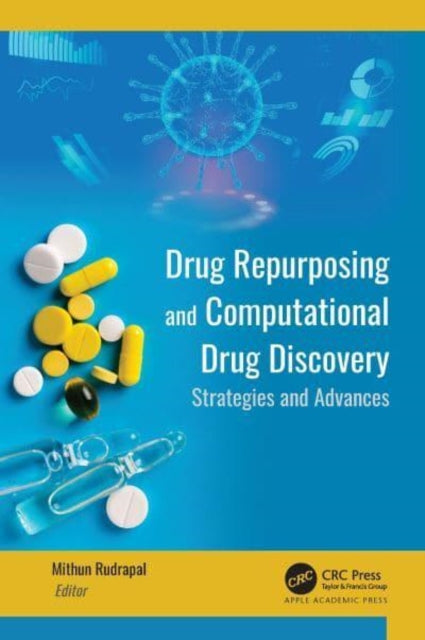
Drug Repurposing and Computational Drug Discovery: Strategies and Advances
Drug Repurposing and Computational Drug Discovery: Strategies and Advances
💎 Earn 693 Points (£6.93) on this item.
We can order this item for you. Delivery usually takes about 4 to 6 weeks.
This item is not held in our immediate stock. We will order it for you after checkout.
Estimated delivery: About 4 to 6 weeks
YOU SAVE £8.23
- Condition: Brand new
- UK Delivery times: Usually arrives within 2 - 3 working days
- UK Shipping: Fee starts at £2.39. Subject to product weight & dimension
Bulk ordering. Want 15 or more copies? Get a personalised quote and bigger discounts. Learn more about bulk orders.
Couldn't load pickup availability
- More about Drug Repurposing and Computational Drug Discovery: Strategies and Advances
Drug repurposing is a promising approach for developing new treatments for infectious diseases, malignant diseases, and rare and difficult-to-treat diseases. It involves finding new uses for existing drugs or compounds by screening them for different biological activities. This can be done through computational/database screening and experimental screening. Drug repurposing has the potential to be cost-effective and efficient, as it can avoid the need for costly and time-consuming drug development. However, there are legal regulations and ramifications to consider, such as ensuring the safety and efficacy of repurposed drugs.
Format: Hardback
Length: 274 pages
Publication date: 27 October 2023
Publisher: Apple Academic Press Inc.
Drug repurposing, a promising approach in drug discovery, involves the identification and development of new uses for existing drugs. This strategy has gained significant attention in recent years due to its potential to revolutionize healthcare by providing cost-effective and efficient treatments for a wide range of diseases.
One of the key advantages of drug repurposing is its ability to accelerate the drug development process. By leveraging the knowledge and understanding of existing drugs, researchers can quickly identify potential new indications and target populations for these drugs. This can save valuable time and resources compared to the traditional drug discovery process, which can be costly and time-consuming.
Drug repurposing has the potential to treat a wide range of diseases, including infectious illnesses, malignant diseases, and rare and difficult-to-treat diseases. For example, drugs that have been used to treat bacterial infections, such as antibiotics, may also be effective against certain types of cancer. Similarly, drugs that have been used to treat cardiovascular diseases may also be useful in the treatment of neurological disorders such as Alzheimer's disease.
Drug discovery approaches using natural sources, phytochemicals, synthetic derivatives, existing drugs, or lead molecules by computational/database screening and experimental screening are also being explored. These approaches offer the potential to discover new drugs with unique properties and mechanisms of action.
However, drug repurposing is not without its challenges. One of the main challenges is the lack of robust clinical data and regulatory approval for new indications. This can make it difficult for researchers to develop and commercialize new treatments based on repurposed drugs. Additionally, there are concerns about the safety and efficacy of repurposed drugs, particularly when used in new populations or for new indications.
To address these challenges, there are ongoing efforts to develop regulatory frameworks and guidelines that will facilitate drug repurposing. These efforts include the development of novel drug discovery platforms, such as precision medicine, which can tailor treatments to individual patients based on their genetic makeup and disease characteristics.
In conclusion, drug repurposing is a promising approach in drug discovery that has the potential to revolutionize healthcare by providing cost-effective and efficient treatments for a wide range of diseases. While there are challenges to be addressed, ongoing efforts to develop regulatory frameworks and guidelines will help to facilitate drug repurposing and ensure the safety and efficacy of new treatments.
Weight: 700g
Dimension: 234 x 156 (mm)
ISBN-13: 9781774912775
UK and International shipping information
UK and International shipping information
UK Delivery and returns information:
- Delivery within 2 - 3 days when ordering in the UK.
- Shipping fee for UK customers from £2.39. Fully tracked shipping service available.
- Returns policy: Return within 30 days of receipt for full refund.
International deliveries:
Shulph Ink now ships to Australia, Belgium, Canada, France, Germany, Ireland, Italy, India, Luxembourg Saudi Arabia, Singapore, Spain, Netherlands, New Zealand, United Arab Emirates, United States of America.
- Delivery times: within 5 - 10 days for international orders.
- Shipping fee: charges vary for overseas orders. Only tracked services are available for most international orders. Some countries have untracked shipping options.
- Customs charges: If ordering to addresses outside the United Kingdom, you may or may not incur additional customs and duties fees during local delivery.