Monica DuffyToft,SiditaKushi
Dying by the Sword: The Militarization of US Foreign Policy
Dying by the Sword: The Militarization of US Foreign Policy
💎 Earn 103 Points (£1.03) on this item.
YOU SAVE £1.23
- Condition: Brand new
- UK Delivery times: Usually arrives within 2 - 3 working days
- UK Shipping: Fee starts at £2.39. Subject to product weight & dimension
Bulk ordering. Want 15 or more copies? Get a personalised quote and bigger discounts. Learn more about bulk orders.
Couldn't load pickup availability
- More about Dying by the Sword: The Militarization of US Foreign Policy
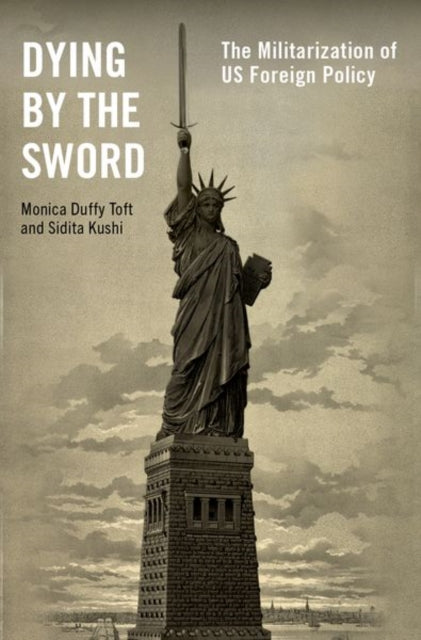
Dying by the Sword examines the US's increasing reliance on kinetic global diplomacy from the Founding era to the present, warning that if it continues, it could damage its diplomatic corps and lead to costly wars of choice.
Format: Hardback
Length: 296 pages
Publication date: 26 July 2023
Publisher: Oxford University Press Inc
Dying by the Sword delves into the intricate tapestry of US foreign policies, spanning from the Founding era to the present, with a fervent mission to raise an alarm about the United States' growing dependence on kinetic global diplomacy. In their insightful exploration, Monica Duffy Toft and Sidita Kushi uncover a concerning trend: since the end of the Cold War and particularly in the aftermath of 9/11, the US has initiated a surge in military interventions, dramatically increasing its use of force abroad. Lacking clear and well-defined national strategic goals, the US now operates on a reactive and fragmented security policy, more akin to a game of whack-a-mole than a well-thought-out strategy.
This book embarks on a comprehensive journey through every major era of US foreign policy, seamlessly merging historical narrative with captivating anecdotes from esteemed US foreign policy officials. It also incorporates compelling case studies and evidence gleaned from the Military Intervention Project (MIP), a groundbreaking initiative that meticulously measures the extent of US reliance on force. Through these diverse sources, the book sheds light on the intricate ways in which the US has employed and carefully balanced its primary tools of statecraft—war, trade, and diplomacy—to achieve its objectives.
However, what emerges is a sobering realization: in recent decades, the US has increasingly favored the use of force over the other pillars of statecraft. This shift has led to a concerning imbalance, as the country's diplomatic corps faces mounting challenges and risks. The book concludes with a fervent warning that if the US fails to reduce its reliance on kinetic diplomacy, it may inflict irreparable damage to its diplomatic corps and condemn itself to costly wars of choice. This trend, if allowed to persist, could have far-reaching consequences for the US's image, credibility, and ultimately its ability to contribute to international stability.
The consequences of such a trajectory are indeed dire. The US's reputation as a global leader would be tarnished, as its actions would be perceived as unilateral and driven by military might rather than by the principles of diplomacy and cooperation. This would undermine the country's ability to forge meaningful alliances and engage in constructive dialogue with other nations, ultimately hindering its efforts to address global challenges and promote peace.
Furthermore, the increased use of force would exacerbate regional tensions and conflicts, leading to a cycle of violence and instability. The US's military interventions, often aimed at achieving narrow political objectives, may inadvertently exacerbate existing conflicts and create new ones, further destabilizing the already fragile global landscape. This would not only harm the interests of the US but also have far-reaching consequences for the broader international community.
In conclusion, Dying by the Sword serves as a poignant reminder of the critical importance of a balanced and strategic approach to foreign policy. The US must reassess its reliance on force and prioritize the cultivation of diplomatic skills, cooperation, and understanding. By reducing its dependence on kinetic diplomacy and embracing a more nuanced and inclusive approach, the US can restore its credibility, strengthen its alliances, and play a vital role in maintaining international stability. The time for introspection and change is now, as the consequences of a continued reliance on force could be catastrophic for the US and the world at large.
Dimension: 235 x 156 (mm)
ISBN-13: 9780197581438
UK and International shipping information
UK and International shipping information
UK Delivery and returns information:
- Delivery within 2 - 3 days when ordering in the UK.
- Shipping fee for UK customers from £2.39. Fully tracked shipping service available.
- Returns policy: Return within 30 days of receipt for full refund.
International deliveries:
Shulph Ink now ships to Australia, Belgium, Canada, France, Germany, Ireland, Italy, India, Luxembourg Saudi Arabia, Singapore, Spain, Netherlands, New Zealand, United Arab Emirates, United States of America.
- Delivery times: within 5 - 10 days for international orders.
- Shipping fee: charges vary for overseas orders. Only tracked services are available for most international orders. Some countries have untracked shipping options.
- Customs charges: If ordering to addresses outside the United Kingdom, you may or may not incur additional customs and duties fees during local delivery.