KerenArbel
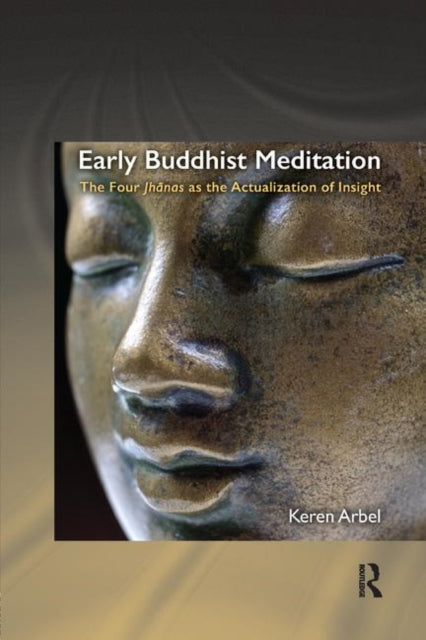
Early Buddhist Meditation: The Four Jhanas as the Actualization of Insight
Early Buddhist Meditation: The Four Jhanas as the Actualization of Insight
💎 Earn 254 Points (£2.54) on this item.
We can order this item for you. Delivery usually takes about 4 to 6 weeks.
This item is not held in our immediate stock. We will order it for you after checkout.
Estimated delivery: About 4 to 6 weeks
YOU SAVE £3.03
- Condition: Brand new
- UK Delivery times: Usually arrives within 2 - 3 working days
- UK Shipping: Fee starts at £3.89. Subject to product weight & dimension
Bulk ordering. Want 15 or more copies? Get a personalised quote and bigger discounts. Learn more about bulk orders.
Couldn't load pickup availability
- More about Early Buddhist Meditation: The Four Jhanas as the Actualization of Insight
This book offers a fresh perspective on the relationship between insight practice (satipatthana) and the attainment of the four jhànas (right samàdhi) in Buddhist meditation. It challenges the traditional understanding of the four jhànas as states of absorption and demonstrates how they are the actualization and embodiment of insight (vipassanà). The author proposes that the four jhànas and vipassanà are integral dimensions of a single process that leads to awakening. This book provides a comprehensive analysis of the fourfold jhàna model independently from traditional interpretations, presenting a model that speaks in the Nikàyas' distinct voice. It shows that the distinction between the practice of serenity (samatha-bhàvanà) and the practice of insight (vipassanà-bhàvanà) is not applicable to early Buddhist understanding of the meditative path. The book aims to reveal the relationship between the jhànas and insight meditation by carefully analyzing the descriptions of the four jhànas in the early Buddhist texts in Pàli, their contexts, associations, and meanings within the conceptual framework of early Buddhism.
\n Format: Paperback / softback
\n Length: 236 pages
\n Publication date: 27 September 2018
\n Publisher: Taylor & Francis Ltd
\n
This book presents a groundbreaking new interpretation of the relationship between insight practice (satipatthana) and the attainment of the four jhànas (i.e., right samàdhi), a central problem in the study of Buddhist meditation. The author challenges the traditional Buddhist understanding of the four jhànas as states of absorption and demonstrates how these states are the actualization and embodiment of insight (vipassanà). It proposes that the four jhànas and what we call vipassanà are integral dimensions of a single process that leads to awakening.
Current literature on the phenomenology of the four jhànas and their relationship with the practice of insight has mostly repeated traditional Theravàda interpretations. To date, no one has offered a comprehensive analysis of the fourfold jhàna model independently from traditional interpretations. This book fills that gap. It presents a model that speaks in the Nikàyas' distinct voice. It demonstrates that the distinction between the practice of serenity (samatha-bhàvanà) and the practice of insight (vipassanà-bhàvanà), a fundamental distinction in Buddhist meditation theory, is not applicable to the early Buddhist understanding of the meditative path. It seeks to show that the common interpretation of the jhànas as altered states of consciousness, absorptions that do not reveal anything about the nature of phenomena, is incompatible with the teachings of the Pàli Nikàyas.
By carefully analyzing the descriptions of the four jhànas in the early Buddhist texts in Pàli, their contexts, associations, and meanings within the conceptual framework of early Buddhism, the relationship between this central element in the Buddhist path and insight meditation becomes revealed in all its power.
Early Buddhist texts provide rich descriptions of the four jhànas, which are essential stages on the path to awakening. The first jhàna, the sanna, is characterized by a sense of calm and tranquility, achieved through the cultivation of mindfulness and concentration. The second jhàna, the dhyana, involves the deepening of concentration and the development of mental clarity, leading to the perception of subtle phenomena and the recognition of their impermanence. The third jhàna, the pana, is characterized by a state of profound absorption and concentration, where the mind is completely absorbed in the object of meditation, leading to the dissolution of the sense of self and the experience of pure consciousness. The fourth jhàna, the nibbāna, is the ultimate goal of Buddhist meditation, achieved through the complete extinction of all mental activity and the attainment of a state of absolute enlightenment.
The relationship between the four jhànas and the practice of insight is crucial in understanding the Buddhist path to awakening. The jhànas are not merely states of absorption or altered states of consciousness, but they are the actualization and embodiment of insight. Insight is the understanding of the true nature of phenomena, including the impermanence, suffering, and non-self of all things. By cultivating the four jhànas, the practitioner develops the necessary skills and qualities to attain insight, which leads to the ultimate liberation from suffering.
The author of this book proposes a novel interpretation of the four jhànas based on a close analysis of the early Buddhist texts in Pàli. They argue that the traditional distinction between the practice of serenity and the practice of insight is not applicable to the early Buddhist understanding of the meditative path. Instead, they suggest that the four jhànas are integral dimensions of a single process that leads to awakening. The jhànas are not merely stages of meditation, but they are the actualization and embodiment of insight.
The author also challenges the common interpretation of the jhànas as altered states of consciousness, absorptions that do not reveal anything about the nature of phenomena. They argue that the jhànas are not merely mental states or experiences, but they are the actualization and embodiment of insight. Insight is the understanding of the true nature of phenomena, including the impermanence, suffering, and non-self of all things. By cultivating the four jhànas, the practitioner develops the necessary skills and qualities to attain insight, which leads to the ultimate liberation from suffering.
The book also provides a comprehensive analysis of the relationship between the four jhànas and the practice of insight within the conceptual framework of early Buddhism. The author argues that the jhànas are not merely mental states or experiences, but they are the actualization and embodiment of insight. Insight is the understanding of the true nature of phenomena, including the impermanence, suffering, and non-self of all things. By cultivating the four jhànas, the practitioner develops the necessary skills and qualities to attain insight, which leads to the ultimate liberation from suffering.
In conclusion, this book offers a groundbreaking new interpretation of the relationship between insight practice and the attainment of the four jhànas. The author challenges the traditional Buddhist understanding of the four jhànas as states of absorption and demonstrates how these states are the actualization and embodiment of insight. They propose that the four jhànas and what we call vipassanà are integral dimensions of a single process that leads to awakening. By carefully analyzing the descriptions of the four jhànas in the early Buddhist texts in Pàli, their contexts, associations, and meanings within the conceptual framework of early Buddhism, the relationship between this central element in the Buddhist path and insight meditation becomes revealed in all its power. This book is a valuable resource for anyone interested in Buddhist meditation and the path to awakening.
\n Weight: 366g\n
Dimension: 234 x 155 x 21 (mm)\n
ISBN-13: 9780367111373\n \n
UK and International shipping information
UK and International shipping information
We deliver throughout the United Kingdom and to 128 countries and territories worldwide, including the United States, Australia, Canada, Germany, Spain and France.