Shulph Ink
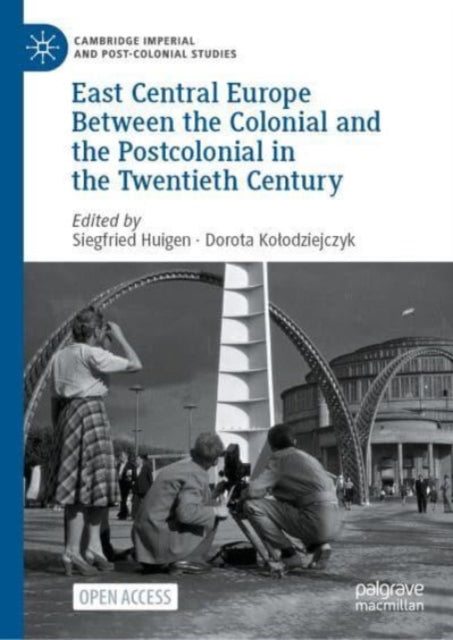
East Central Europe Between the Colonial and the Postcolonial in the Twentieth Century
East Central Europe Between the Colonial and the Postcolonial in the Twentieth Century
💎 Earn 144 Points (£1.44) on this item.
We can order this item for you. Delivery usually takes about 4 to 6 weeks.
This item is not held in our immediate stock. We will order it for you after checkout.
Estimated delivery: About 4 to 6 weeks
YOU SAVE £6.09
- Condition: Brand new
- UK Delivery times: Usually arrives within 2 - 3 working days
- UK Shipping: Fee starts at £2.39. Subject to product weight & dimension
Bulk ordering. Want 15 or more copies? Get a personalised quote and bigger discounts. Learn more about bulk orders.
Couldn't load pickup availability
- More about East Central Europe Between the Colonial and the Postcolonial in the Twentieth Century
This open-access book examines the ambiguity of East Central Europe during the twentieth century, comparing local contexts through a transnational reworking of postcolonial studies theoretical models. It explores how cultural and literary narratives have created and revised historical knowledge, using collective memory to feed into identity models.
Format: Paperback / softback
Length: 265 pages
Publication date: 17 March 2023
Publisher: Springer International Publishing AG
This expansive open-access book delves into the complexities of East Central Europe during the twentieth century, undertaking a comparative and transnational reworking of theoretical models in postcolonial studies to unravel the region's multifaceted identity. Since the early modern era, East Central Europe has undeniably been a subject of imperialism, yet it has also been observed as a hub of colonial activity, with individuals from the region frequently embracing colonial discourses in contexts beyond Europe. Spanning a vast expanse of time, from the pre-World War II era to the aftermath of the Second World War, the book explores how cultural and literary narratives from East Central Europe have shaped and revised historical knowledge, utilizing collective memory to inform identity models.
The book's exploration of East Central Europe's ambiguous identity is rooted in its historical context. The region has been a crossroads of empires, cultures, and ideologies, with a complex history of colonization and resistance. From the Habsburg Empire to the Soviet Union, East Central Europe has been a site of political, economic, and cultural domination, leaving a lasting impact on its people and culture.
However, the book also highlights the resilience and creativity of East Central Europe's people. Despite the hardships and oppression they have faced, East Central Europeans have developed a rich cultural heritage that reflects their unique experiences and struggles. From literature and music to art and cuisine, East Central Europe has produced some of the most influential and innovative works in the world.
The book's comparative and transnational approach is key to its understanding of East Central Europe's identity. By examining the region through the lens of postcolonial studies, the book seeks to understand how cultural and historical narratives have been shaped by imperialism, colonialism, and nationalism. It also explores how these narratives have been used to construct and revise identity models, both within and outside of East Central Europe.
One of the book's most significant contributions is its use of collective memory to understand the complexities of East Central Europe's identity. Collective memory is the shared memory of a group of people about a particular event or period in their history. It is often shaped by social, political, and cultural factors, and can be used to reinforce or challenge dominant narratives.
The book examines how collective memory has been used in East Central Europe to shape historical knowledge and identity. It explores how cultural and literary narratives have been used to construct and revise historical knowledge, and how these narratives have been used to feed into identity models. For example, the book discusses how the legacy of communism has been used to shape East Central Europe's identity, both within and outside of the region.
The book also explores how cultural and literary narratives have been used to challenge dominant narratives and promote alternative perspectives. For example, the book discusses how the works of authors such as Franz Kafka and János Arany have been used to challenge the dominant narrative of communism and promote a more nuanced understanding of the region's history.
In conclusion, this open-access book is a valuable contribution to the study of East Central Europe's identity. By undertaking a comparative and transnational reworking of theoretical models in postcolonial studies, the book provides a rich and nuanced understanding of the region's history and culture. Through its use of collective memory, the book challenges dominant narratives and promotes alternative perspectives, helping to shape a more inclusive and accurate understanding of East Central Europe's past and present.
Weight: 371g
Dimension: 210 x 148 (mm)
ISBN-13: 9783031174896
Edition number: 1st ed. 2023
This item can be found in:
UK and International shipping information
UK and International shipping information
UK Delivery and returns information:
- Delivery within 2 - 3 days when ordering in the UK.
- Shipping fee for UK customers from £2.39. Fully tracked shipping service available.
- Returns policy: Return within 30 days of receipt for full refund.
International deliveries:
Shulph Ink now ships to Australia, Belgium, Canada, France, Germany, Ireland, Italy, India, Luxembourg Saudi Arabia, Singapore, Spain, Netherlands, New Zealand, United Arab Emirates, United States of America.
- Delivery times: within 5 - 10 days for international orders.
- Shipping fee: charges vary for overseas orders. Only tracked services are available for most international orders. Some countries have untracked shipping options.
- Customs charges: If ordering to addresses outside the United Kingdom, you may or may not incur additional customs and duties fees during local delivery.