Shulph Ink
Eastern Metis: Chronicling and Reclaiming a Denied Past
Eastern Metis: Chronicling and Reclaiming a Denied Past
💎 Earn 584 Points (£5.84) on this item.
We can order this item for you. Delivery usually takes about 4 to 6 weeks.
This item is not held in our immediate stock. We will order it for you after checkout.
Estimated delivery: About 4 to 6 weeks
- Condition: Brand new
- UK Delivery times: Usually arrives within 2 - 3 working days
- UK Shipping: Fee starts at £2.39. Subject to product weight & dimension
Bulk ordering. Want 15 or more copies? Get a personalised quote and bigger discounts. Learn more about bulk orders.
Couldn't load pickup availability
- More about Eastern Metis: Chronicling and Reclaiming a Denied Past
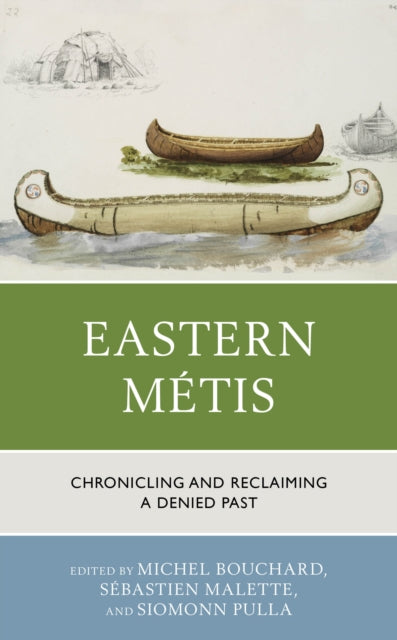
Eastern Métis challenges dominant nationalist narratives and provides a rich and nuanced view of what it means to be Métis, exploring the archival and historical record to demonstrate the origins and continued existence of Métis communities across Ontario, the Canadian Maritimes, and the West.
Format: Hardback
Length: 372 pages
Publication date: 01 March 2021
Publisher: Lexington Books
Eastern Métis is a subject that has faced significant criticism and debate, with many people questioning its authenticity, its impact on race relations, and its cultural appropriation. However, there is a growing body of historical and social evidence that demonstrates the origins and continued existence of Métis communities across Ontario, the Canadian Maritimes, and the West. In this volume, a group of authors takes a critical look at the archival and historical record, challenging dominant nationalist tropes that exclude the possibility of legitimate Métis communities and identities in central and eastern Canada.
The authors adopt a continental rhizomatic approach, which allows them to explore the complex and interconnected relationships between Métis communities across different regions. This approach provides a rich and nuanced view of what it means to be Métis, highlighting the diverse experiences and perspectives of Métis individuals and communities.
One of the key themes that emerges from the book is the historical and political marginalization of Métis communities. The authors argue that Métis people have been subjected to a range of discriminatory practices, including forced relocation, segregation, and discrimination in education and employment. These practices have contributed to the ongoing struggles of Métis communities to assert their identity and claim their rightful place in Canadian society.
Another important theme is the cultural diversity and resilience of Métis communities. The authors highlight the many different traditions, languages, and practices that are shared by Métis communities, and how these traditions have been adapted and transformed over time to survive and thrive in a changing world. This cultural diversity is a testament to the resilience and adaptability of Métis people, and it demonstrates the importance of recognizing and valuing the diverse contributions of all Canadian communities.
The book also explores the ongoing struggles of Métis communities to assert their rights and claim their place in Canadian society. The authors argue that Métis people have been historically excluded from many of the benefits and opportunities that are available to other Canadians, and that this exclusion has contributed to the ongoing marginalization of Métis communities.
To address these challenges, the authors suggest a range of policy and social interventions that can support the development and recognition of Métis communities. These interventions include the recognition of Métis rights and the creation of a Métis-specific legal framework, the promotion of Métis cultural education and awareness, and the development of community-based initiatives that support Métis economic and social development.
In conclusion, Eastern Métis is a subject that requires careful consideration and analysis. This volume provides a valuable contribution to the ongoing debate about the origins, identity, and future of Métis communities in Canada. By challenging dominant nationalist tropes and promoting a more inclusive and nuanced understanding of Métis history and culture, the authors hope to contribute to the ongoing efforts to promote social justice and equality for all Canadian communities.
Introduction:
Eastern Métis is a subject that has faced significant criticism and debate, with many people questioning its authenticity, its impact on race relations, and its cultural appropriation. However, there is a growing body of historical and social evidence that demonstrates the origins and continued existence of Métis communities across Ontario, the Canadian Maritimes, and the West. In this volume, a group of authors takes a critical look at the archival and historical record, challenging dominant nationalist tropes that exclude the possibility of legitimate Métis communities and identities in central and eastern Canada.
The Historical and Political Marginalization of Métis Communities:
One of the key themes that emerges from the book is the historical and political marginalization of Métis communities. The authors argue that Métis people have been subjected to a range of discriminatory practices, including forced relocation, segregation, and discrimination in education and employment. These practices have contributed to the ongoing struggles of Métis communities to assert their identity and claim their rightful place in Canadian society.
The historical marginalization of Métis communities can be traced back to the arrival of European settlers in North America. Métis people are the descendants of Indigenous women and European men, and they emerged as a result of the intermingling of these two groups. However, Métis people were often viewed as a threat to the stability and security of European-Canadian society, and they were subjected to a range of discriminatory policies and practices.
For example, in the 18th and 19th centuries, the Canadian government implemented policies that forced Métis people to relocate to designated reserves. These reserves were often located in remote and isolated areas, and they were designed to isolate Métis people from their traditional lands and cultures. The conditions on these reserves were often harsh, and Métis people were subjected to a range of social and economic disadvantages, including poverty, poor health, and limited access to education and employment opportunities.
In addition to forced relocation, Métis people were also subjected to segregation and discrimination in education and employment. Métis children were often excluded from mainstream schools and were forced to attend segregated schools that were designed to educate them in a way that was consistent with European-Canadian values and traditions. Métis adults were also often excluded from mainstream employment opportunities and were forced to work in low-paying and unskilled jobs that were not consistent with their skills and qualifications.
The historical and political marginalization of Métis communities has had a significant impact on their identity and sense of belonging. Métis people have often felt disconnected from their traditional lands and cultures, and they have struggled to assert their identity and claim their rightful place in Canadian society. This has contributed to the ongoing struggles of Métis communities to assert their rights and claim their place in Canadian society.
The Cultural Diversity and Resilience of Métis Communities:
Another important theme that emerges from the book is the cultural diversity and resilience of Métis communities. The authors highlight the many different traditions, languages, and practices that are shared by Métis communities, and how these traditions have been adapted and transformed over time to survive and thrive in a changing world. This cultural diversity is a testament to the resilience and adaptability of Métis people, and it demonstrates the importance of recognizing and valuing the diverse contributions of all Canadian communities.
Métis communities are characterized by a rich and diverse cultural heritage that is influenced by a range of different factors, including Indigenous traditions, European traditions, and the experiences of Métis people themselves. Métis communities have developed a range of unique traditions and practices that are unique to their communities, including traditional music, dance, and storytelling. These traditions are often passed down from generation to generation and are an important part of Métis identity and culture.
In addition to their cultural traditions, Métis communities are also characterized by a strong sense of community and social support. Métis people are known for their strong sense of family and community, and they often rely on each other for support and assistance in times of need. Métis communities also have a strong tradition of volunteerism and community service, and they are often involved in a range of different community-based initiatives that support their communities and promote social justice.
Despite the challenges that Métis communities have faced, they have demonstrated a remarkable ability to adapt and thrive in a changing world. Métis people have been able to maintain their cultural traditions and practices while also embracing new technologies and opportunities for social and economic development. Métis communities have also been involved in a range of different advocacy and activism efforts that have aimed to promote their rights and claim their place in Canadian society.
The Ongoing Struggles of Métis Communities to Assert Their Rights and Claim Their Place in Canadian Society:
However, despite the cultural diversity and resilience of Métis communities, they continue to face ongoing struggles to assert their rights and claim their place in Canadian society. The authors argue that Métis people have been historically excluded from many of the benefits and opportunities that are available to other Canadians, and that this exclusion has contributed to the ongoing marginalization of Métis communities.
One of the key challenges that Métis communities face is the lack of recognition and recognition of their rights. Métis people have been historically denied access to many of the benefits and opportunities that are available to other Canadians, including access to education, healthcare, and housing. Métis people have also been denied access to many of the rights and benefits that are available to other Indigenous peoples, including the right to self-determination and the right to participate in decision-making processes that affect their communities.
In addition to the lack of recognition and recognition of their rights, Métis communities also face a range of other challenges. Métis people are often subjected to discrimination and prejudice in a range of different contexts, including education, employment, and housing. Métis people are also often excluded from many of the social and cultural events that are available to other Canadians, including sports events, cultural events, and community events.
To address these challenges, the authors suggest a range of policy and social interventions that can support the development and recognition of Métis communities. These interventions include the recognition of Métis rights and the creation of a Métis-specific legal framework, the promotion of Métis cultural education and awareness, and the development of community-based initiatives that support Métis economic and social development.
Conclusion:
In conclusion, Eastern Métis is a subject that requires careful consideration and analysis. This volume provides a valuable contribution to the ongoing debate about the origins, identity, and future of Métis communities in Canada. By challenging dominant nationalist tropes and promoting a more inclusive and nuanced understanding of Métis history and culture, the authors hope to contribute to the ongoing efforts to promote social justice and equality for all Canadian communities.
Weight: 690g
Dimension: 235 x 158 x 28 (mm)
ISBN-13: 9781793605436
UK and International shipping information
UK and International shipping information
UK Delivery and returns information:
- Delivery within 2 - 3 days when ordering in the UK.
- Shipping fee for UK customers from £2.39. Fully tracked shipping service available.
- Returns policy: Return within 30 days of receipt for full refund.
International deliveries:
Shulph Ink now ships to Australia, Belgium, Canada, France, Germany, Ireland, Italy, India, Luxembourg Saudi Arabia, Singapore, Spain, Netherlands, New Zealand, United Arab Emirates, United States of America.
- Delivery times: within 5 - 10 days for international orders.
- Shipping fee: charges vary for overseas orders. Only tracked services are available for most international orders. Some countries have untracked shipping options.
- Customs charges: If ordering to addresses outside the United Kingdom, you may or may not incur additional customs and duties fees during local delivery.