Shulph Ink
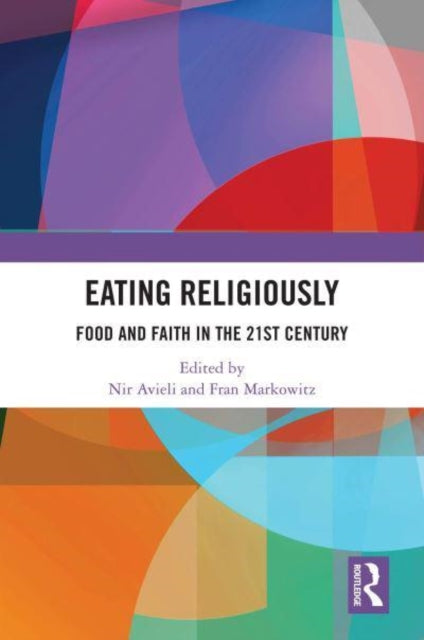
Eating Religiously: Food and Faith in the 21st Century
Eating Religiously: Food and Faith in the 21st Century
💎 Earn 811 Points (£8.11) on this item.
We can order this item for you. Delivery usually takes about 4 to 6 weeks.
This item is not held in our immediate stock. We will order it for you after checkout.
Estimated delivery: About 4 to 6 weeks
YOU SAVE £9.63
- Condition: Brand new
- UK Delivery times: Usually arrives within 2 - 3 working days
- UK Shipping: Fee starts at £2.39. Subject to product weight & dimension
Bulk ordering. Want 15 or more copies? Get a personalised quote and bigger discounts. Learn more about bulk orders.
Couldn't load pickup availability
- More about Eating Religiously: Food and Faith in the 21st Century
This book explores the intersections of food,faith,and society in the 21st century, offering a fresh approach to theorizing the culinary sphere in relation to morality,identity,justice,and the sublime. It critically analyzes the relationships between food,the state,civil society,gender,race,and faith and examines the manifold meanings of food,eating,and commensality as dynamic social and religious practices.
Format: Hardback
Length: 132 pages
Publication date: 24 October 2023
Publisher: Taylor & Francis Ltd
This groundbreaking book delves into the intricate connections between 21st-century food,faith,and society,providing a fresh and thought-provoking perspective on the culinary realm. It aims to theorize the relationship between food,morality,identity,justice,and the sublime, offering a novel approach to understanding the multifaceted aspects of food consumption.
In a world where food trends, diets, gastronomic politics, and fusion cuisines dominate, this edited volume critically examines the various intersections and transformations of food, the state, civil society, gender, race, and faith. Drawing upon emerging post-secularist perspectives on religion(s) and innovative approaches to mobility and fixity in the 21st century, the book seeks to explore the profound meanings of food, eating, and commensality as dynamic social and religious practices.
The primary objective of Eating Religiously: Food and Faith in the 21st Century is to present cutting-edge anthropological research that delves into the causes, effects, meanings, and consequences of theoretical and real-world relationships between culinary practices and religion, identity politics, and national pride. The chapters in this book, originally published as a special issue of Food, Culture, and Society, offer a comprehensive exploration of these complex interconnections.
The first chapter, "Introduction: Food, Faith, and the 21st Century," sets the stage for the subsequent chapters by providing an overview of the book's themes and objectives. It highlights the significance of food in shaping cultural, social, and religious practices, as well as the ways in which it can be used to express and reinforce identity, values, and beliefs. The chapter also explores the challenges and opportunities that arise from the increasing globalization of food production and consumption, which has led to the emergence of new culinary practices and the blurring of boundaries between different cultures.
The second chapter, "Food, Faith, and Identity Politics," examines the ways in which food is used as a tool for identity formation, representation, and negotiation. It explores the role of food in constructing and challenging religious and cultural identities, as well as the ways in which it can contribute to the formation of national and regional identities. The chapter also considers the ways in which food can be used to promote social justice and equality, as well as the challenges and limitations of these efforts.
The third chapter, "Food, Faith, and the State," explores the complex relationships between food, the state, and power. It examines the ways in which the state regulates and controls food production, distribution, and consumption, as well as the ways in which food can be used to promote or challenge state power. The chapter also considers the role of food in promoting or resisting political ideologies and movements, such as veganism, organic farming, and food sovereignty.
The fourth chapter, "Food, Faith, and National Pride," examines the ways in which food is used to express and celebrate national identity. It explores the role of food in cultural festivals, celebrations, and rituals, as well as the ways in which food can be used to promote or challenge national pride. The chapter also considers the ways in which food can be used to promote or challenge globalization, as well as the challenges and limitations of these efforts.
The fifth chapter, "Conclusion: Food, Faith, and the 21st Century," summarizes the key findings and arguments presented in the previous chapters. It reflects on the implications of the book's research for understanding the complex relationships between food, faith, and society in the 21st century. The chapter also suggests potential avenues for future research and action, such as the development of more inclusive and sustainable food systems, the promotion of interfaith dialogue and understanding, and the recognition of the diverse and complex meanings of food and eating.
In conclusion, Eating Religiously: Food and Faith in the 21st Century is a groundbreaking book that offers a fresh and thought-provoking perspective on the relationship between food, faith, and society. It provides a comprehensive exploration of the causes, effects, meanings, and repercussions of theoretical and real-world relationships between culinary practices and religion, identity politics, and national pride. The book's research is informed by emerging post-secularist perspectives on religion and innovative approaches to mobility and fixity in the 21st century, and it offers valuable insights into the complex and multifaceted aspects of food consumption and its impact on our lives.
Weight: 430g
Dimension: 246 x 174 (mm)
ISBN-13: 9781032551616
This item can be found in:
UK and International shipping information
UK and International shipping information
UK Delivery and returns information:
- Delivery within 2 - 3 days when ordering in the UK.
- Shipping fee for UK customers from £2.39. Fully tracked shipping service available.
- Returns policy: Return within 30 days of receipt for full refund.
International deliveries:
Shulph Ink now ships to Australia, Belgium, Canada, France, Germany, Ireland, Italy, India, Luxembourg Saudi Arabia, Singapore, Spain, Netherlands, New Zealand, United Arab Emirates, United States of America.
- Delivery times: within 5 - 10 days for international orders.
- Shipping fee: charges vary for overseas orders. Only tracked services are available for most international orders. Some countries have untracked shipping options.
- Customs charges: If ordering to addresses outside the United Kingdom, you may or may not incur additional customs and duties fees during local delivery.