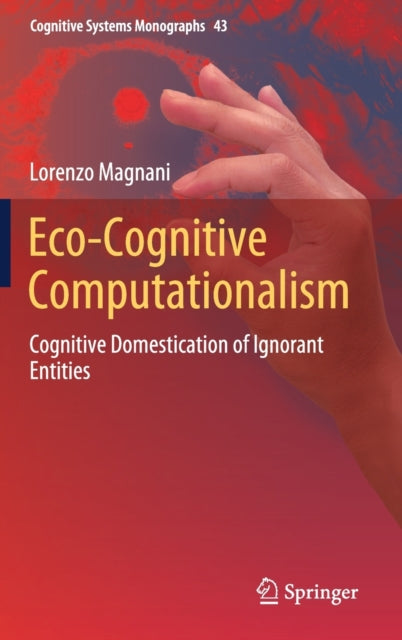
Lorenzo Magnani
Eco-Cognitive Computationalism: Cognitive Domestication of Ignorant Entities
Eco-Cognitive Computationalism: Cognitive Domestication of Ignorant Entities
💎 Earn 371 Points (£3.71) on this item.
We can order this item for you. Delivery usually takes about 4 to 6 weeks.
This item is not held in our immediate stock. We will order it for you after checkout.
Estimated delivery: About 4 to 6 weeks
YOU SAVE £15.66
- Condition: Brand new
- UK Delivery times: Usually arrives within 2 - 3 working days
- UK Shipping: Fee starts at £2.39. Subject to product weight & dimension
Bulk ordering. Want 15 or more copies? Get a personalised quote and bigger discounts. Learn more about bulk orders.
Couldn't load pickup availability
- More about Eco-Cognitive Computationalism: Cognitive Domestication of Ignorant Entities
This book explores the widespread distribution of computational tools, models, and methods, emphasizing their role as mediators of cognition. It introduces an eco-cognitive approach to computation that questions the cognitive domestication of ignorant entities and proposes an intellectual framework to understand the emergence and modification of information, cognition, and computation. It also highlights the distinction between weak and strong levels of creative "abductive" hypothetical cognition, with weak accomplishments associated with computational machines and deep creativity with human cognizers benefiting from eco-cognitive openness.
Format: Hardback
Length: 106 pages
Publication date: 31 August 2021
Publisher: Springer Nature Switzerland AG
This book delves into the pervasive distribution of computational tools, models, and methods, highlighting their crucial role in the modern significance of computational machines as cognitive intermediaries. It presents a novel eco-cognitive perspective on computation, emphasizing the pervasive cognitive domestication of ignorant entities in contemporary societies. Eco-cognitive computationalism does not seek to provide a definitive and static definition of information, cognition, and computation but rather aims to establish an intellectual framework that captures their historical and dynamic nature. By respecting their inherent qualities, it proposes an approach that elucidates the emergence and modification of these concepts, encompassing both unconventional non-digital cases. Furthermore, this perspective leads to a clear differentiation between weak and strong levels of creative "abductive" hypothetical cognition. Weak accomplishments are associated with "locked abductive strategies," typical of computational machines, while deep creativity is linked to "unlocked abductive strategies," which characterize human cognizers who benefit from the eco-cognitive openness.
Introduction:
The book explores the widespread dissemination of computational tools, models, and methods, emphasizing their pivotal role in the contemporary significance of computational machines as cognitive intermediaries. It presents a novel eco-cognitive perspective on computation, highlighting the pervasive cognitive domestication of ignorant entities in contemporary societies. Eco-cognitive computationalism does not seek to provide a definitive and static definition of information, cognition, and computation but rather aims to establish an intellectual framework that captures their historical and dynamic nature. By respecting their inherent qualities, it proposes an approach that elucidates the emergence and modification of these concepts, encompassing both unconventional non-digital cases. Furthermore, this perspective leads to a clear differentiation between weak and strong levels of creative "abductive" hypothetical cognition. Weak accomplishments are associated with "locked abductive strategies," typical of computational machines, while deep creativity is linked to "unlocked abductive strategies," which characterize human cognizers who benefit from the eco-cognitive openness.
Eco-Cognitive Computationalism:
Eco-cognitive computationalism offers an entirely new approach to computation, aiming to underline the question of the overwhelming cognitive domestication of ignorant entities that persistently operates in our current societies. It challenges the conventional notion of computation as solely a tool for solving problems and emphasizes the broader cognitive implications of computational technologies. The book proposes an eco-cognitive framework that recognizes the historical and dynamical nature of information, cognition, and computation. It seeks to understand their forms of "emergence" and the modification of their meanings, while also addressing impressive unconventional non-digital cases.
Perspective on Information, Cognition, and Computation:
Eco-cognitive computationalism proposes an intellectual framework that depicts how we can understand the forms of "emergence" and the modification of the meanings of information, cognition, and computation. It recognizes the historical and dynamic nature of these concepts, acknowledging that they are not fixed or universal but rather evolve and change over time. The framework proposes that information, cognition, and computation emerge through complex processes of interaction and co-evolution with other entities, including humans, the environment, and technological systems.
Unconventional Non-Digital Cases:
The book delves into unconventional non-digital cases that highlight the broader cognitive implications of computation. It explores how computational tools, models, and methods are being used in fields such as art, music, and social sciences to create new forms of expression, understand complex systems, and foster creativity. These cases demonstrate the potential of eco-cognitive computationalism to extend the scope of computation beyond traditional problem-solving domains.
Divergence between Weak and Strong Levels of Creative Abductive Hypothetical Cognition:
Eco-cognitive computationalism also leads to a clear description of the divergence between weak and strong levels of creative "abductive" hypothetical cognition. Weak accomplishments are related to "locked abductive strategies," typical of computational machines, while deep creativity is instead related to "unlocked abductive strategies," which characterize human cognizers who benefit from the eco-cognitive openness.
Conclusion:
In conclusion, this book offers a novel eco-cognitive perspective on computation that emphasizes the pervasive cognitive domestication of ignorant entities in contemporary societies. It proposes an intellectual framework that captures the historical and dynamic nature of information, cognition, and computation. By exploring unconventional non-digital cases, the book demonstrates the potential of eco-cognitive computationalism to extend the scope of computation beyond traditional problem-solving domains. The distinction between weak and strong levels of creative "abductive" hypothetical cognition highlights the unique capabilities of human cognizers and the importance of eco-cognitive openness in fostering deep creativity.
Weight: 360g
Dimension: 235 x 155 (mm)
ISBN-13: 9783030814465
Edition number: 1st ed. 2022
This item can be found in:
UK and International shipping information
UK and International shipping information
UK Delivery and returns information:
- Delivery within 2 - 3 days when ordering in the UK.
- Shipping fee for UK customers from £2.39. Fully tracked shipping service available.
- Returns policy: Return within 30 days of receipt for full refund.
International deliveries:
Shulph Ink now ships to Australia, Belgium, Canada, France, Germany, Ireland, Italy, India, Luxembourg Saudi Arabia, Singapore, Spain, Netherlands, New Zealand, United Arab Emirates, United States of America.
- Delivery times: within 5 - 10 days for international orders.
- Shipping fee: charges vary for overseas orders. Only tracked services are available for most international orders. Some countries have untracked shipping options.
- Customs charges: If ordering to addresses outside the United Kingdom, you may or may not incur additional customs and duties fees during local delivery.