Shulph Ink
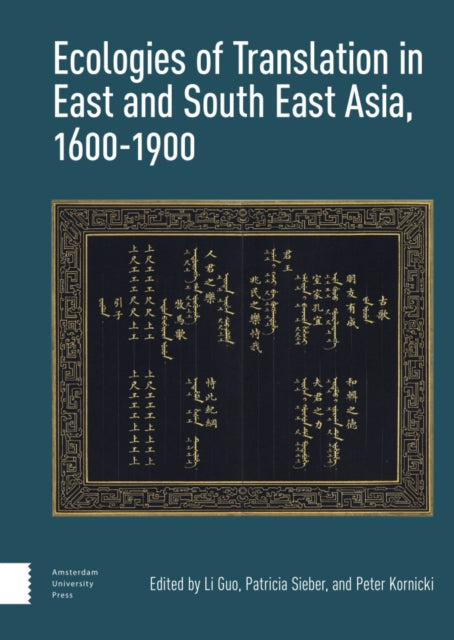
Ecologies of Translation in East and South East Asia, 1600-1900
Ecologies of Translation in East and South East Asia, 1600-1900
💎 Earn 689 Points (£6.89) on this item.
We can order this item for you. Delivery usually takes about 4 to 6 weeks.
This item is not held in our immediate stock. We will order it for you after checkout.
Estimated delivery: About 4 to 6 weeks
YOU SAVE £8.18
- Condition: Brand new
- UK Delivery times: Usually arrives within 2 - 3 working days
- UK Shipping: Fee starts at £2.39. Subject to product weight & dimension
Bulk ordering. Want 15 or more copies? Get a personalised quote and bigger discounts. Learn more about bulk orders.
Couldn't load pickup availability
- More about Ecologies of Translation in East and South East Asia, 1600-1900
This ground-breaking volume explores how translation from plain Chinese interacted with traditional biliteracy and translational multilingualism in the early modern Sinographic sphere, leading to the development of new translation ecologies and requiring different models of translation theory.
Format: Hardback
Length: 326 pages
Publication date: 09 June 2022
Publisher: Amsterdam University Press
This groundbreaking volume on early modern inter-Asian translation delves into the intricate interplay between two distinct realms: the traditional standard of biliteracy prevalent in literary practices within the Sinographic sphere, and the practices of translational multilingualism, which involve the mastery of multiple spoken languages to produce fully localized target texts. Through a comprehensive examination of translations from plain Chinese, the book reveals the emergence of novel translation ecologies that not only expand our understanding of early modern translation practices across the Sinographic region but also highlight the need for alternative models of translation theory to account for the transregional applications of non-alphabetic graphic technologies.
In the early modern era, the translation of texts from plain Chinese played a pivotal role in the interconnected networks of cultures across the Sinographic sphere. This translation process, situated at the crossroads of traditional biliteracy and translational multilingualism, emerged as a complex and dynamic field of study. The traditional standard of biliteracy, which emphasized the ability to read and write in both Chinese and a regional language, was deeply ingrained in the literary practices of the Sinographic world. However, alongside this standard, a new phenomenon of translational multilingualism began to take shape. Translators who possessed proficiency in multiple spoken languages sought to bridge the linguistic barriers between different cultures and produce translations that were both faithful to the original meaning and culturally relevant to their target audiences.
The translations from plain Chinese in this period were not merely linguistic translations but also cultural translations. They aimed to convey not only the linguistic nuances of the source text but also the broader cultural values, beliefs, and customs associated with it. Translators worked tirelessly to adapt the language, syntax, and imagery of the source text to the conventions and expectations of their target audiences, ensuring that the translated works could resonate with readers from diverse linguistic and cultural backgrounds.
One of the key findings of this volume is that translations from plain Chinese carved out new ecologies of translation. These ecologies were characterized by the intermingling of multiple languages, the use of non-alphabetic graphic technologies, and the negotiation of cultural differences. Translators employed a range of strategies, such as borrowing words, adapting grammar, and incorporating local cultural references, to create translations that were both accessible and meaningful to their target audiences.
Furthermore, the translations from plain Chinese demonstrated the transregional uses of a non-alphabetic graphic technology. The spread of Chinese writing systems, such as Chinese characters, throughout the Sinographic sphere facilitated the exchange of ideas, knowledge, and cultural practices. Translators played a crucial role in this process by facilitating the transmission of Chinese texts across different languages and cultures, enabling a broader understanding of Chinese culture and its influence on the region.
In conclusion, this groundbreaking volume on early modern inter-Asian translation offers a comprehensive exploration of the complex relationship between translation, multilingualism, and cultural exchange in the Sinographic sphere. By examining the translations from plain Chinese, the book sheds light on the emergence of new translation ecologies, the transregional uses of non-alphabetic graphic technologies, and the broader implications of these developments for translation theory and practice. This volume is a valuable resource for scholars, researchers, and students interested in the history of translation, cultural studies, and the Sinographic world.
Dimension: 234 x 156 (mm)
ISBN-13: 9789463729550
This item can be found in:
UK and International shipping information
UK and International shipping information
UK Delivery and returns information:
- Delivery within 2 - 3 days when ordering in the UK.
- Shipping fee for UK customers from £2.39. Fully tracked shipping service available.
- Returns policy: Return within 30 days of receipt for full refund.
International deliveries:
Shulph Ink now ships to Australia, Belgium, Canada, France, Germany, Ireland, Italy, India, Luxembourg Saudi Arabia, Singapore, Spain, Netherlands, New Zealand, United Arab Emirates, United States of America.
- Delivery times: within 5 - 10 days for international orders.
- Shipping fee: charges vary for overseas orders. Only tracked services are available for most international orders. Some countries have untracked shipping options.
- Customs charges: If ordering to addresses outside the United Kingdom, you may or may not incur additional customs and duties fees during local delivery.