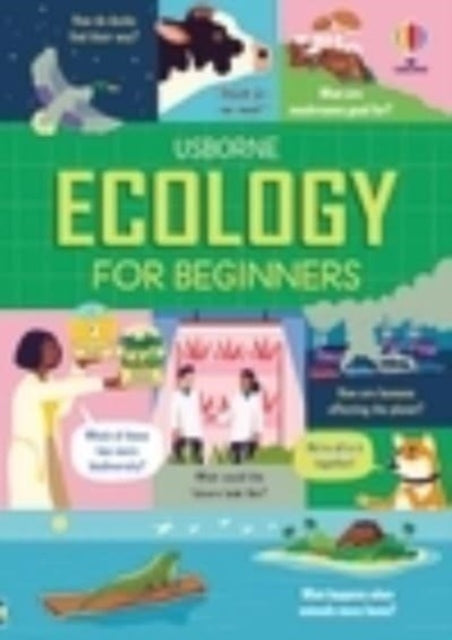
Andy Prentice,Lan Cook
Ecology for Beginners
Ecology for Beginners
💎 Earn 35 Points (£0.35) on this item.
YOU SAVE £2.92
- Condition: Brand new
- UK Delivery times: Usually arrives within 2 - 3 working days
- UK Shipping: Fee starts at £3.89. Subject to product weight & dimension
Bulk ordering. Want 15 or more copies? Get a personalised quote and bigger discounts. Learn more about bulk orders.
Couldn't load pickup availability
- More about Ecology for Beginners
This book provides an accessible introduction to Ecology,exploring how living things cope in different environments and the importance of protecting our planet. It follows real-world examples and discusses topics such as ecosystems, conservation, and rewilding.
Format: Hardback
Length: 128 pages
Publication date: 06 July 2023
Publisher: Usborne Publishing Ltd
Ecology is a fascinating field that delves into the intricate relationships between living organisms and their environments. It encompasses the study of how species interact, compete, and survive within ecosystems, as well as the broader aspects of biodiversity, conservation, and sustainability. In this comprehensive guide, we will explore the basics of ecology, from the fundamentals of population dynamics and food webs to the complex processes of ecosystem restoration and conservation.
Understanding Ecology:
Ecology is a branch of biology that focuses on the study of living organisms and their interactions with each other and their environment. It seeks to understand the patterns, processes, and mechanisms that govern the distribution, abundance, and diversity of species within ecosystems. By studying ecology, we gain insights into the complex web of life that sustains our planet and the importance of preserving it for future generations.
The Scope of Ecology:
Ecology encompasses a wide range of topics, including:
Population Dynamics: Population dynamics is the study of the number of individuals in a population and how it changes over time. It includes factors such as birth rate, death rate, migration, and genetic variation. Population dynamics play a crucial role in determining the structure and function of ecosystems.
Food Webs: Food webs are networks of interconnected organisms that exchange nutrients and energy through feeding relationships. They include producers (such as plants), consumers (such as animals), and decomposers (such as fungi and bacteria). Food webs are essential for maintaining the balance of ecosystems and providing energy to organisms.
Habitat: Habitat is the physical environment in which organisms live. It includes factors such as temperature, humidity, soil type, and vegetation cover. Habitat plays a critical role in determining the distribution and abundance of species within an ecosystem.
Ecosystems: Ecosystems are dynamic systems that consist of living organisms, non-living components (such as soil and water), and the physical environment. They include terrestrial ecosystems (such as forests, grasslands, and deserts), aquatic ecosystems (such as lakes, rivers, and oceans), and ecosystems in other environments (such as polar regions and mountaintops).
Biodiversity: Biodiversity is the variety of life on Earth, including the diversity of species, genes, and ecosystems. It encompasses the diversity of life at all levels of biological organization, from individuals to populations to ecosystems. Biodiversity is essential for maintaining the stability and resilience of ecosystems.
Conservation: Conservation is the practice of protecting and preserving natural resources and ecosystems. It involves managing human activities that can harm ecosystems, such as deforestation, pollution, and overfishing. Conservation is essential for maintaining the balance and health of ecosystems and ensuring the long-term survival of species.
Ecosystem Restoration: Ecosystem restoration is the process of repairing and restoring degraded ecosystems. It involves removing invasive species, restoring native vegetation, and reestablishing ecological processes. Ecosystem restoration is important for recovering degraded ecosystems and promoting biodiversity.
Ecological Ethics: Ecological ethics is the study of the ethical implications of human activities on ecosystems and biodiversity. It involves considering the rights.
Ecology is a fascinating field that delves into the intricate relationships between living organisms and their environments. It encompasses the study of how species interact, compete, and survive within ecosystems, as well as the broader aspects of biodiversity, conservation, and sustainability. In this comprehensive guide, we will explore the basics of ecology, from the fundamentals of population dynamics and food webs to the complex processes of ecosystem restoration and conservation.
Understanding Ecology:
Ecology is a branch of biology that focuses on the study of living organisms and their interactions with each other and their environment. It seeks to understand the patterns, processes, and mechanisms that govern the distribution, abundance, and diversity of species within ecosystems. By studying ecology, we gain insights into the complex web of life that sustains our planet and the importance of preserving it for future generations.
The Scope of Ecology:
Ecology encompasses a wide range of topics, including:
Population Dynamics: Population dynamics is the study of the number of individuals in a population and how it changes over time. It includes factors such as birth rate, death rate, migration, and genetic variation. Population dynamics play a crucial role in determining the structure and function of ecosystems.
Food Webs: Food webs are networks of interconnected organisms that exchange nutrients and energy through feeding relationships. They include producers (such as plants), consumers (such as animals), and decomposers (such as fungi and bacteria). Food webs are essential for maintaining the balance of ecosystems and providing energy to organisms.
Habitat: Habitat is the physical environment in which organisms live. It includes factors such as temperature, humidity, soil type, and vegetation cover. Habitat plays a critical role in determining the distribution and abundance of species within an ecosystem.
Ecosystems: Ecosystems are dynamic systems that consist of living organisms, non-living components (such as soil and water), and the physical environment. They include terrestrial ecosystems (such as forests, grasslands, and deserts), aquatic ecosystems (such as lakes, rivers, and oceans), and ecosystems in other environments (such as polar regions and mountaintops).
Biodiversity: Biodiversity is the variety of life on Earth, including the diversity of species, genes, and ecosystems. It encompasses the diversity of life at all levels of biological organization, from individuals to populations to ecosystems. Biodiversity is essential for maintaining the stability and resilience of ecosystems.
Conservation: Conservation is the practice of protecting and preserving natural resources and ecosystems. It involves managing human activities that can harm ecosystems, such as deforestation, pollution, and overfishing. Conservation is essential for maintaining the balance and health of ecosystems and ensuring the long-term survival of species.
Ecosystem Restoration: Ecosystem restoration is the process of repairing and restoring degraded ecosystems. It involves removing invasive species, restoring native vegetation, and reestablishing ecological processes. Ecosystem restoration is important for recovering degraded ecosystems and promoting biodiversity.
Ecological Ethics: Ecological ethics is the study of the ethical implications of human activities on ecosystems and biodiversity. It involves considering the.
In conclusion, ecology is a vital field that provides us with insights into the complex web of life that sustains our planet. By understanding the basics of ecology, we can better appreciate the importance of conservation, restoration, and sustainability. By working together to protect and preserve our natural resources and ecosystems, we can ensure a healthy and thriving planet for future generations.
Weight: 524g
Dimension: 246 x 176 x 17 (mm)
ISBN-13: 9781474998475
UK and International shipping information
UK and International shipping information
We deliver throughout the United Kingdom and to 128 countries and territories worldwide, including the United States, Australia, Canada, Germany, Spain and France.