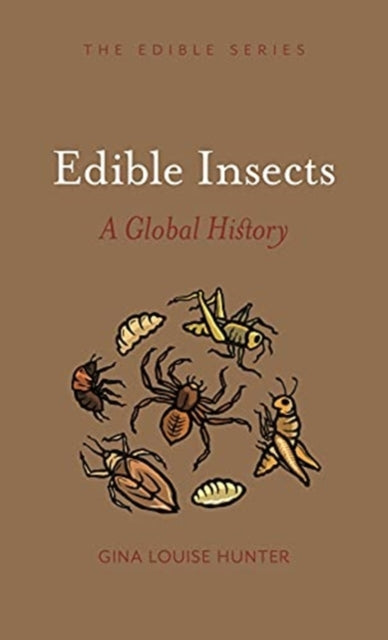
Gina Louise Hunter
Edible Insects: A Global History
Edible Insects: A Global History
YOU SAVE £4.74
- Condition: Brand new
- UK Delivery times: Usually arrives within 2 - 3 working days
- UK Shipping: Fee starts at £3.89. Subject to product weight & dimension
Bulk ordering. Want 15 or more copies? Get a personalised quote and bigger discounts. Learn more about bulk orders.
Couldn't load pickup availability
- More about Edible Insects: A Global History
Insects are a rich source of protein and other nutrients, and are eaten by billions of people around the world. However, they are rarely eaten in the West. Edible Insects: A Global History explores the history and potential of insects as food, including their culinary uses and potential to alleviate global food shortage and natural resource overexploitation.
Format: Hardback
Length: 176 pages
Publication date: 16 August 2021
Publisher: Reaktion Books
In a world where approximately two billion people embrace the consumption of insects as a regular part of their diet, it is intriguing to note that these creatures are rarely encountered in Western culinary traditions. Despite their widespread consumption across various cultures, why do some individuals find the idea of eating insects repulsive, while others relish them as a delectable treat? Edible Insects: A Global History offers a comprehensive exploration of the historical and contemporary significance of insects as human food, spanning from our ancient origins to the prevailing food trends of today. The menu includes a diverse range of insects such as beetles, butterflies, grasshoppers, and grubs, each with its unique story that highlights traditional methods of insect collection, preparation, consumption, and preservation. Within this book, we delve into the diverse culinary applications of creepy-crawlies across different cultures, shedding light on the potential of insects to address global food shortages and the over-exploitation of natural resources. Moreover, we discover the crucial role played by world-class chefs in making insects palatable to consumers in the West, challenging preconceived notions and broadening our culinary horizons.
The consumption of insects has a rich and diverse history, dating back to prehistoric times when our ancestors relied on them as a staple source of nutrition. In many cultures, insects were considered a delicacy and were prepared in various ways, including roasting, grilling, and frying. However, the Western world has largely been resistant to the idea of eating insects, with many people finding them repulsive or unappetizing.
One of the main reasons for this resistance is the cultural and psychological associations that people have with insects. In Western societies, insects are often associated with dirt, disease, and pests, which can create a negative perception of them as food. Additionally, the idea of consuming insects can be seen as a violation of our natural instincts, as humans have traditionally been carnivores and have relied on meat as a primary source of nutrition.
Another factor that contributes to the disgust towards eating insects is the lack of familiarity and exposure to them. Many people have never encountered insects in their natural environment or had the opportunity to learn about their culinary potential. This lack of knowledge and understanding can create a sense of fear and uncertainty, which can make it difficult for people to embrace the idea of eating insects.
Despite these challenges, there is a growing movement in the West towards the acceptance and consumption of insects as food. This movement is driven by a variety of factors, including concerns about food security, environmental sustainability, and the need to address global food shortages. Insects are a highly nutritious and sustainable source of food, as they require less land, water, and feed than traditional livestock. They also have a high protein content and are rich in essential vitamins and minerals.
One of the key players in promoting the consumption of insects in the West is the culinary industry. Chefs and restaurants are increasingly experimenting with insects as a ingredient in their dishes, creating innovative and delicious recipes that challenge traditional culinary norms. For example, insects such as crickets, grasshoppers, and mealworms are being used in burgers, tacos, and pasta dishes, providing a unique and savory flavor that is gaining popularity among food enthusiasts.
In addition to the culinary industry, there are also a number of advocacy groups and organizations that are working to raise awareness and promote the consumption of insects as food. These groups provide information about the nutritional benefits of insects, as well as the traditional and contemporary culinary applications of these creatures. They also work to address the cultural and psychological barriers that prevent people from embracing the idea of eating insects, by promoting education and awareness campaigns.
Despite the growing interest in the consumption of insects as food, there are still challenges that need to be addressed. One of the biggest challenges is the need for regulatory frameworks and standards to ensure the safety and quality of insect products. Insects can be susceptible to pests, diseases, and environmental contaminants, which can pose risks to human health if not properly managed. Additionally, there is a need for more research and development to improve the processing and preservation of insects, as well as to develop new and innovative products that can appeal to a broader range of consumers.
In conclusion, the consumption of insects as food has a rich and diverse history, spanning from our prehistoric past to the present day. While some individuals find the idea of eating insects repulsive, others embrace them as a delectable treat. The Western world has been resistant to the idea of eating insects due to cultural and psychological associations, lack of familiarity and exposure, and the need for regulatory frameworks and standards. However, there is a growing movement towards the acceptance and consumption of insects as food, driven by concerns about food security, environmental sustainability, and the need to address global food shortages. With the culinary industry, advocacy groups, and research and development, it is possible to overcome these challenges and create a more sustainable and inclusive food system that benefits both humans and the environment.
Weight: 366g
Dimension: 127 x 204 x 16 (mm)
ISBN-13: 9781789144468
UK and International shipping information
UK and International shipping information
We deliver throughout the United Kingdom and to 128 countries and territories worldwide, including the United States, Australia, Canada, Germany, Spain and France.