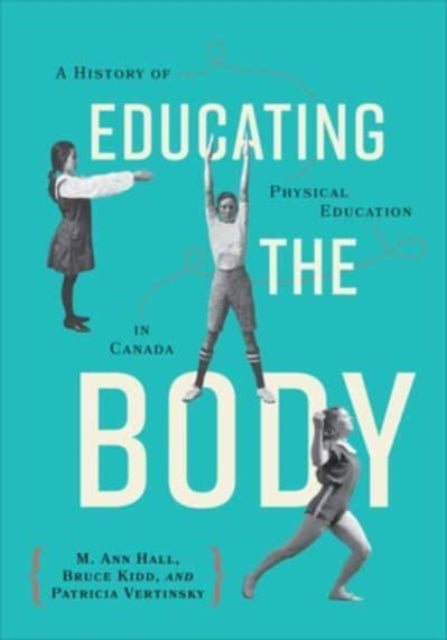
M. Ann Hall,Bruce Kidd,Patricia Vertinsky
Educating the Body: A History of Physical Education in Canada
Educating the Body: A History of Physical Education in Canada
💎 Earn 123 Points (£1.23) on this item.
YOU SAVE £3.22
- Condition: Brand new
- UK Delivery times: Usually arrives within 2 - 3 working days
- UK Shipping: Fee starts at £2.39. Subject to product weight & dimension
Bulk ordering. Want 15 or more copies? Get a personalised quote and bigger discounts. Learn more about bulk orders.
Couldn't load pickup availability
- More about Educating the Body: A History of Physical Education in Canada
Educating the Body explores Canada's physical education history, advocates, innovations, and institutions, highlighting the realities of class, gender, and race and the marginalization of Indigenous teachings. It is essential for understanding policy options in the face of declining physical activity levels.
Format: Paperback / softback
Length: 326 pages
Publication date: 07 November 2023
Publisher: University of Toronto Press
Educating the Body: A History of Physical Education in Canada
Physical education in Canada has a rich and diverse history, with numerous advocates, innovators, and institutions contributing to its development. This book provides a comprehensive overview of the major developments in physical education from the early nineteenth century to the present day, both within and beyond schools. It examines the realities of Canada's classed, gendered, and racialized society and reveals the rich history of Indigenous teachings and practices that were marginalized and erased by the residential school system.
The book begins by tracing the origins of physical education in Canada, which can be traced back to the early nineteenth century. During this time, physical education was primarily focused on military training and physical fitness, with schools and universities offering courses in gymnastics, track and field, and swimming. However, the focus on physical education began to shift in the early twentieth century, with the introduction of physical education programs in schools. These programs were designed to promote physical fitness, health, and well-being among students and were often based on the principles of physical education pioneers such as William James and John Dewey.
One of the major developments in physical education in Canada was the introduction of the physical education curriculum. This curriculum was designed to provide students with a comprehensive understanding of physical education and to help them develop their physical skills and abilities. The curriculum was divided into three levels: primary, intermediate, and secondary. Primary school students were taught basic physical skills such as running, jumping, and throwing, while intermediate school students were taught more advanced skills such as swimming, basketball, and volleyball. Secondary school students were taught more specialized skills such as track and field, gymnastics, and dance.
The physical education curriculum was also influenced by the social and cultural context of Canada. For example, during the Second World War, physical education was used to promote physical fitness and to prepare soldiers for combat. This led to the development of programs such as the Canadian Army Physical Fitness Test and the Canadian Air Force Physical Fitness Test.
In addition to the physical education curriculum, physical education in Canada has also been influenced by the development of sports and recreation. Canada has a rich history of sports, with many of the world's top athletes coming from the country. Sports such as hockey, basketball, and football have become a major part of Canadian culture, and physical education programs have been designed to promote these sports.
However, physical education in Canada has also faced several challenges. One of the major challenges is the decline in physical activity levels across the population. This decline has been attributed to a variety of factors, including the increasing popularity of sedentary activities such as watching television and playing video games, the lack of access to physical education programs, and the high cost of sports equipment.
To address these challenges, physical education programs in Canada have been designed to be more inclusive and accessible. This has included the development of programs for children with disabilities, the development of programs for women and girls, and the development of programs for older adults.
In addition to the physical education curriculum, physical education in Canada has also been influenced by the development of health and wellness programs. Health and wellness programs have been designed to promote physical and mental health and to reduce the risk of chronic diseases such as heart disease, diabetes, and cancer. These programs have included programs such as yoga, meditation, and mindfulness.
Despite these challenges, physical education in Canada has continued to grow and evolve. The book concludes with a vision for the future of physical education in Canada. This vision includes the development of more inclusive and accessible programs, the promotion of physical and mental health and wellness, and the recognition of the importance of Indigenous teachings and practices in physical education.
In conclusion, Educating the Body: A History of Physical Education in Canada is a comprehensive and engaging book that provides a history of physical education in Canada. The book traces the major developments in physical education from the early nineteenth century to the present day, both within and beyond schools, and examines the realities of Canada's classed, gendered, and racialized society. The book also reveals the rich history of Indigenous teachings and practices that were marginalized and erased by the residential school system. Despite the challenges that physical education in Canada has faced, the book concludes with a vision for the future that includes the development of more inclusive and accessible programs, the promotion of physical and mental health and wellness, and the recognition of the importance of Indigenous teachings and practices in physical education.
Weight: 610g
Dimension: 176 x 255 x 22 (mm)
ISBN-13: 9781487525941
UK and International shipping information
UK and International shipping information
UK Delivery and returns information:
- Delivery within 2 - 3 days when ordering in the UK.
- Shipping fee for UK customers from £2.39. Fully tracked shipping service available.
- Returns policy: Return within 30 days of receipt for full refund.
International deliveries:
Shulph Ink now ships to Australia, Belgium, Canada, France, Germany, Ireland, Italy, India, Luxembourg Saudi Arabia, Singapore, Spain, Netherlands, New Zealand, United Arab Emirates, United States of America.
- Delivery times: within 5 - 10 days for international orders.
- Shipping fee: charges vary for overseas orders. Only tracked services are available for most international orders. Some countries have untracked shipping options.
- Customs charges: If ordering to addresses outside the United Kingdom, you may or may not incur additional customs and duties fees during local delivery.