Shulph Ink
Electronic Devices, Circuits, and Systems for Biomedical Applications: Challenges and Intelligent Approach
Electronic Devices, Circuits, and Systems for Biomedical Applications: Challenges and Intelligent Approach
💎 Earn 530 Points (£5.30) on this item.
YOU SAVE £8.91
- Condition: Brand new
- UK Delivery times: Usually arrives within 2 - 3 working days
- UK Shipping: Fee starts at £2.39. Subject to product weight & dimension
Bulk ordering. Want 15 or more copies? Get a personalised quote and bigger discounts. Learn more about bulk orders.
Couldn't load pickup availability
- More about Electronic Devices, Circuits, and Systems for Biomedical Applications: Challenges and Intelligent Approach
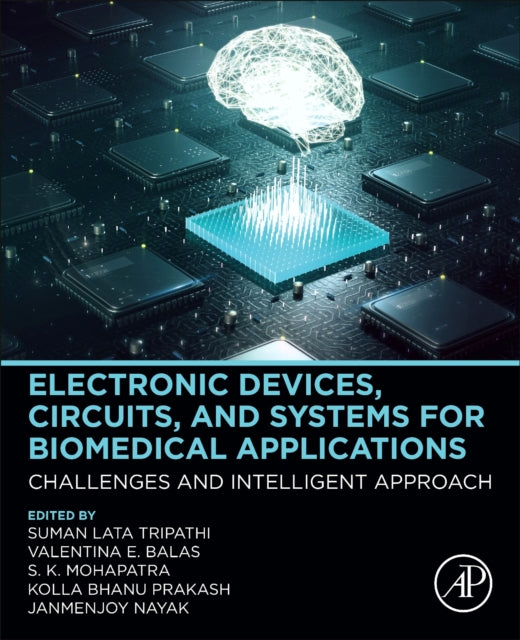
Electronic Devices, Circuits, and Systems for Biomedical Applications: Challenges and Intelligent Approaches is a book that discusses the latest information on designing new technological solutions for low-power, high-speed efficient biomedical devices, circuits, and systems. It outlines new methods to enhance system performance, provides key parameters to explore electronic devices and circuit biomedical applications, and discusses innovative materials that improve device performance, even for those with smaller dimensions and lower costs.
Format: Paperback / softback
Length: 584 pages
Publication date: 29 April 2021
Publisher: Elsevier Science & Technology
Electronic Devices, Circuits, and Systems for Biomedical Applications: Challenges and Intelligent Approaches delves into the most recent advancements in designing innovative technological solutions for low-power, high-speed efficient biomedical devices, circuits, and systems. The book offers a comprehensive overview of novel methods to enhance system performance, provides valuable parameters to explore electronic devices and circuit biomedical applications, and discusses cutting-edge materials that significantly improve device performance, even for smaller dimensions and lower costs. This comprehensive resource is particularly valuable for graduate students in biomedical engineering and medical informatics, biomedical engineers, medical device designers, and researchers in signal processing.
The design of new technological solutions for low-power, high-speed efficient biomedical devices, circuits, and systems is a critical area of research and development. In recent years, there has been a significant increase in the demand for medical devices that can provide accurate and timely diagnosis, as well as treatment options for various diseases and conditions. This has led to the development of innovative electronic devices, circuits, and systems that can meet these demands.
One of the key challenges in designing biomedical devices is the need for low power consumption. This is particularly important in wearable devices, where the battery life of the device can be limited. To address this challenge, researchers have developed new materials and technologies that can reduce power consumption while maintaining high performance. For example, some researchers have developed biodegradable materials that can be used in medical implants, which can reduce the risk of infection and improve patient comfort.
Another challenge in designing biomedical devices is the need for high speed and accuracy. This is particularly important in imaging systems, where the speed of data acquisition and processing can have a significant impact on the quality of the images. To address this challenge, researchers have developed new imaging techniques, such as magnetic resonance imaging (MRI) and computed tomography (CT), that can provide high-resolution images in a short amount of time.
In addition to these challenges, there are also several other factors that need to be considered when designing biomedical devices. These include the need for miniaturization, the need for wireless communication, and the need for integration with other medical devices. Miniaturization is important in order to reduce the size and weight of the device, which can make it more comfortable and easier to use. Wireless communication is important in order to enable remote monitoring and management of the device. Integration with other medical devices is important in order to provide seamless communication and data exchange between different medical systems.
Despite these challenges, there are several intelligent approaches that can be used to design biomedical devices, circuits, and systems. One of these approaches is the use of artificial intelligence (AI) and machine learning (ML). AI and ML can be used to analyze large amounts of data and identify patterns that can be used to improve the performance of biomedical devices. For example, AI and ML can be used to analyze medical images and identify abnormalities that may be missed by human observers.
Another intelligent approach is the use of integrated circuits (ICs). ICs are small electronic devices that can be used to perform a wide range of functions, including signal processing, data storage, and communication. ICs can be used to design biomedical devices that are more efficient and reliable than traditional devices. For example, ICs can be used to design biomedical sensors that can detect small changes in blood pressure or heart rate.
In addition to these intelligent approaches, there are also several other factors that need to be considered when designing biomedical devices, circuits, and systems. These include the need for regulatory compliance, the need for user-friendly design, and the need for long-term reliability. Regulatory compliance is important in order to ensure that biomedical devices meet safety and performance standards. User-friendly design is important in order to ensure that biomedical devices are easy to use and accessible to patients. Long-term reliability is important in order to ensure that biomedical devices can be used for many years without needing to be replaced.
In conclusion, the design of new technological solutions for low-power, high-speed efficient biomedical devices, circuits, and systems is a complex and challenging area of research and development. However, there are several intelligent approaches that can be used to design biomedical devices that are more efficient, reliable, and user-friendly. These approaches include the use of AI and ML, integrated circuits, and other innovative materials and technologies. By using these approaches, we can improve the quality of healthcare and enhance the lives of patients around the world.
Weight: 1176g
Dimension: 189 x 236 x 31 (mm)
ISBN-13: 9780323851725
This item can be found in:
UK and International shipping information
UK and International shipping information
UK Delivery and returns information:
- Delivery within 2 - 3 days when ordering in the UK.
- Shipping fee for UK customers from £2.39. Fully tracked shipping service available.
- Returns policy: Return within 30 days of receipt for full refund.
International deliveries:
Shulph Ink now ships to Australia, Belgium, Canada, France, Germany, Ireland, Italy, India, Luxembourg Saudi Arabia, Singapore, Spain, Netherlands, New Zealand, United Arab Emirates, United States of America.
- Delivery times: within 5 - 10 days for international orders.
- Shipping fee: charges vary for overseas orders. Only tracked services are available for most international orders. Some countries have untracked shipping options.
- Customs charges: If ordering to addresses outside the United Kingdom, you may or may not incur additional customs and duties fees during local delivery.