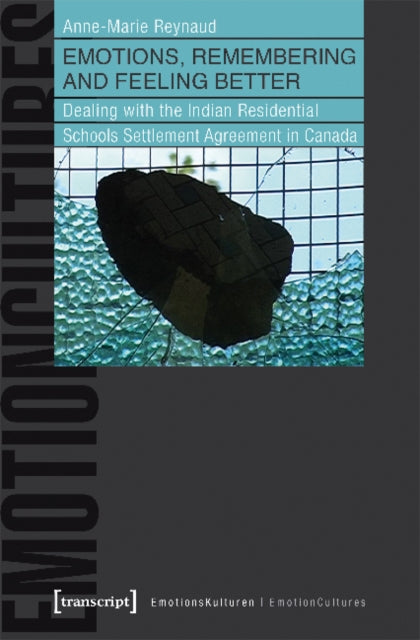
Anne-marie Reynaud
Emotions, Remembering and Feeling Better - Dealing with the Indian Residential Schools Settlement Agreement in Canada
Emotions, Remembering and Feeling Better - Dealing with the Indian Residential Schools Settlement Agreement in Canada
💎 Earn 185 Points (£1.85) on this item.
We can order this item for you. Delivery usually takes about 4 to 6 weeks.
This item is not held in our immediate stock. We will order it for you after checkout.
Estimated delivery: About 4 to 6 weeks
YOU SAVE £7.83
- Condition: Brand new
- UK Delivery times: Usually arrives within 2 - 3 working days
- UK Shipping: Fee starts at £2.39. Subject to product weight & dimension
Bulk ordering. Want 15 or more copies? Get a personalised quote and bigger discounts. Learn more about bulk orders.
Couldn't load pickup availability
- More about Emotions, Remembering and Feeling Better - Dealing with the Indian Residential Schools Settlement Agreement in Canada
Format: Paperback / softback
Length: 350 pages
Publication date: 08 December 2021
Publisher: Transcript Verlag
The Indian Residential Schools Settlement Agreement (2007-2015) was a historic class action lawsuit in Canada that had a profound impact on the lives of Aboriginal survivors across the country. In a rare and insightful account, Anne-Marie Reynaud delves into the settlement's reconciliatory aspiration alongside the local realities faced by the Mitchikanibikok Inik First Nations in Quebec. Drawing from extensive anthropological fieldwork, Reynaud weaves together the experiences of survivors regarding financial compensation, the Truth and Reconciliation Commission, and contemporary theories on emotions, memory, trauma, and transitional justice.
This carefully crafted book offers a profound exploration of the complexities and nuances of the settlement's impact on the lives of Aboriginal survivors. Reynaud sheds light on the challenges and struggles faced by these individuals, as well as the opportunities for healing and reconciliation that the settlement has provided. Through her meticulous research and thoughtful analysis, Reynaud offers a valuable contribution to the ongoing dialogue about the legacy of residential schools and the ongoing efforts to address the trauma and injustice experienced by Aboriginal communities.
One of the key themes that emerges from Reynaud's book is the complex interplay between the settlement's reconciliatory aspirations and the local realities of the Mitchikanibikok Inik First Nations. The settlement was designed to address the historical trauma and abuse experienced by Aboriginal children at residential schools, and it aimed to provide financial compensation and support for survivors. However, Reynaud argues that the settlement's implementation was not without its challenges and that the local context played a significant role in shaping its impact.
For example, Reynaud notes that the Mitchikanibikok Inik First Nations had a unique cultural and historical relationship with the residential schools, and that the settlement's approach to compensation and reconciliation did not fully acknowledge this relationship. She argues that the settlement's focus on monetary compensation may have overshadowed the importance of cultural healing and the need for meaningful engagement with survivors and their communities.
In addition, Reynaud explores the emotional and psychological toll that the residential schools have had on Aboriginal survivors. She argues that the trauma experienced by these individuals has been deeply ingrained in their lives, and that the settlement's efforts to address this trauma may not have been sufficient. Reynaud suggests that the settlement's focus on monetary compensation may have inadvertently perpetuated a sense of victimization and that more comprehensive approaches to healing and reconciliation are needed.
Reynaud's book also offers valuable insights into the broader context of emotions, memory, trauma, and transitional justice in relation to the settlement. She draws on a range of theoretical frameworks to explore the ways in which these concepts can help us understand the experiences of Aboriginal survivors and the challenges they face in the aftermath of residential schools. For example, Reynaud discusses the concept of intergenerational trauma, which suggests that the trauma experienced by Aboriginal communities can be passed down from generation to generation, and how the settlement's efforts to address this trauma may need to take a longer-term perspective.
Reynaud's book is a valuable addition to the literature on the Indian Residential Schools Settlement Agreement and the ongoing struggles of Aboriginal communities in Canada. It offers a nuanced and empathetic perspective on the experiences of Aboriginal survivors and provides a critical analysis of the settlement's impact on their lives. Through her careful research and thoughtful analysis, Reynaud offers a roadmap for policymakers and practitioners working to address the legacy of residential schools and promote healing and reconciliation in Aboriginal communities.
In conclusion, the Indian Residential Schools Settlement Agreement (2007-2015) was a historic class action lawsuit in Canada that had a profound impact on the lives of Aboriginal survivors across the country. In a rare and insightful account, Anne-Marie Reynaud delves into the settlement's reconciliatory aspiration alongside the local realities faced by the Mitchikanibikok Inik First Nations in Quebec. Drawing from extensive anthropological fieldwork, Reynaud weaves together the experiences of survivors regarding financial compensation, the Truth and Reconciliation Commission, and contemporary theories on emotions, memory, trauma, and transitional justice. This carefully crafted book offers a profound exploration of the complexities and nuances of the settlement's impact on the lives of Aboriginal survivors. Reynaud sheds light on the challenges and struggles faced by these individuals, as well as the opportunities for healing and reconciliation that the settlement has provided. Through her meticulous research and thoughtful analysis, Reynaud offers a valuable contribution to the ongoing dialogue about the legacy of residential schools and the ongoing efforts to address the trauma and injustice experienced by Aboriginal communities.
Weight: 666g
Dimension: 226 x 147 x 15 (mm)
ISBN-13: 9783837639186
This item can be found in:
UK and International shipping information
UK and International shipping information
UK Delivery and returns information:
- Delivery within 2 - 3 days when ordering in the UK.
- Shipping fee for UK customers from £2.39. Fully tracked shipping service available.
- Returns policy: Return within 30 days of receipt for full refund.
International deliveries:
Shulph Ink now ships to Australia, Belgium, Canada, France, Germany, Ireland, Italy, India, Luxembourg Saudi Arabia, Singapore, Spain, Netherlands, New Zealand, United Arab Emirates, United States of America.
- Delivery times: within 5 - 10 days for international orders.
- Shipping fee: charges vary for overseas orders. Only tracked services are available for most international orders. Some countries have untracked shipping options.
- Customs charges: If ordering to addresses outside the United Kingdom, you may or may not incur additional customs and duties fees during local delivery.