Shulph Ink
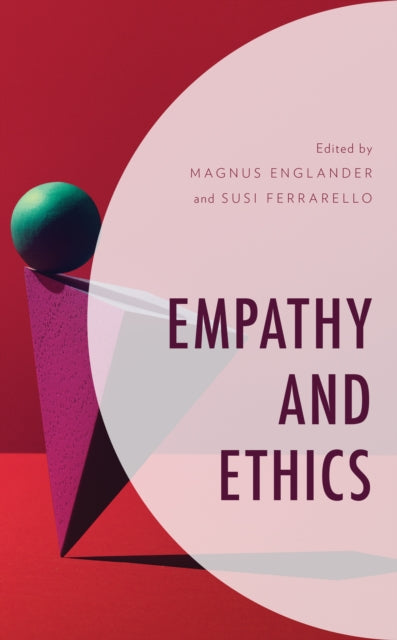
Empathy and Ethics
Empathy and Ethics
We can order this item for you. Delivery usually takes about 4 to 6 weeks.
This item is not held in our immediate stock. We will order it for you after checkout.
Estimated delivery: About 4 to 6 weeks
- Condition: Brand new
- UK Delivery times: Usually arrives within 2 - 3 working days
- UK Shipping: Fee starts at £3.89. Subject to product weight & dimension
Bulk ordering. Want 15 or more copies? Get a personalised quote and bigger discounts. Learn more about bulk orders.
Couldn't load pickup availability
- More about Empathy and Ethics
The book explores the relationship between empathy and ethics, examining whether it is right to be empathetic, whether empathy can be unethical, and whether there is an ethical obligation to be empathetic. It offers phenomenological descriptions of the thorny problem pertaining to the interconnection of empathy and ethics essential for professionals and scholars of different fields.
Format: Hardback
Length: 544 pages
Publication date: 05 May 2023
Publisher: Bloomsbury Publishing Plc
This book explores the complex relationship between empathy and ethics, challenging the notion that empathy is always ethical. It presents a unique and indispensable reflection on the interconnection between empathy and ethics, raising important questions about the rightness of empathy, its potential unethical nature, and the ethical obligation to be empathetic. The essays offer phenomenological descriptions of the thorny problem pertaining to the interconnection of empathy and ethics, essential for professionals and scholars of different fields, such as philosophy, psychiatry, health science, psychology, and sociology.
Contributors to this book include Michael Agostinelli Jr., Elodie Boublil, Francesca Brencio, Manuel Camassa, Scott D. Churchill, Nicolas de Warren, Craig Derksen, John J. Drummond, Íngrid Vendrell Ferran, Jannik M. Hansen, Simon Høffding, Joel Krueger, Carlos Lobo, Esteban Marín-Ávila, Alexander Montes, Dermot Moran, Henning Nörenberg, Tone Roald, Eva Schwarz, Andrea Staiti, Joona Taipale, Stefano Vincini, Maren Wehrle, and Dan Zahavi.
The book aims to provide a deeper understanding of the ethical implications of empathy and to encourage a more ethical approach to interpersonal relationships and professional practice. It challenges the notion that empathy is always good and highlights the potential for empathy to be harmful or unethical. The contributors argue that empathy is a complex phenomenon that requires careful consideration and training to be used effectively and ethically.
One of the key themes of the book is the importance of empathy in healthcare. Healthcare professionals must be able to empathize with their patients in order to provide effective care and support. However, empathy can be challenging in healthcare settings, where there are often time constraints, high-stress environments, and complex medical conditions. The contributors argue that empathy can be used to improve patient outcomes, reduce patient anxiety, and build trust between patients and healthcare providers.
However, empathy can also be unethical in certain situations. For example, empathy can lead to compassion fatigue, where healthcare providers become overwhelmed by the emotional burden of their work and become unable to provide effective care. Empathy can also be used to justify harmful practices, such as coercion or discrimination.
To address these ethical challenges, the book offers a range of solutions. One of the key solutions is to educate our citizens and train our professionals to use the right form of empathy. This involves teaching individuals to recognize and manage their own emotions, to understand the perspectives of others, and to respond to others in a compassionate and ethical manner.
Another solution is to create a culture of empathy in healthcare settings. This involves creating a supportive and inclusive environment where healthcare providers can feel comfortable expressing their emotions and concerns. It also involves providing training and support to healthcare providers to help them manage their own stress and to develop effective coping strategies.
In addition to healthcare, empathy is also important in other fields, such as education, law, and social work. Empathy can help individuals to understand and connect with others, to develop empathy for others, and to make ethical decisions. However, empathy can also be challenging in these fields, where there are often competing interests and conflicting values.
The contributors to this book offer a range of perspectives on the ethical implications of empathy. Some argue that empathy is a fundamental human value that should be promoted and protected. Others argue that empathy can be harmful or unethical in certain situations and that it should be used with caution.
One of the challenges of promoting empathy is that it can be difficult to measure. Empathy is a subjective experience that is difficult to quantify and measure. However, the contributors argue that it is important to measure empathy in order to understand its impact on individuals and society.
One of the ways that empathy can be measured is through the use of empathy tests. Empathy tests measure individuals' ability to recognize and respond to the emotions of others. These tests can be used to identify individuals who may be at risk of developing empathy-related disorders, such as compassion fatigue or burnout.
In addition to empathy tests, the contributors to this book also offer a range of other strategies for promoting empathy. These strategies include mindfulness, meditation, and social support. Mindfulness involves being present in the moment and paying attention to one's thoughts and feelings. Meditation involves focusing on one's breath and clearing one's mind. Social support involves building relationships with others and seeking support when needed.
Despite the challenges of promoting empathy, the contributors to this book argue that it is essential for building a more ethical and compassionate society. Empathy can help individuals to understand and connect with others, to develop empathy for others, and to make ethical decisions. However, empathy can also be harmful or unethical in certain situations, and it is important to be aware of these risks.
In conclusion, this book represents a unique and indispensable reflection on the interconnection between empathy and ethics. It challenges the notion that empathy is always ethical and offers a range of solutions for addressing the ethical challenges of empathy. By educating our citizens and training our professionals to use the right form of empathy, we can create a culture of empathy in healthcare settings and other fields, and we can help to build a more ethical and compassionate society.
Weight: 894g
Dimension: 237 x 161 x 36 (mm)
ISBN-13: 9781538154106
UK and International shipping information
UK and International shipping information
We deliver throughout the United Kingdom and to 128 countries and territories worldwide, including the United States, Australia, Canada, Germany, Spain and France.