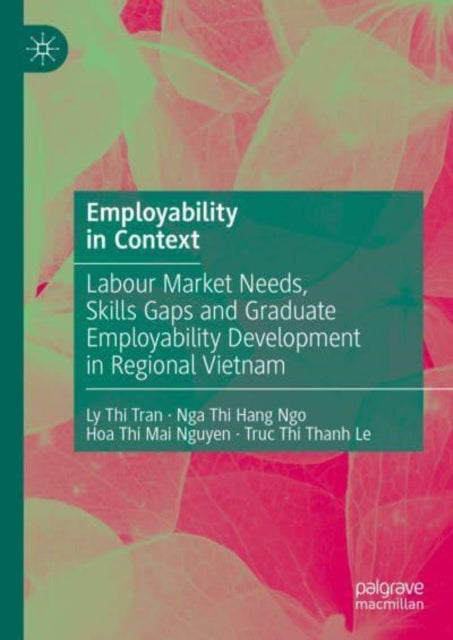
Ly Thi Tran,Nga Thi Hang Ngo,Hoa Thi Mai Nguyen,Truc Thi Thanh Le
Employability in Context: Labour Market Needs, Skills Gaps and Graduate Employability Development in Regional Vietnam
Employability in Context: Labour Market Needs, Skills Gaps and Graduate Employability Development in Regional Vietnam
💎 Earn 454 Points (£4.54) on this item.
We can order this item for you. Delivery usually takes about 4 to 6 weeks.
This item is not held in our immediate stock. We will order it for you after checkout.
Estimated delivery: About 4 to 6 weeks
YOU SAVE £19.14
- Condition: Brand new
- UK Delivery times: Usually arrives within 2 - 3 working days
- UK Shipping: Fee starts at £2.39. Subject to product weight & dimension
Bulk ordering. Want 15 or more copies? Get a personalised quote and bigger discounts. Learn more about bulk orders.
Couldn't load pickup availability
- More about Employability in Context: Labour Market Needs, Skills Gaps and Graduate Employability Development in Regional Vietnam
This book explores graduate employability in regional Vietnam, discussing government and institutional policies, employer perspectives, and graduate experiences. It aims to develop employability in context for graduates to adapt to regional conditions and tackle new employment challenges.
Format: Hardback
Length: 241 pages
Publication date: 18 November 2022
Publisher: Springer International Publishing AG
This comprehensive book delves into the critical issue of graduate employability in regional Vietnam, offering a comprehensive analysis of both the labor market's demands and the practices and challenges involved in developing graduate employability and career capacity building at the national, institutional, and individual levels. By examining government and institutional policies, as well as considering the perspectives and experiences of three key stakeholders: employers, graduates, and universities, the book provides a deep understanding of graduate employability in the country.
One of the key findings of the book is the importance of contextualizing employability for graduates in regional Vietnam to ensure their ability to adapt to the unique social, cultural, and demographic conditions of the region. This requires a focus on developing skills and competencies that are tailored to the specific needs of local industries and employers, as well as an understanding of the cultural nuances and workplace dynamics that are prevalent in the region.
Another important aspect of the book is its recognition of the changing nature of the job market and the need for graduates to be adaptable and flexible in their career paths. The book discusses the importance of lifelong learning, continuous professional development, and the ability to navigate the evolving job market landscape, as well as the challenges that graduates face in terms of job insecurity, underemployment, and the need to adapt to new technologies and work practices.
To address these challenges, the book proposes a range of strategies and interventions that can be implemented at the national, institutional, and individual levels. At the national level, the book suggests that the government should prioritize investment in education and training, including vocational training and apprenticeships, to ensure that graduates have the skills and competencies needed by the labor market. Additionally, the government should promote policies that support entrepreneurship and innovation, such as tax incentives and research and development funding, to create new job opportunities and stimulate economic growth.
At the institutional level, universities should play a critical role in developing graduate employability by offering programs that are tailored to the needs of the labor market and by providing students with practical skills and experiences that are relevant to their career aspirations. Universities should also work closely with employers to ensure that their programs align with industry requirements and that students are prepared for the job market.
Finally, at the individual level, graduates should be proactive in their career development and seek out opportunities to gain practical experience, network with professionals, and develop their skills and competencies. Graduates should also be open to learning and adapting to new technologies and work practices, as well as being willing to relocate to different regions or industries to pursue their career goals.
In conclusion, this book provides a valuable contribution to the literature on graduate employability in regional Vietnam. By offering a comprehensive analysis of the challenges and opportunities facing graduates in the region, the book provides a roadmap
This comprehensive book delves into the critical issue of graduate employability in regional Vietnam, offering a comprehensive analysis of both the labor market's demands and the practices and challenges involved in developing graduate employability and career capacity building at the national, institutional, and individual levels. By examining government and institutional policies, as well as considering the perspectives and experiences of three key stakeholders: employers, graduates, and universities, the book provides a deep understanding of graduate employability in the country
One of the key findings of the book is the importance of contextualizing employability for graduates in regional Vietnam to ensure their ability to adapt to the unique social, cultural, and demographic conditions of the region. This requires a focus on developing skills and competencies that are tailored to the specific needs of local industries and employers, as well as an understanding of the cultural nuances and workplace dynamics that are prevalent the region.
Another important aspect of the book is its recognition of the changing nature that the job market and the need for graduates to be adaptable and flexible in their career paths. The book discusses the importance of lifelong the learning, continuous professional development, and the ability to navigate the evolving job market landscape, as well as the challenges that graduates face in terms of job insecurity, underemployment, and the need to adapt to new technologies and work practices.
To address these challenges, the book proposes a range of strategies and interventions that can be implemented at the national, institutional, and individual levels. At the national level, the book suggests that the government should prioritize investment in education and training, including vocational training and apprenticeships, to ensure that graduates have the skills and competencies needed by the labor market. Additionally, the government should promote policies that support entrepreneurship and innovation, such as tax incentives and research and development funding, to create new job opportunities and stimulate economic growth.
At the institutional level, universities should play a critical role in developing graduate employability by offering programs that are tailored to the needs of the labor market and by providing students with practical skills and experiences that are relevant to their career aspirations. Universities should also work closely with employers to ensure that their programs align with industry requirements and that students are prepared for the job market.
Finally, at the individual level, graduates should be proactive in their career development and seek out opportunities to gain practical experience, network with professionals, and develop their skills and competencies. Graduates should also be open to learning and adapting to new technologies and work practices, as well as being willing to relocate to different regions or industries to pursue their career goals.
In conclusion, this book provides a valuable contribution to the literature on graduate employability in regional Vietnam. By offering a comprehensive analysis of the challenges and opportunities facing graduates in the region, the book provides a roadmap,
This comprehensive book delves into the critical issue of graduate employability in regional Vietnam, offering a comprehensive analysis of both the labor market's demands and the practices and challenges involved in developing graduate employability and career capacity building at the national, institutional, and individual levels. By examining government and institutional policies, as well as considering the perspectives and experiences of three key stakeholders: employers, graduates, and universities, the book provides a deep understanding of graduate employability in the country.
One of the key findings of the book is the importance of contextualizing employability for graduates in regional Vietnam to ensure their ability to adapt to the unique social, cultural, and demographic conditions of the region. This requires a focus on developing skills and competencies that are tailored to the specific needs of local industries and employers, as well as an understanding of the cultural nuances and workplace dynamics that are prevalent in the region.
Another important aspect of the book is its recognition of the changing nature of the job market and the need for graduates to be adaptable and flexible in their career paths. The book discusses the importance of lifelong the learning, continuous professional development, and the ability to navigate the evolving job market landscape, as well as the challenges that graduates face in terms of job insecurity, underemployment, and the need to adapt to new technologies and work practices.
To address these challenges, the book proposes a range of strategies and interventions that can be implemented at the national, institutional, and individual levels. At the national level, the book suggests that the government should prioritize investment in education and training, including vocational training and apprenticeships, to ensure that graduates have the skills and competencies needed by the labor market. Additionally, the government should promote policies that support entrepreneurship and innovation, such as tax incentives and research and development funding, to create new job opportunities and stimulate economic growth.
At the institutional level, universities should play a critical role in developing graduate employability by offering programs that are tailored to the needs of the labor market and by providing students with practical skills and experiences that are relevant to their career aspirations. Universities should also work closely with employers to ensure that their programs align with industry requirements and that students are prepared for the job market.
Finally, at the individual level, graduates should be proactive in their career development and seek out opportunities to gain practical experience, network with professionals, and develop their skills and competencies. Graduates should also be open to learning and adapting to new technologies and work practices, as well as being willing to relocate to different regions or industries to pursue their career goals.
In conclusion, this book provides a valuable contribution to the literature on graduate employability in regional Vietnam. By offering a comprehensive analysis of the challenges and opportunities facing graduates in the region, the book provides a roadmap,
This comprehensive book delves into the critical issue of graduate employability in regional Vietnam, offering a comprehensive analysis of both the labor market's demands and the practices and challenges involved in developing graduate employability and career capacity building at the national, institutional, and individual levels. By examining government and institutional policies, as well as considering the perspectives and experiences of three key stakeholders: employers, graduates, and universities, the book provides a deep understanding of graduate employability in the country.
One of the key findings of the book is the importance of contextualizing employability for graduates in regional Vietnam to ensure their ability to adapt to the unique social, cultural, and demographic conditions of the region. This requires a focus on developing skills and competencies that are tailored to the specific needs of local industries and employers, as well as an understanding of the cultural nuances and workplace dynamics that are prevalent in the region.
Another important aspect of the book is its recognition of the changing nature of the job market and the need for graduates to be adaptable and flexible in their career paths. The book discusses the importance of lifelong the learning, continuous professional development, and the ability to navigate the evolving job market landscape, as well as the challenges that graduates face in terms of job insecurity, underemployment, and the need to adapt to new technologies and work practices.
To address these challenges, the book proposes a range of strategies and interventions that can be implemented at the national, institutional, and individual levels. At the national level, the book suggests that the government should prioritize investment in education and training, including vocational training and apprenticeships, to ensure that graduates have the skills and competencies needed by the labor market. Additionally, the government should promote policies that support entrepreneurship and innovation, such as tax incentives and research and development funding, to create new job opportunities and stimulate economic growth.
At the institutional level, universities should play a critical role in developing graduate employability by offering programs that are tailored to the needs of the labor market and by providing students with practical skills and experiences that are relevant to their career aspirations. Universities should also work closely with employers to ensure that their programs align with industry requirements and that students are prepared for the job market.
Finally, at the individual level, graduates should be proactive in their career development and seek out opportunities to gain practical experience, network with professionals, and develop their skills and competencies. Graduates should also be open to learning and adapting to new technologies and work practices, as well as being willing to relocate to different regions or industries to pursue their career goals.
In conclusion, this book provides a valuable contribution to the literature on graduate employability in regional Vietnam. By offering a comprehensive analysis of the challenges and opportunities facing graduates in the region, the book provides a roadmap,
Weight: 446g
Dimension: 153 x 217 x 23 (mm)
ISBN-13: 9783031041433
Edition number: 1st ed. 2022
UK and International shipping information
UK and International shipping information
UK Delivery and returns information:
- Delivery within 2 - 3 days when ordering in the UK.
- Shipping fee for UK customers from £2.39. Fully tracked shipping service available.
- Returns policy: Return within 30 days of receipt for full refund.
International deliveries:
Shulph Ink now ships to Australia, Belgium, Canada, France, Germany, Ireland, Italy, India, Luxembourg Saudi Arabia, Singapore, Spain, Netherlands, New Zealand, United Arab Emirates, United States of America.
- Delivery times: within 5 - 10 days for international orders.
- Shipping fee: charges vary for overseas orders. Only tracked services are available for most international orders. Some countries have untracked shipping options.
- Customs charges: If ordering to addresses outside the United Kingdom, you may or may not incur additional customs and duties fees during local delivery.