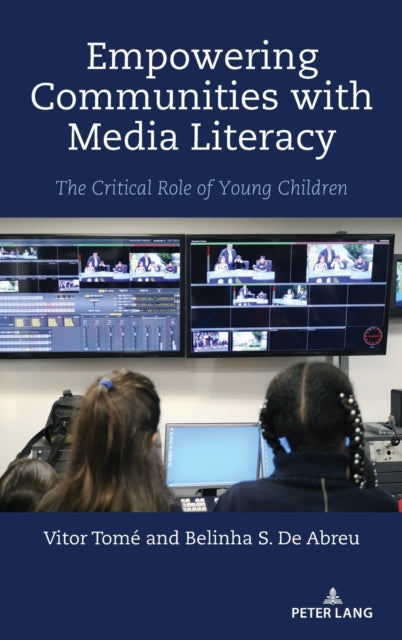
Vitor Tome,Belinha S. De Abreu
Empowering Communities with Media Literacy: The Critical Role of Young Children
Empowering Communities with Media Literacy: The Critical Role of Young Children
💎 Earn 340 Points (£3.40) on this item.
YOU SAVE £8.86
- Condition: Brand new
- UK Delivery times: Usually arrives within 2 - 3 working days
- UK Shipping: Fee starts at £2.39. Subject to product weight & dimension
Bulk ordering. Want 15 or more copies? Get a personalised quote and bigger discounts. Learn more about bulk orders.
Couldn't load pickup availability
- More about Empowering Communities with Media Literacy: The Critical Role of Young Children
This book details a project that aimed to empower pre-school and primary-school-aged children to become active and effective citizens in the digital era through a local digital media literacy program. The project involved 400 children, their families, teachers, and community members in a Lisbon locality. The research presented aims to answer the question of how a local and replicable digital media literacy program can empower children to become active and effective citizens in the digital era.
Format: Hardback
Length: 228 pages
Publication date: 31 October 2022
Publisher: Peter Lang Publishing Inc
This book delves into the intricate details of a project named Digital Citizenship Education for Democratic Participation, which involved approximately 400 pre-school and primary school children, their families, teachers, and community members in a Lisbon locality. The primary objective of this research is to explore the potential of a local and replicable digital media literacy program to empower preschool and primary-school-aged children to become active and effective citizens in the digital era.
The authors of this book take readers on a comprehensive journey, sharing the steps taken throughout the project, including the significant challenges encountered and the innovative solutions devised to overcome them. They also delve into the project's sustainability, discussing the strategies employed to ensure its long-term impact and relevance.
The project aimed to equip children with the necessary skills and knowledge to navigate the digital world safely and responsibly. It involved a range of activities and initiatives, such as workshops, seminars, and online platforms, designed to promote digital literacy, media awareness, and critical thinking. The children were encouraged to engage with digital technologies, explore online resources, and participate in digital discussions and debates, fostering their ability to critically evaluate information and make informed decisions.
One of the key challenges faced by the project was the need to engage and retain the children's interest in the digital realm. The authors recognized that children, especially at a young age, can be easily distracted and disengaged from traditional learning methods. To address this, they incorporated interactive and engaging activities into the curriculum, such as games, quizzes, and creative projects, making learning fun and exciting for the children.
Another challenge was ensuring that the digital media literacy program reached a wide audience. The authors recognized that not all children had equal access to digital technologies and resources, particularly those from marginalized communities. To address this, they collaborated with local schools, community organizations, and government agencies to promote the program and provide resources to those who needed them.
The project also aimed to foster a sense of community and social responsibility among the children. The authors believed that by teaching children about digital citizenship, they could empower them to become active contributors to their communities and advocate for social change. To achieve this, they organized community events and projects, such as digital storytelling competitions and online campaigns, that allowed the children to showcase their skills and contribute to their local communities.
Throughout the book, the authors provide valuable insights and lessons learned from their experiences. They highlight the importance of collaboration, adaptability, and a holistic approach to digital citizenship education. They also emphasize the need for ongoing research and evaluation to ensure that the program remains effective and relevant in the ever-changing digital landscape.
In conclusion, this book offers a comprehensive and insightful exploration of the Digital Citizenship Education for Democratic Participation project. It provides valuable insights into the challenges and opportunities faced by educators
This book delves into the intricate details of a project named Digital Citizenship Education for Democratic Participation, which involved approximately 400 pre-school and primary school children, their families, teachers, and community members in a Lisbon locality. The primary objective of this research is to explore the potential of a local and replicable digital media literacy program to empower preschool and primary-school-aged children to become active and effective citizens in the digital era.
The authors of this book take readers on a comprehensive journey, sharing the steps taken throughout the project, including the significant challenges encountered and the innovative solutions devised to overcome them. They also delve into the project's sustainability, discussing the strategies employed to ensure its long-term impact and relevance.
The project aimed to equip children with the necessary skills and knowledge to navigate the digital world safely and responsibly. It involved a range of activities and initiatives, such as workshops, seminars, and online platforms, designed to promote digital literacy, media awareness, and critical thinking. The children were encouraged to engage with digital technologies, explore online resources, and participate in digital discussions and debates, fostering their ability to critically evaluate information and make informed decisions.
One of the key challenges faced by the project was the need to engage and retain the children's interest in the digital realm. The authors recognized that children, especially at a young age, can be easily distracted and disengaged from traditional learning methods. To address this, they incorporated interactive and engaging activities into the curriculum, such as games, quizzes, and creative projects, making learning fun and exciting for the children.
Another challenge was ensuring that the digital media literacy program reached a wide audience. The authors recognized that not all children had equal access to digital technologies and resources, particularly those from marginalized communities. To address this, they collaborated with local schools, community organizations, and government agencies to promote the program and provide resources to those who needed them.
The project also aimed to foster a sense of community and social responsibility among the children. The authors believed that by teaching children about digital citizenship, they could empower them to become active contributors to their communities and advocate for social change. To achieve this, they organized community events and projects, such as digital storytelling competitions and online campaigns, that allowed the children to showcase their skills and contribute to their local communities.
Throughout the book, the authors provide valuable insights and lessons learned from their experiences. They highlight the importance of collaboration, adaptability, and a holistic approach to digital citizenship education. They also emphasize the need for ongoing research and evaluation to ensure that the program remains effective and relevant in the ever-changing digital landscape.
In conclusion, this book offers a comprehensive and insightful exploration of the Digital Citizenship Education for Democratic Participation project. It provides valuable insights into the challenges and opportunities faced by educators.
Weight: 454g
Dimension: 234 x 158 x 19 (mm)
ISBN-13: 9781433195099
Edition number: New ed
UK and International shipping information
UK and International shipping information
UK Delivery and returns information:
- Delivery within 2 - 3 days when ordering in the UK.
- Shipping fee for UK customers from £2.39. Fully tracked shipping service available.
- Returns policy: Return within 30 days of receipt for full refund.
International deliveries:
Shulph Ink now ships to Australia, Belgium, Canada, France, Germany, Ireland, Italy, India, Luxembourg Saudi Arabia, Singapore, Spain, Netherlands, New Zealand, United Arab Emirates, United States of America.
- Delivery times: within 5 - 10 days for international orders.
- Shipping fee: charges vary for overseas orders. Only tracked services are available for most international orders. Some countries have untracked shipping options.
- Customs charges: If ordering to addresses outside the United Kingdom, you may or may not incur additional customs and duties fees during local delivery.