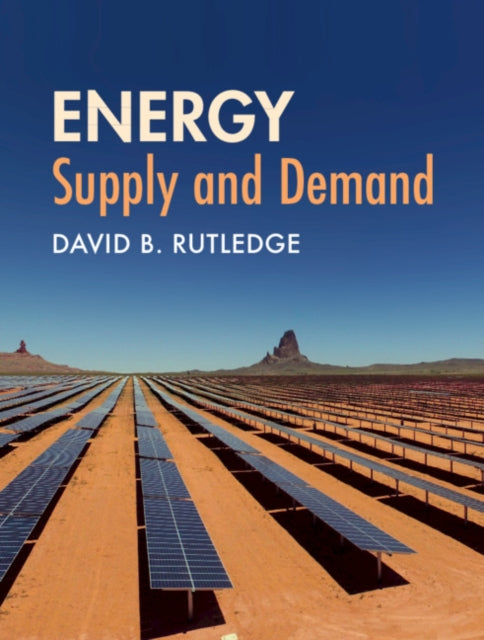
David B.Rutledge
Energy: Supply and Demand
Energy: Supply and Demand
💎 Earn 217 Points (£2.17) on this item.
YOU SAVE £2.58
- Condition: Brand new
- UK Delivery times: Usually arrives within 2 - 3 working days
- UK Shipping: Fee starts at £2.39. Subject to product weight & dimension
Bulk ordering. Want 15 or more copies? Get a personalised quote and bigger discounts. Learn more about bulk orders.
Couldn't load pickup availability
- More about Energy: Supply and Demand
This text provides students with a comprehensive account of the trends in energy supply and demand, discussing developments in technology and policy, and the environmental impacts of the energy industry. It is accompanied by online resources and is ideal for courses on energy and related disciplines.
Format: Hardback
Length: 556 pages
Publication date: 12 December 2019
Publisher: Cambridge University Press
Focusing on trends in energy supply and demand, this comprehensive text provides students with a thorough understanding of the subject and the skills necessary to make future projections and study climate impacts. Developments in technology and policy are discussed in depth, including the role of coal, the fracking revolution for oil and gas, the electricity grid, wind and solar power, battery storage, and biofuels. Trends in demand are also detailed, with analysis of industrial demands such as LEDs, air conditioning, heat pumps, and information technology, as well as the transportation demands of railroads, ships, and cars (including electric vehicles). The environmental impacts of the energy industry are considered throughout, with a full chapter dedicated to climate change. Real-life case studies and examples add context, and over 400 full-color figures illustrate key concepts. Accompanied by a package of online resources including solutions, video examples, sample data, and PowerPoint slides, this is an ideal text for courses on energy and is accessible to a range of students from engineering and related disciplines.
Introduction:
The energy industry is a vital component of modern society, providing the power and fuel that drive our economy, transportation, and daily lives. However, the demand for energy is constantly evolving, and this has significant implications for the supply and demand of various energy sources. In this text, we will explore the trends in energy supply and demand, and the impact of these trends on the environment and society.
Trends in Energy Supply:
One of the most significant trends in energy supply is the increasing use of renewable energy sources. Solar, wind, and hydroelectric power are becoming increasingly popular as they offer a clean and sustainable alternative to fossil fuels. This trend is driven by concerns about climate change, as well as the rising costs of fossil fuels.
Trends in Energy Demand:
In contrast to the trends in energy supply, there are several trends in energy demand. One of the most significant is the growth of industrialization and urbanization, which has led to an increase in the demand for energy-intensive products and services. This has particularly impacted the demand for electricity, as many industries require large amounts of power to operate.
The Role of Coal:
Coal is one of the most significant sources of energy in the world, and it has played a crucial role in the development of modern society. However, coal is also one of the most polluting energy sources, and its use has significant environmental impacts. As a result, many countries are reducing their reliance on coal and shifting towards renewable energy sources.
The Fracking Revolution for Oil and Gas:
The fracking revolution for oil and gas has been a major game-changer in the energy industry. Fracking involves the extraction of oil and gas from shale rock using high-pressure water and chemicals. This technique has led to a significant increase in the production of oil and gas, and it has also helped to reduce the cost of energy. However, fracking has also raised concerns about environmental impacts, such as air and water pollution, and it has been linked to earthquakes.
The Electricity Grid:
The electricity grid is a critical infrastructure that connects power plants and consumers. It is responsible for delivering electricity to homes, businesses, and other consumers. As the demand for electricity continues to grow, the electricity grid is facing significant challenges. One of the most significant challenges is the need to upgrade and expand the grid to meet the growing demand.
Wind and Solar Power:
Wind and solar power are two of the most promising renewable energy sources. Wind power is generated by harnessing the power of the wind, while solar power is generated by converting sunlight into electricity. Both wind and solar power are clean and sustainable, and they have significant potential to reduce our reliance on fossil fuels.
Battery Storage:
Battery storage is a critical technology for the development of renewable energy sources. Battery storage allows for the storage of excess energy generated by renewable sources, such as wind and solar power, for use during times of low demand. This technology has significant potential to improve the reliability and stability of the electricity grid.
Biofuels:
Biofuels are a type of fuel that is produced from organic materials, such as corn, sugarcane, and vegetable oil. Biofuels are a renewable energy source, and they can be used to power vehicles and generate electricity. However, biofuels have been criticized for their environmental impacts, such as the use of land and water resources, and their impact on food prices.
Environmental Impacts of the Energy Industry:
The energy industry has significant environmental impacts, including air pollution, water pollution, and greenhouse gas emissions. These impacts have significant consequences for human health, the environment, and the economy. As a result, many countries are taking steps to reduce their reliance on fossil fuels and transition to renewable energy sources.
Climate Change:
Climate change is a significant threat to the planet, and the energy industry is a major contributor to greenhouse gas emissions. As a result, many countries are taking steps to reduce their reliance on fossil fuels and transition to renewable energy sources.
Conclusion:
In conclusion, the trends in energy supply and demand are complex and multifaceted. The increasing use of renewable energy sources, the growth of industrialization and urbanization, the fracking revolution for oil and gas, the electricity grid, wind and solar power, battery storage, and biofuels are all significant trends that are shaping the future of the energy industry. The environmental impacts of the energy industry are significant, and many countries are taking steps to reduce their reliance on fossil fuels and transition to renewable energy sources. Climate change is a significant threat to the planet, and the energy industry is a major contributor to greenhouse gas emissions. As a result, many countries are taking steps to reduce their reliance on fossil fuels and transition to renewable energy sources.
Weight: 1286g
Dimension: 248 x 195 x 29 (mm)
ISBN-13: 9781107031074
UK and International shipping information
UK and International shipping information
UK Delivery and returns information:
- Delivery within 2 - 3 days when ordering in the UK.
- Shipping fee for UK customers from £2.39. Fully tracked shipping service available.
- Returns policy: Return within 30 days of receipt for full refund.
International deliveries:
Shulph Ink now ships to Australia, Belgium, Canada, France, Germany, Ireland, Italy, India, Luxembourg Saudi Arabia, Singapore, Spain, Netherlands, New Zealand, United Arab Emirates, United States of America.
- Delivery times: within 5 - 10 days for international orders.
- Shipping fee: charges vary for overseas orders. Only tracked services are available for most international orders. Some countries have untracked shipping options.
- Customs charges: If ordering to addresses outside the United Kingdom, you may or may not incur additional customs and duties fees during local delivery.