Shulph Ink
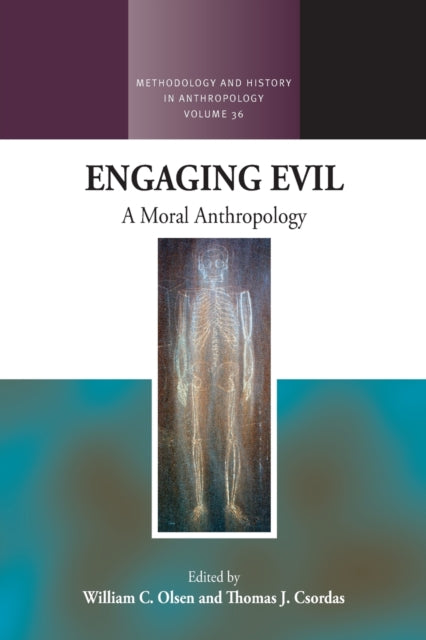
Engaging Evil: A Moral Anthropology
Engaging Evil: A Moral Anthropology
💎 Earn 119 Points (£1.19) on this item.
We can order this item for you. Delivery usually takes about 4 to 6 weeks.
This item is not held in our immediate stock. We will order it for you after checkout.
Estimated delivery: About 4 to 6 weeks
YOU SAVE £4.04
- Condition: Brand new
- UK Delivery times: Usually arrives within 2 - 3 working days
- UK Shipping: Fee starts at £2.39. Subject to product weight & dimension
Bulk ordering. Want 15 or more copies? Get a personalised quote and bigger discounts. Learn more about bulk orders.
Couldn't load pickup availability
- More about Engaging Evil: A Moral Anthropology
Anthropologists have expressed wariness about the concept of evil due to its cultural baggage and theological implications, but this volume shows its usefulness as a descriptor of empirical reality where concepts like violence, criminality, and hatred fall short.
Format: Paperback / softback
Length: 322 pages
Publication date: 14 October 2022
Publisher: Berghahn Books
Anthropologists have expressed wariness about the concept of evil even in discussions of morality and ethics, in part because the concept carries its own cultural baggage and theological implications in Euro-American societies. Addressing the problem of evil as a distinctly human phenomenon and a category of ethnographic analysis, this volume shows the usefulness of engaging evil as a descriptor of empirical reality where concepts such as violence, criminality, and hatred fall short of capturing the darkest side of human existence.
Evil has been a topic of debate and discussion among anthropologists for many years. While some believe that evil is a real and tangible force that exists in the world, others argue that it is a social construct that is used to justify certain behaviors and beliefs. One of the main challenges in discussing evil is the fact that it carries its own cultural baggage and theological implications in Euro-American societies. This can make it difficult for anthropologists to approach the topic in a neutral and objective manner.
One of the ways that anthropologists have attempted to address the problem of evil is by engaging it as a descriptor of empirical reality. This means that they look at the ways in which evil manifests itself in the world and try to understand its causes and effects. For example, some anthropologists have studied the phenomenon of violence and have found that it is often rooted in social and economic inequality. They have also studied the phenomenon of criminality and have found that it is often driven by a desire for power and control.
However, even when anthropologists engage evil as a descriptor of empirical reality, they still face challenges. One of the main challenges is the fact that evil is a subjective concept. Different people have different definitions of evil, and it can be difficult to come to a consensus on what constitutes evil behavior. This can lead to misunderstandings and conflicts between different groups of people.
Another challenge is the fact that evil can be used to justify certain behaviors and beliefs. For example, some people use evil to justify their hatred of certain groups of people, such as immigrants or Muslims. This can lead to violence and discrimination against these groups.
Despite these challenges, anthropologists continue to study evil and its effects on society. They believe that understanding evil is important for developing more effective strategies for preventing and addressing it. One of the ways that anthropologists have done this is by conducting ethnographic research. Ethnographic research involves spending time in a particular community and observing the ways in which people interact with each other and with the world around them.
One of the most famous examples of ethnographic research on evil is the work of anthropologist Mary Douglas. Douglas studied the phenomenon of witchcraft in Africa and found that it was often used to justify social and economic inequality. She also found that witchcraft was often used to control women and to prevent them from asserting their own power.
Douglas's work has had a significant impact on the way that anthropologists think about evil. She has shown that evil is not just a social construct, but it is also a real and tangible force that exists in the world. She has also shown that evil can be used to justify certain behaviors and beliefs, and that it can have a negative impact on society.
In addition to ethnographic research, anthropologists have also used other methods to study evil. For example, some anthropologists have used psychological research to study the causes of evil behavior. They have found that there are a variety of factors that can contribute to evil behavior, including genetics, upbringing, and socialization.
Another method that anthropologists have used to study evil is by using historical research. Historical research can help us to understand the origins of evil behavior and to see how it has changed over time. For example, some anthropologists have studied the history of slavery and have found that it was often used to justify the exploitation of people.
Despite these advances in the study of evil, there are still many challenges that remain. One of the main challenges is the fact that evil is a complex and multifaceted phenomenon. It is difficult to understand all of the factors that contribute to evil behavior, and it is difficult to develop effective strategies for preventing and addressing it.
In conclusion, anthropologists have expressed wariness about the concept of evil even in discussions of morality and ethics, in part because the concept carries its own cultural baggage and theological implications in Euro-American societies. Addressing the problem of evil as a distinctly human phenomenon and a category of ethnographic analysis, this volume shows the usefulness of engaging evil as a descriptor of empirical reality where concepts such as violence, criminality, and hatred fall short of capturing the darkest side of human existence. While there are still many challenges that remain, anthropologists continue to study evil and its effects on society in order to develop more effective strategies for preventing and addressing it.
Weight: 470g
Dimension: 152 x 229 x 23 (mm)
ISBN-13: 9781800736405
This item can be found in:
UK and International shipping information
UK and International shipping information
UK Delivery and returns information:
- Delivery within 2 - 3 days when ordering in the UK.
- Shipping fee for UK customers from £2.39. Fully tracked shipping service available.
- Returns policy: Return within 30 days of receipt for full refund.
International deliveries:
Shulph Ink now ships to Australia, Belgium, Canada, France, Germany, Ireland, Italy, India, Luxembourg Saudi Arabia, Singapore, Spain, Netherlands, New Zealand, United Arab Emirates, United States of America.
- Delivery times: within 5 - 10 days for international orders.
- Shipping fee: charges vary for overseas orders. Only tracked services are available for most international orders. Some countries have untracked shipping options.
- Customs charges: If ordering to addresses outside the United Kingdom, you may or may not incur additional customs and duties fees during local delivery.