Shulph Ink
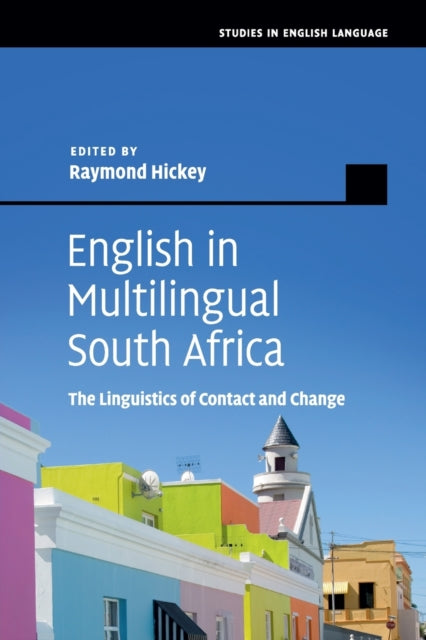
English in Multilingual South Africa: The Linguistics of Contact and Change
English in Multilingual South Africa: The Linguistics of Contact and Change
💎 Earn 127 Points (£1.27) on this item.
We can order this item for you. Delivery usually takes about 4 to 6 weeks.
This item is not held in our immediate stock. We will order it for you after checkout.
Estimated delivery: About 4 to 6 weeks
YOU SAVE £1.51
- Condition: Brand new
- UK Delivery times: Usually arrives within 2 - 3 working days
- UK Shipping: Fee starts at £2.39. Subject to product weight & dimension
Bulk ordering. Want 15 or more copies? Get a personalised quote and bigger discounts. Learn more about bulk orders.
Couldn't load pickup availability
- More about English in Multilingual South Africa: The Linguistics of Contact and Change
South Africa is a country with great linguistic diversity, with large indigenous languages like isiZulu and isiXhosa, as well as European roots like Afrikaans and English. This book investigates sociolinguistic factors and the challenges of multilingualism and globalization in education and social interaction, with a focus on the historical background of English in South Africa.
Format: Paperback / softback
Length: 442 pages
Publication date: 09 June 2022
Publisher: Cambridge University Press
South Africa is a country renowned for its remarkable linguistic diversity, boasting a wide array of indigenous languages and languages with European roots. Millions of people speak isiZulu and isiXhosa, two of the largest indigenous languages, while Afrikaans and English, with their European origins, are also widely spoken, with several million people utilizing them daily. This diverse linguistic landscape has given rise to a multitude of contact scenarios, leading to language variation and change. This insightful volume, authored by a team of esteemed scholars, delves into the sociolinguistic factors and challenges faced by South Africans as a result of multilingualism and globalization in education and social interactions. The historical background of English in South Africa provides a framework for examining the interfaces with other languages spoken in the country, highlighting processes such as contact, bilingualism, code-switching, and language shift.
The linguistic diversity of South Africa is a testament to the country's rich cultural heritage and historical influences. Each indigenous language has its own unique grammar, vocabulary, and cultural traditions, reflecting the diverse communities that have inhabited the region over centuries. In addition to the indigenous languages, South Africa has also embraced languages with European roots, such as Afrikaans and English. These languages have played a significant role in shaping the country's political, economic, and social landscape, and have contributed to the development of a vibrant and diverse society.
One of the key challenges facing South Africa as a result of multilingualism is the preservation and promotion of indigenous languages. While many indigenous languages are in danger of becoming extinct, efforts are being made to revitalize and promote these languages through language revitalization programs, education, and cultural events. These initiatives aim to ensure that the unique linguistic heritage of South Africa is not lost to future generations and that indigenous languages continue to play a vital role in the country's social and cultural life.
Another challenge is the integration of languages with European roots. While Afrikaans and English have been widely adopted as the official languages of South Africa, there are still significant linguistic and cultural barriers that prevent effective communication and interaction between speakers of different languages. This can lead to misunderstandings, inequality, and social exclusion, particularly in areas where there is a high concentration of speakers of different languages.
To address these challenges, South Africa has implemented policies and programs aimed at promoting multilingualism and promoting effective communication between speakers of different languages. These policies include the development of multilingual education programs, the promotion of language rights and the recognition of indigenous languages, and the establishment of language forums and networks to facilitate communication and collaboration between speakers of different languages.
In conclusion, South Africa's linguistic diversity is a source of pride and a testament to the country's rich cultural heritage. While the challenges of multilingualism and globalization are significant, South Africa has taken steps to address these challenges and promote effective communication between speakers of different languages. Through language revitalization programs, education, and cultural events, South Africa is working to ensure that the unique linguistic heritage of the country is preserved and celebrated for generations to come.
Weight: 638g
Dimension: 152 x 228 x 29 (mm)
ISBN-13: 9781108442237
UK and International shipping information
UK and International shipping information
UK Delivery and returns information:
- Delivery within 2 - 3 days when ordering in the UK.
- Shipping fee for UK customers from £2.39. Fully tracked shipping service available.
- Returns policy: Return within 30 days of receipt for full refund.
International deliveries:
Shulph Ink now ships to Australia, Belgium, Canada, France, Germany, Ireland, Italy, India, Luxembourg Saudi Arabia, Singapore, Spain, Netherlands, New Zealand, United Arab Emirates, United States of America.
- Delivery times: within 5 - 10 days for international orders.
- Shipping fee: charges vary for overseas orders. Only tracked services are available for most international orders. Some countries have untracked shipping options.
- Customs charges: If ordering to addresses outside the United Kingdom, you may or may not incur additional customs and duties fees during local delivery.