Shulph Ink
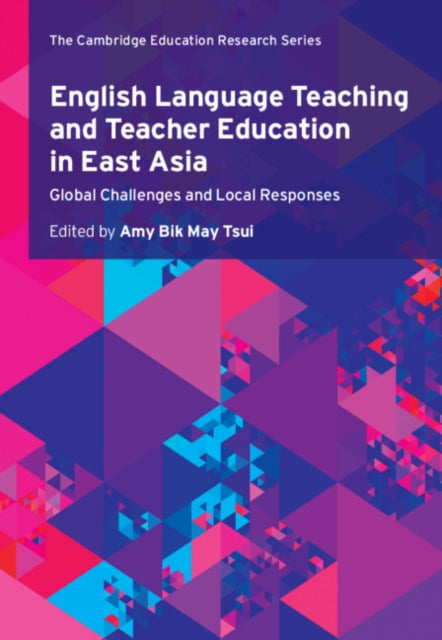
English Language Teaching and Teacher Education in East Asia: Global Challenges and Local Responses
English Language Teaching and Teacher Education in East Asia: Global Challenges and Local Responses
💎 Earn 514 Points (£5.14) on this item.
We can order this item for you. Delivery usually takes about 4 to 6 weeks.
This item is not held in our immediate stock. We will order it for you after checkout.
Estimated delivery: About 4 to 6 weeks
YOU SAVE £6.10
- Condition: Brand new
- UK Delivery times: Usually arrives within 2 - 3 working days
- UK Shipping: Fee starts at £2.39. Subject to product weight & dimension
Bulk ordering. Want 15 or more copies? Get a personalised quote and bigger discounts. Learn more about bulk orders.
Couldn't load pickup availability
- More about English Language Teaching and Teacher Education in East Asia: Global Challenges and Local Responses
The spread of English as a global language has posed immense challenges to governments and English language teaching and teacher education professions in Asia. This volume examines English language education policies across ten Asian jurisdictions, their corresponding teacher education policies, and their impact on teachers and teacher educators. It provides insights into the similarities and critical issues faced by these countries, despite their diverse backgrounds.
Format: Hardback
Length: 350 pages
Publication date: 05 November 2020
Publisher: Cambridge University Press
The pervasive influence of English on globalization has rendered it a crucial global literacy skill, presenting significant challenges to governments and the fields of English language teaching and teacher education in Asia. As students increasingly demand a high level of English proficiency, governments and educators are tasked with addressing this demand effectively. This comprehensive volume explores English language education policies across ten Asian jurisdictions, alongside corresponding teacher education policies. It delves into the impact of these policies on teachers and teacher educators, offering insightful perspectives from scholars actively involved in implementing government policies. By examining these diverse jurisdictions, the book sheds light on the remarkable similarities in the challenges faced by these countries and the critical issues that have emerged from their local responses, despite their distinct socioeconomic, political, cultural, and historical backgrounds.
The spread of English has become an integral part of globalization, and its significance in Asia is undeniable. In this region, the demand for English proficiency is rapidly increasing, presenting immense challenges to governments and English language teaching and teacher education professions. As students strive to achieve high levels of English proficiency, governments and educators are tasked with meeting this demand effectively.
In Asia, the spread of English has had a profound impact on various aspects of society. It has facilitated communication and trade across borders, allowing individuals and businesses to connect with a global audience. English has also become a key tool for education and job opportunities, as it is widely accepted as the language of higher learning and international business.
However, the spread of English has also brought about significant challenges for governments and educators in Asia. One of the primary challenges is the lack of adequate resources and infrastructure to support English language learning. Many schools and universities in Asia lack the necessary resources, such as qualified English teachers, modern teaching materials, and adequate learning spaces. This can result in poor quality education and limited opportunities for students to develop their English skills.
Another challenge is the cultural and linguistic diversity in Asia. Each country in the region has its own unique culture, language, and customs, which can impact the way English is taught and learned. Teachers may need to adapt their teaching methods and materials to meet the diverse needs of their students, which can be time-consuming and challenging.
Furthermore, the spread of English has led to concerns about language loss and the preservation of local languages and cultures. In some cases, English may replace local languages as the primary language of communication, leading to the erosion of cultural identity and heritage. This can have negative consequences for social cohesion and cultural diversity in the region.
To address these challenges, governments and educators in Asia have implemented various policies and programs to promote English language learning. These policies include the development of English language curricula, the training of English teachers, and the establishment of English language centers and schools.
In addition, teacher education programs have been designed to equip teachers with the skills and knowledge necessary to teach English effectively. These programs often include language training, teaching methodology, and cultural sensitivity training, which are essential for effective English language teaching in diverse contexts.
Despite these efforts, there are still challenges to be addressed in the promotion of English language learning in Asia. One of the primary challenges is the need for continued investment in resources and infrastructure to support English language learning. Governments and educators must prioritize the development of English language programs and ensure that they are adequately resourced to meet the growing demand for English proficiency.
Another challenge is the need to address the cultural and linguistic diversity in Asia. Teachers must be trained to adapt their teaching methods and materials to meet the diverse needs of their students, and efforts must be made to preserve and promote local languages and cultures.
Furthermore, there is a need to promote a positive attitude towards English language learning and to address the negative perceptions and stereotypes associated with English. This can be achieved through awareness campaigns, cultural events, and language exchange programs that promote the value of English and its role in promoting social and economic development in Asia.
In conclusion, the spread of English has become an integral part of globalization, and its significance in Asia is undeniable. Governments and educators in the region are faced with significant challenges in promoting English language learning. However, by implementing effective policies and programs, and by prioritizing the development of resources and infrastructure, it is possible to address these challenges and ensure that English language learning continues to thrive in Asia.
Weight: 616g
Dimension: 177 x 250 x 24 (mm)
ISBN-13: 9781108479714
UK and International shipping information
UK and International shipping information
UK Delivery and returns information:
- Delivery within 2 - 3 days when ordering in the UK.
- Shipping fee for UK customers from £2.39. Fully tracked shipping service available.
- Returns policy: Return within 30 days of receipt for full refund.
International deliveries:
Shulph Ink now ships to Australia, Belgium, Canada, France, Germany, Ireland, Italy, India, Luxembourg Saudi Arabia, Singapore, Spain, Netherlands, New Zealand, United Arab Emirates, United States of America.
- Delivery times: within 5 - 10 days for international orders.
- Shipping fee: charges vary for overseas orders. Only tracked services are available for most international orders. Some countries have untracked shipping options.
- Customs charges: If ordering to addresses outside the United Kingdom, you may or may not incur additional customs and duties fees during local delivery.