Shulph Ink
Epitaxial Growth of Complex Metal Oxides
Epitaxial Growth of Complex Metal Oxides
💎 Earn 1334 Points (£13.34) on this item.
- Condition: Brand new
- UK Delivery times: Usually arrives within 2 - 3 working days
- UK Shipping: Fee starts at £2.39. Subject to product weight & dimension
Bulk ordering. Want 15 or more copies? Get a personalised quote and bigger discounts. Learn more about bulk orders.
Couldn't load pickup availability
- More about Epitaxial Growth of Complex Metal Oxides
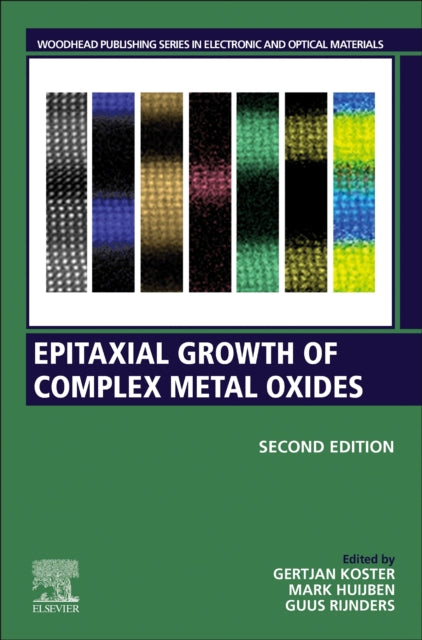
Epitaxial Growth of Complex Metal Oxides,Second Edition discusses techniques and recent developments in the fabrication quality of complex metal oxides,which are facilitating advances in electronic,magnetic and optical applications. It also discusses selected examples of important applications of complex metal oxide thin films.
Format: Paperback / softback
Length: 534 pages
Publication date: 15 April 2022
Publisher: Elsevier Science & Technology
Epitaxial Growth of Complex Metal Oxides, Second Edition delves into comprehensive techniques and recent advancements in enhancing the fabrication quality of complex metal oxides, propelling progress in electronic, magnetic, and optical applications. The book explores the fundamental processes involved in epitaxial growth of complex metal oxides, shedding light on the influence of strain and stoichiometry on crystal structure and associated properties in thin film oxides. Furthermore, it concludes by examining selected case studies highlighting significant applications of complex metal oxide thin films, encompassing optoelectronics, batteries, spintronics, and neuromorphic technologies. This revised edition has undergone a thorough update, featuring brand new chapters on topics such as atomic layer deposition, interfaces, STEM-EELs, and the epitaxial growth of multiferroics, ferroelectrics, and nanocomposites.
Epitaxial growth is a crucial process in the fabrication of complex metal oxides, as it allows for precise control over their crystal structure and properties. By growing thin films of metal oxides on suitable substrates, researchers can engineer materials with tailored properties that are essential for various applications. One of the key techniques involved in epitaxial growth is the use of epitaxy, which is the growth of one crystal structure on top of another. This process can be achieved by controlling the temperature, pressure, and chemical composition of the growth environment.
Strain is another important factor that affects the crystal structure and properties of complex metal oxides. Strain can be introduced during the growth process by applying external forces or by changing the composition of the film. Different strains can lead to different crystal structures, such as cubic, tetragonal, or hexagonal, which have different electronic, magnetic, and optical properties. Stoichiometry is also crucial in epitaxial growth, as it determines the ratio of elements in the film. Changing the stoichiometry can affect the electronic and magnetic properties of the film, as well as its physical and chemical properties.
Epitaxial growth of complex metal oxides has numerous applications in electronic, magnetic, and optical fields. For example, thin film oxides of titanium dioxide are used in solar cells to convert sunlight into electricity. Oxides of iron and nickel are used in magnetic storage devices, such as hard drives and magnetic tapes. Oxides of copper and gold are used in electronic devices, such as transistors and interconnects. Oxides of zinc oxide are used in optoelectronic devices, such as light-emitting diodes and solar cells.
In addition to these applications, epitaxial growth of complex metal oxides has also been used to engineer materials with tailored properties for various other applications. For example, thin film oxides of titanium dioxide are used in coatings to protect surfaces from corrosion and wear. Oxides of iron and nickel are used in sensors to detect magnetic fields and other physical quantities. Oxides of copper and gold are used in microelectromechanical systems (MEMS) to create small devices with precise movements.
Epitaxial growth of complex metal oxides has seen significant advancements in recent years, with the development of new techniques and materials. One of the most promising techniques is atomic layer deposition (ALD), which allows for the precise control of the growth of thin films. ALD involves the sequential deposition of thin layers of materials, each layer being deposited at a different temperature and pressure. This technique can be used to create films with a wide range of compositions and properties, making it an ideal tool for the fabrication of complex metal oxide thin films.
Another important development is the use of interfaces in epitaxial growth. Interfaces play a crucial role in determining the electronic and magnetic properties of complex metal oxide thin films. By controlling the composition and structure of the interfaces, researchers can engineer materials with tailored properties that are essential for various applications. For example, interfaces between different metal oxides can be used to create materials with specific magnetic properties, such as ferromagnetic or antiferromagnetic behavior.
STEM-EELs (scanning transmission electron microscopy with energy-filtered electron lenses) is another technique that has been used to study the epitaxial growth of complex metal oxides. STEM-EELs allows for the precise imaging of the atomic structure of the film, which can be used to identify defects and other structural features. This technique can also be used to study the growth process and to optimize the growth conditions for specific applications.
Epitaxial growth of complex metal oxides has also been used to engineer materials with tailored properties for various other applications. For example, thin film oxides of titanium dioxide are used in coatings to protect surfaces from corrosion and wear. Oxides of iron and nickel are used in sensors to detect magnetic fields and other physical quantities. Oxides of copper and gold are used in microelectromechanical systems (MEMS) to create small devices with precise movements.
In conclusion, epitaxial growth of complex metal oxides is a crucial process in the fabrication of materials with tailored properties that are essential for various applications. By controlling the crystal structure and properties of complex metal oxides, researchers can engineer materials with specific electronic, magnetic, and optical properties. Epitaxial growth has numerous applications in electronic, magnetic, and optical fields, and it has seen significant advancements in recent years with the development of new techniques and materials. The use of atomic layer deposition, interfaces, STEM-EELs, and other techniques has allowed for the precise control of the growth of thin films and the engineering of materials with tailored properties. As technology continues to evolve, we can expect to see even more exciting developments in the field of epitaxial growth of complex metal oxides.
Dimension: 229 x 152 (mm)
ISBN-13: 9780081029459
Edition number: 2 ed
This item can be found in:
UK and International shipping information
UK and International shipping information
UK Delivery and returns information:
- Delivery within 2 - 3 days when ordering in the UK.
- Shipping fee for UK customers from £2.39. Fully tracked shipping service available.
- Returns policy: Return within 30 days of receipt for full refund.
International deliveries:
Shulph Ink now ships to Australia, Belgium, Canada, France, Germany, Ireland, Italy, India, Luxembourg Saudi Arabia, Singapore, Spain, Netherlands, New Zealand, United Arab Emirates, United States of America.
- Delivery times: within 5 - 10 days for international orders.
- Shipping fee: charges vary for overseas orders. Only tracked services are available for most international orders. Some countries have untracked shipping options.
- Customs charges: If ordering to addresses outside the United Kingdom, you may or may not incur additional customs and duties fees during local delivery.