Linden Lewis,Francio Guadeloupe,Yvon van der Pijl,Nikki Mulder,Jordi Halfman,Guiselle Starink-Martha,Rose Mary Allen,Lisenne Delgado
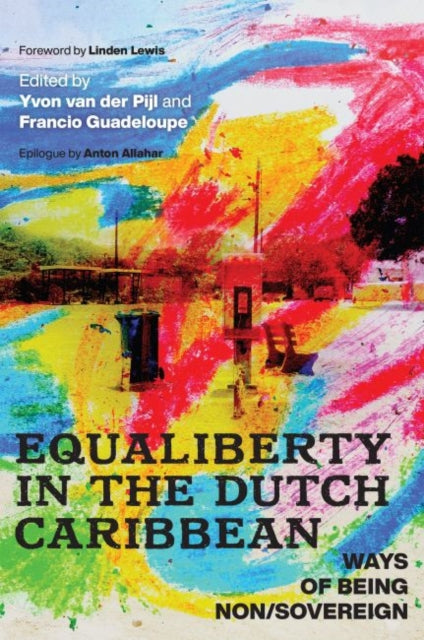
Equaliberty in the Dutch Caribbean: Ways of Being Non/Sovereign
Equaliberty in the Dutch Caribbean: Ways of Being Non/Sovereign
💎 Earn 535 Points (£5.35) on this item.
YOU SAVE £12.90
- Condition: Brand new
- UK Delivery times: Usually arrives within 2 - 3 working days
- UK Shipping: Fee starts at £2.39. Subject to product weight & dimension
Bulk ordering. Want 15 or more copies? Get a personalised quote and bigger discounts. Learn more about bulk orders.
Couldn't load pickup availability
- More about Equaliberty in the Dutch Caribbean: Ways of Being Non/Sovereign
Equaliberty in the Dutch Caribbean is a collection of essays that examines equality and freedom on non-sovereign islands, challenging conventional assumptions and engaging with everyday projects, imaginaries, and dreams.
Format: Hardback
Length: 210 pages
Publication date: 15 April 2022
Publisher: Rutgers University Press
Equaliberty in the Dutch Caribbean is a captivating collection of essays that delves into the core principles of equality and freedom on the non-sovereign islands of the Dutch Caribbean. Through extensive ethnographic research, historical and media analysis, the study of popular culture, and personal accounts, the diverse contributions challenge prevailing notions about political non/sovereignty. While acknowledging the existence of nationalist independence movements, the book creates a critical space to explore alternative forms of political articulation, autonomy, liberty, and a fulfilling life. Spanning across all six distinct islands, the volume engages with the daily endeavors, ordinary imaginaries, and aspirations of equaliberty alongside the efforts of independistas and traditional social movements seeking greater or full self-determination. As such, it presents a rich and profound narrative of the diverse ways of being and belonging in our contemporary postcolonial world.
Introduction:
Equaliberty in the Dutch Caribbean explores the complex interplay between equality and freedom on the non-sovereign islands of the Dutch Caribbean. Drawing on a wealth of ethnographic research, historical analysis, media scrutiny, and personal narratives, the book offers a multifaceted perspective on these islands' political landscapes. While acknowledging the existence of nationalist independence movements, it also seeks to examine alternative forms of political expression, autonomy, liberty, and a good life. By engaging with a diverse range of voices and stories across all six islands, the volume explores the everyday projects, ordinary imaginaries, and dreams of equaliberty alongside the work of independistas and traditional social movements striving for more or full self-determination.
Ethnographic Research:
The authors of Equaliberty in the Dutch Caribbean have conducted extensive fieldwork on the islands, immersing themselves in the local cultures, traditions, and social dynamics. Through their ethnographic research, they have shed light on the diverse experiences and perspectives of the people living on these islands, challenging conventional notions of uniformity and homogeneity. The authors' deep understanding of the local context enables them to provide nuanced and empathetic accounts of the challenges and opportunities faced by the inhabitants of the Dutch Caribbean.
Historical and Media Analysis:
The book also incorporates historical and media analysis to provide a broader context for understanding the political developments in the Dutch Caribbean. The authors examine the historical legacies of colonialism, slavery, and neocolonialism, as well as the impact of globalization and international relations on the islands. Through their analysis, they highlight the struggles and resilience of the people in the face of historical oppression and exploitation. The media scrutiny further sheds light on the ways in which the islands are represented and portrayed in the global media, contributing to the construction of national and regional identities.
Popular Culture and Autoethnography:
In addition to ethnographic research and historical analysis, Equaliberty in the Dutch Caribbean incorporates popular culture and autoethnography to enrich the understanding of equality and freedom on the islands. The authors explore the role of music, dance, literature, and other forms of cultural expression in shaping the political consciousness and identity of the people. Through their personal accounts and reflections, they offer insights into the experiences and struggles of individuals and communities, highlighting the complexities and nuances of their lived realities.
Alternative Forms of Political Expression:
One of the central themes of the book is the exploration of alternative forms of political expression and autonomy in the Dutch Caribbean. The authors argue that traditional nationalist movements may not always be the most effective means of achieving political self-determination. Instead, they suggest that there are other ways of articulating political demands and aspirations, such as community-based initiatives, social movements, and cultural practices. By highlighting these alternative forms of political articulation, the book encourages readers to think beyond the traditional boundaries of political discourse and explore new avenues for achieving equality and freedom.
Autonomy and Liberty:
Equaliberty in the Dutch Caribbean also delves into the concept of autonomy and liberty in the context of the non-sovereign islands. The authors argue that autonomy and liberty are not merely abstract ideals but are essential for the well-being and development of individuals and communities. They highlight the importance of self-determination, self-governance, and the ability to make decisions that affect one's life and future. Through their analysis, they advocate for greater autonomy and liberty for the people of the Dutch Caribbean, recognizing the need to address the historical legacies of colonialism and oppression.
A Good Life and Equaliberty:
The book emphasizes the pursuit of a good life and equaliberty as the ultimate goals of political and social movements in the Dutch Caribbean. The authors argue that equality and freedom are not merely abstract concepts but are integral to the well-being and happiness of individuals and communities. They highlight the importance of social justice, human rights, and the creation of a just and equitable society. By advocating for equaliberty, the book seeks to empower individuals and communities to live fulfilling lives and contribute to the development of a more inclusive and prosperous postcolonial world.
Conclusion:
In conclusion, Equaliberty in the Dutch Caribbean is a groundbreaking collection of essays that offers a comprehensive and nuanced understanding of equality and freedom on the non-sovereign islands of the Dutch Caribbean. Through a rich blend of ethnographic research, historical analysis, media scrutiny, and personal narratives, the book challenges conventional assumptions about political non/sovereignty and explores alternative forms of political expression, autonomy, liberty, and a good life. By engaging with a diverse range of voices and stories across all six islands, the volume provides a powerful telling of the various ways of being and belonging in our contemporary postcolonial world. As such, Equaliberty in the Dutch Caribbean is a valuable resource for scholars, activists, and anyone interested in understanding the complexities and challenges of political and social movements in the region.
Dimension: 235 x 156 (mm)
ISBN-13: 9781978818675
This item can be found in:
UK and International shipping information
UK and International shipping information
UK Delivery and returns information:
- Delivery within 2 - 3 days when ordering in the UK.
- Shipping fee for UK customers from £2.39. Fully tracked shipping service available.
- Returns policy: Return within 30 days of receipt for full refund.
International deliveries:
Shulph Ink now ships to Australia, Belgium, Canada, France, Germany, Ireland, Italy, India, Luxembourg Saudi Arabia, Singapore, Spain, Netherlands, New Zealand, United Arab Emirates, United States of America.
- Delivery times: within 5 - 10 days for international orders.
- Shipping fee: charges vary for overseas orders. Only tracked services are available for most international orders. Some countries have untracked shipping options.
- Customs charges: If ordering to addresses outside the United Kingdom, you may or may not incur additional customs and duties fees during local delivery.