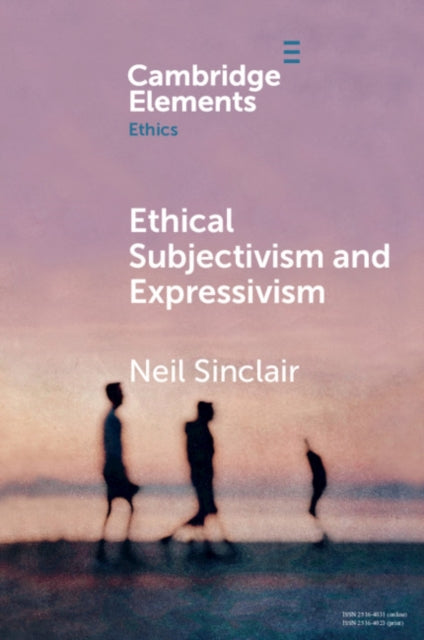
NeilSinclair
Ethical Subjectivism and Expressivism
Ethical Subjectivism and Expressivism
💎 Earn 84 Points (£0.84) on this item.
We can order this item for you. Delivery usually takes about 4 to 6 weeks.
This item is not held in our immediate stock. We will order it for you after checkout.
Estimated delivery: About 4 to 6 weeks
YOU SAVE £1.01
- Condition: Brand new
- UK Delivery times: Usually arrives within 2 - 3 working days
- UK Shipping: Fee starts at £2.39. Subject to product weight & dimension
Bulk ordering. Want 15 or more copies? Get a personalised quote and bigger discounts. Learn more about bulk orders.
Couldn't load pickup availability
- More about Ethical Subjectivism and Expressivism
Ethical subjectivists and expressivists both believe that moral judgments are descriptions of our attitudes, but they differ in how they interpret these judgments. Ethical subjectivists hold that moral judgments are descriptions of our attitudes, while expressivists hold that they are expressions of our attitudes. This Element assesses each view by considering whether they can accommodate three central features of moral practice: practicality, moral disagreement, and mind-independence. It distinguishes several versions of subjectivism and examines key expressivist notions such as moral attitudes and expression. It also examines the different meanings of subjective and relative and considers whether subjectivism and expressivism make ethics subjective or relative in each of these senses.
Format: Paperback / softback
Length: 75 pages
Publication date: 10 September 2020
Publisher: Cambridge University Press
Ethical subjectivists believe that moral judgments are descriptions of our attitudes. On the other hand, expressivists argue that they are expressions of our attitudes. Both views share common elements, such as the natural world and our reactions to it. This Element aims to evaluate each of these perspectives by examining whether they can accommodate three central aspects of moral practice: the practicality of moral judgments, the phenomenon of moral disagreement, and the mind-independence of some moral truths.
Throughout the assessment, various versions of subjectivism are distinguished, including simple, communal, idealizing, and normative. Key expressivist notions such as moral attitudes and expression are explored in depth. The meanings of subjective and relative are examined, and the question is raised whether subjectivism and expressivism make ethics subjective or relative in each of these senses.
Ethical subjectivists hold that moral judgments are descriptions of our attitudes. They argue that moral judgments are not merely subjective opinions or preferences but rather objective descriptions of our underlying attitudes. Ethical subjectivists believe that moral judgments are based on our experiences, values, and beliefs and that they reflect our dispositions to act in certain ways.
Expressivists, on the other hand, hold that moral judgments are expressions of our attitudes. They argue that moral judgments are not just descriptions of our attitudes but also expressions of those attitudes. Expressivists believe that moral judgments are not only based on our experiences, values, and beliefs but also on our emotional states and the way we express ourselves.
Both ethical subjectivists and expressivists agree that the natural world and our reactions to it play a significant role in shaping our moral judgments. Ethical subjectivists argue that our moral judgments are influenced by our experiences with the natural world, such as our interactions with other people and our experiences of pain and pleasure. Expressivists argue that our moral judgments are influenced by our emotional responses to the natural world, such as our feelings of empathy and compassion.
Both ethical subjectivists and expressivists also agree that moral judgments are not merely subjective opinions or preferences but rather objective descriptions of our attitudes. Ethical subjectivists argue that moral judgments are based on our experiences, values, and beliefs and that they reflect our dispositions to act in certain ways. Expressivists argue that moral judgments are based on our emotional responses to the natural world and that they express our attitudes towards certain actions.
However, there are some key differences between ethical subjectivists and expressivists. Ethical subjectivists believe that moral judgments are objective and that they can be universally valid. They argue that moral judgments are based on universal principles that apply to all people and that they are not influenced by cultural or historical differences. Expressivists, on the other hand, believe that moral judgments are subjective and that they are influenced by cultural and historical differences.
Expressivists also argue that moral judgments are not merely expressions of our attitudes but also expressions of our emotions. They argue that moral judgments are not only based on our experiences, values, and beliefs but also on our emotional states and the way we express ourselves. Ethical subjectivists, on the other hand, argue that moral judgments are not merely expressions of our emotions but also expressions of our rational faculties.
Another key difference between ethical subjectivists and expressivists is their approach to moral disagreement. Ethical subjectivists believe that moral disagreement is inevitable and that there is no universal solution to moral problems. They argue that moral judgments are subjective and that different people may have different moral judgments based on their experiences, values, and beliefs. Expressivists, on the other hand, believe that moral disagreement can be resolved through dialogue and mutual understanding.
Expressivists also argue that moral judgments are not only expressions of our attitudes but also expressions of our identities. They argue that moral judgments are not only based on our experiences, values, and beliefs but also on our sense of self and our sense of belonging to a particular community or culture. Ethical subjectivists, on the other hand, argue that moral judgments are not only expressions of our identities but also expressions of our rational faculties.
In conclusion, ethical subjectivists and expressivists both hold that moral judgments are descriptions of our attitudes. However, there are some key differences between the two perspectives. Ethical subjectivists believe that moral judgments are objective and universal, while expressivists believe that moral judgments are subjective and influenced by cultural and historical differences. Expressivists also argue that moral judgments are expressions of our emotions and identities, while ethical subjectivists argue that moral judgments are expressions of our rational faculties.
Weight: 142g
Dimension: 152 x 229 x 4 (mm)
ISBN-13: 9781108706513
UK and International shipping information
UK and International shipping information
UK Delivery and returns information:
- Delivery within 2 - 3 days when ordering in the UK.
- Shipping fee for UK customers from £2.39. Fully tracked shipping service available.
- Returns policy: Return within 30 days of receipt for full refund.
International deliveries:
Shulph Ink now ships to Australia, Belgium, Canada, France, Germany, Ireland, Italy, India, Luxembourg Saudi Arabia, Singapore, Spain, Netherlands, New Zealand, United Arab Emirates, United States of America.
- Delivery times: within 5 - 10 days for international orders.
- Shipping fee: charges vary for overseas orders. Only tracked services are available for most international orders. Some countries have untracked shipping options.
- Customs charges: If ordering to addresses outside the United Kingdom, you may or may not incur additional customs and duties fees during local delivery.