Shulph Ink
Ethics in Comedy: Essays on Crossing the Line
Ethics in Comedy: Essays on Crossing the Line
💎 Earn 188 Points (£1.88) on this item.
We can order this item for you. Delivery usually takes about 4 to 6 weeks.
This item is not held in our immediate stock. We will order it for you after checkout.
Estimated delivery: About 4 to 6 weeks
YOU SAVE £2.24
- Condition: Brand new
- UK Delivery times: Usually arrives within 2 - 3 working days
- UK Shipping: Fee starts at £2.39. Subject to product weight & dimension
Bulk ordering. Want 15 or more copies? Get a personalised quote and bigger discounts. Learn more about bulk orders.
Couldn't load pickup availability
- More about Ethics in Comedy: Essays on Crossing the Line
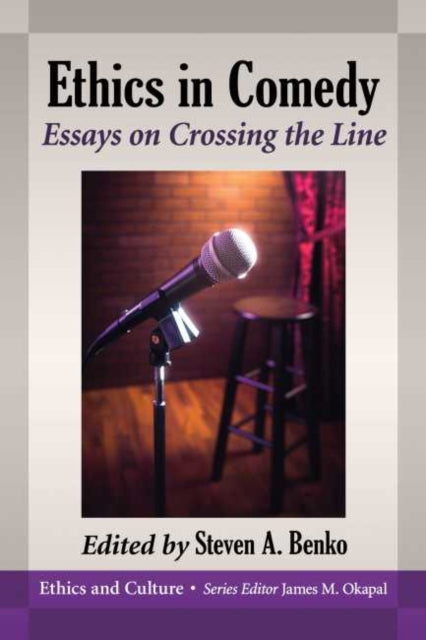
Laughter can unite or divide, and it is important to draw moral and ethical lines around humor and laughter. This collection of essays explores possible ways to do this, including a Kantian approach to humor and the creation of safe spaces for profanity and offense. Contributors work to establish and explain guidelines for thinking about the moral questions that arise when humor and laughter intersect with medicine, gender, race, and politics.
Format: Paperback / softback
Length: 214 pages
Publication date: 30 November 2020
Publisher: McFarland & Co Inc
Humor is a universal human experience that can bring people together and create a sense of community, but it can also be a source of division and conflict. While laughter can unite people by showing how they share values and perspectives, it can also make people feel excluded and humiliated. This collection of new essays addresses possible ways that moral and ethical lines can be drawn around humor and laughter.
One approach to understanding the moral implications of humor is to consider the work of philosopher Immanuel Kant. Kant believed that humor was a form of play that could be used to explore the limits of morality and to develop a sense of moral character. He argued that humor should be used to promote goodwill and to avoid harm, and that it should be respectful of others.
However, not all humor is created equal. Some humor can be offensive, inappropriate, or harmful. For example, jokes that make fun of people's race, gender, or sexual orientation can be deeply hurtful and can perpetuate harmful stereotypes. Similarly, jokes that make fun of people's physical or mental disabilities can be insensitive and can contribute to discrimination.
To address these issues, contributors to this volume work to establish and explain guidelines for thinking about the moral questions that arise when humor and laughter intersect with medicine, gender, race, and politics. They draw from the work of stand-up comedians, television shows, and ethicists to provide examples of how humor can be used to promote goodwill and to avoid harm.
One of the key challenges in drawing moral lines around humor is the fact that humor is subjective. What one person finds funny may not be funny to another person, and what is considered appropriate in one context may not be appropriate in another. This can make it difficult to establish clear guidelines for behavior.
To address this challenge, contributors to this volume suggest that we should approach humor with a sense of empathy and understanding. We should be willing to listen to other people's perspectives and to consider the impact of our humor on others. We should also be willing to apologize if we make a mistake or if our humor is offensive.
In addition to these guidelines, contributors to this volume also suggest that we should be aware of the power of humor to influence public opinion. Humor can be used to promote social change and to challenge dominant ideologies. However, it can also be used to perpetuate harmful stereotypes and to undermine social justice.
To address this issue, contributors to this volume suggest that we should be more critical of the media and of the entertainment industry. We should be aware of the ways in which they use humor to promote their products and to influence public opinion. We should also be more supportive of media that promotes social justice and that challenges harmful stereotypes.
In conclusion, humor is a universal human experience that can bring people together and create a sense of community, but it can also be a source of division and conflict. While laughter can unite people by showing how they share values and perspectives, it can also make people feel excluded and humiliated. This collection of new essays addresses possible ways that moral and ethical lines can be drawn around humor and laughter. By approaching humor with a sense of empathy and understanding, we can create a more inclusive and just society.
Weight: 358g
Dimension: 153 x 224 x 18 (mm)
ISBN-13: 9781476676418
This item can be found in:
UK and International shipping information
UK and International shipping information
UK Delivery and returns information:
- Delivery within 2 - 3 days when ordering in the UK.
- Shipping fee for UK customers from £2.39. Fully tracked shipping service available.
- Returns policy: Return within 30 days of receipt for full refund.
International deliveries:
Shulph Ink now ships to Australia, Belgium, Canada, France, Germany, Ireland, Italy, India, Luxembourg Saudi Arabia, Singapore, Spain, Netherlands, New Zealand, United Arab Emirates, United States of America.
- Delivery times: within 5 - 10 days for international orders.
- Shipping fee: charges vary for overseas orders. Only tracked services are available for most international orders. Some countries have untracked shipping options.
- Customs charges: If ordering to addresses outside the United Kingdom, you may or may not incur additional customs and duties fees during local delivery.