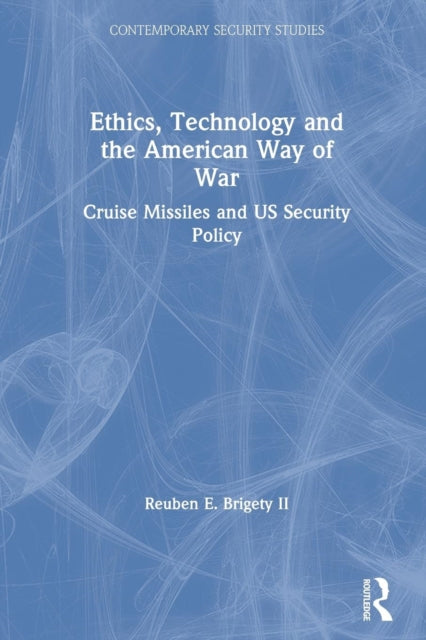
Reuben E.Brigety II
Ethics, Technology and the American Way of War: Cruise Missiles and US Security Policy
Ethics, Technology and the American Way of War: Cruise Missiles and US Security Policy
💎 Earn 231 Points (£2.31) on this item.
We can order this item for you. Delivery usually takes about 4 to 6 weeks.
This item is not held in our immediate stock. We will order it for you after checkout.
Estimated delivery: About 4 to 6 weeks
YOU SAVE £2.75
- Condition: Brand new
- UK Delivery times: Usually arrives within 2 - 3 working days
- UK Shipping: Fee starts at £2.39. Subject to product weight & dimension
Bulk ordering. Want 15 or more copies? Get a personalised quote and bigger discounts. Learn more about bulk orders.
Couldn't load pickup availability
- More about Ethics, Technology and the American Way of War: Cruise Missiles and US Security Policy
US Presidents have increasingly used stand-off precision-guided munitions (PGMs) to influence foreign adversaries and signal displeasure without the large cost of lives, economic resources, or political capital that result from large-scale military operations. This study investigates the impact of ethics, strategy, and military technology on the decision calculus of national leaders.
Format: Paperback / softback
Length: 176 pages
Publication date: 16 April 2019
Publisher: Taylor & Francis Ltd
A comprehensive examination of the impact of precision-guided munitions (PGMs) on the decision-making process of US policymakers regarding the use of force is presented in this groundbreaking investigation. By delving into the intricate interplay between ethics, strategy, and military technology, this study aims to shed light on the complex factors that shape the calculus of national leaders when considering the employment of military force.
Following the first Gulf War in 1991, this study reveals a significant trend wherein US Presidents have increasingly resorted to the use of stand-off precision-guided munitions (PGMs), particularly the Tomahawk cruise missile. These PGMs offer a compelling alternative to traditional large-scale military operations, as they can achieve desired policy outcomes without incurring the substantial costs in terms of lives, economic resources, and political capital associated with conventional military campaigns.
The appeal of PGMs lies in their ability to selectively target specific adversaries or regions, minimizing collateral damage and civilian casualties. This selective approach aligns with the ethical principles of proportionality and discrimination, which emphasize the responsible use of force in pursuit of national interests. Moreover, PGMs can serve as powerful diplomatic tools, allowing policymakers to convey their displeasure with certain actions or policies without resorting to military force.
In the post-9/11 world, where the threat of terrorism and regional instability remains a pressing concern, understanding alternative uses of force under significant policy constraints is of paramount importance. PGMs offer a valuable tool in this regard, as they can be deployed in a targeted and surgical manner, minimizing the risk of unintended consequences and maximizing the chances of achieving desired policy outcomes.
However, the use of PGMs also raises several ethical and strategic considerations. For instance, the precision and accuracy of PGMs can blur the lines between military and civilian targets, leading to unintended harm to non-combatants. Additionally, the deployment of PGMs can escalate tensions and exacerbate conflicts, potentially leading to long-term instability and humanitarian crises.
To address these challenges, policymakers must carefully consider the ethical implications of PGMs, as well as the broader strategic context in which they are deployed. This requires a nuanced understanding of the geopolitical landscape, the interests of various stakeholders, and the potential risks and benefits of different military options.
In conclusion, this comprehensive investigation into the impact of precision-guided munitions on the decision-making process of US policymakers regarding the use of force offers valuable insights into the complex interplay between ethics, strategy, and military technology. By examining the ethical, strategic, and technological dimensions of PGMs, this study contributes to our understanding of the challenges and opportunities associated with alternative uses of force in a post-9/11 world.
Weight: 296g
Dimension: 156 x 232 x 17 (mm)
ISBN-13: 9781138011472
UK and International shipping information
UK and International shipping information
UK Delivery and returns information:
- Delivery within 2 - 3 days when ordering in the UK.
- Shipping fee for UK customers from £2.39. Fully tracked shipping service available.
- Returns policy: Return within 30 days of receipt for full refund.
International deliveries:
Shulph Ink now ships to Australia, Belgium, Canada, France, Germany, Ireland, Italy, India, Luxembourg Saudi Arabia, Singapore, Spain, Netherlands, New Zealand, United Arab Emirates, United States of America.
- Delivery times: within 5 - 10 days for international orders.
- Shipping fee: charges vary for overseas orders. Only tracked services are available for most international orders. Some countries have untracked shipping options.
- Customs charges: If ordering to addresses outside the United Kingdom, you may or may not incur additional customs and duties fees during local delivery.