Shulph Ink
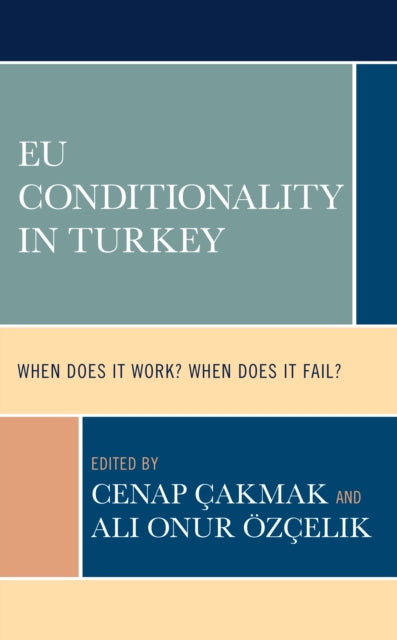
EU Conditionality in Turkey: When Does It Work? When Does It Fail?
EU Conditionality in Turkey: When Does It Work? When Does It Fail?
We can order this item for you. Delivery usually takes about 4 to 6 weeks.
This item is not held in our immediate stock. We will order it for you after checkout.
Estimated delivery: About 4 to 6 weeks
- Condition: Brand new
- UK Delivery times: Usually arrives within 2 - 3 working days
- UK Shipping: Fee starts at £3.89. Subject to product weight & dimension
Bulk ordering. Want 15 or more copies? Get a personalised quote and bigger discounts. Learn more about bulk orders.
Couldn't load pickup availability
- More about EU Conditionality in Turkey: When Does It Work? When Does It Fail?
The book EU Conditionality in Turkey: When Does it Work? When Does it Fail? explores the dynamics of conditionality in the EU-Turkey relationship, analyzing disputes and agreements and the strengths and weaknesses of conditionality. It offers expert analysis of each case underlining Turkeys accession to the EU, inferring how, when, and under what conditions it works or fails.
Format: Hardback
Length: 240 pages
Publication date: 01 August 2022
Publisher: Bloomsbury Publishing Plc
EU Conditionality in Turkey: When Does it Work? When Does it Fail? is a comprehensive exploration of the dynamics of conditionality in the European Union-Turkey relationship. It seeks to address several interconnected questions regarding the terms, circumstances, and factors that make conditionality work or fail in this context. The book analyzes the areas of disputes and agreements, and the contributions of this edited volume are focused on exploring the strengths and weaknesses of what conditionality offers or stipulates, as well as what Turkey, as a candidate state, is capable or incapable of performing in response. Through a detailed analysis of each separate case underlined by the parties involved in the process of Turkey's accession to the EU, the editors and contributors of this collection expertly infer how, when, and under what conditions the concept of conditionality works or fails.
The book begins by examining the historical background of EU conditionality in Turkey. It highlights the various stages of Turkey's accession process, including the negotiation of the Ankara Agreement in 1963, the Customs Union in 1995, and the EU's enlargement in 2004. The authors argue that EU conditionality has played a significant role in shaping Turkey's political and economic development, and that it has been both a source of opportunity and a source of constraint.
One of the key strengths of EU conditionality is that it provides a framework for Turkey to address its political and economic challenges. The conditionality process involves a series of negotiations and agreements between Turkey and the EU, which are designed to ensure that Turkey meets the EU's political and economic standards. These standards include the rule of law, human rights, and economic stability.
However, EU conditionality has also been criticized for its negative impact on Turkey's political and economic development. Some argue that the conditionality process has been used as a tool to pressure Turkey to adopt policies that are not in its best interests. For example, the EU has imposed sanctions on Turkey in response to its human rights violations, and has also demanded that Turkey implement reforms to its judiciary and economy.
The book also explores the factors that make EU conditionality work or fail in Turkey. One of the key factors is the political will of the EU and Turkey. The EU has been willing to provide financial and political support to Turkey, but it has also been reluctant to impose sanctions or other measures that could harm Turkey's economy. This has led to a situation where Turkey has been able to negotiate favorable terms in its accession negotiations, but has also been required to implement reforms that are not in its best interests.
Another factor that makes EU conditionality work or fail in Turkey is the level of political and economic development in Turkey. Turkey has made significant progress in recent years, but it still faces significant challenges. For example, the country's economy is still heavily dependent on foreign investment, and it has been hit hard by the global financial crisis. This has led to a situation where Turkey has been unable to meet the EU's economic standards, and has been required to implement reforms to its economy.
The book also examines the role of the EU's institutions in EU conditionality in Turkey. The EU's institutions include the European Commission, the European Council, and the European Parliament. These institutions have played a significant role in shaping EU conditionality in Turkey, and have been responsible for negotiating and implementing the various agreements and negotiations between Turkey and the EU.
However, the book also argues that the EU's institutions have been too bureaucratic and slow in responding to Turkey's needs. This has led to a situation where Turkey has been able to negotiate favorable terms in its accession negotiations, but has also been required to implement reforms that are not in its best interests.
In conclusion, EU Conditionality in Turkey: When Does it Work? When Does it Fail? is a comprehensive exploration of the dynamics of conditionality in the European Union-Turkey relationship. It seeks to address several interconnected questions regarding the terms, circumstances, and factors that make conditionality work or fail in this context. The book analyzes the areas of disputes and agreements, and the contributions of this edited volume are focused on exploring the strengths and weaknesses of what conditionality offers or stipulates, as well as what Turkey, as a candidate state, is capable or incapable of performing in response. Through a detailed analysis of each separate case underlined by the parties involved in the process of Turkey's accession to the EU, the editors and contributors of this collection expertly infer how, when, and under what conditions the concept of conditionality works or fails.
Weight: 506g
Dimension: 159 x 237 x 24 (mm)
ISBN-13: 9781666910698
UK and International shipping information
UK and International shipping information
We deliver throughout the United Kingdom and to 128 countries and territories worldwide, including the United States, Australia, Canada, Germany, Spain and France.