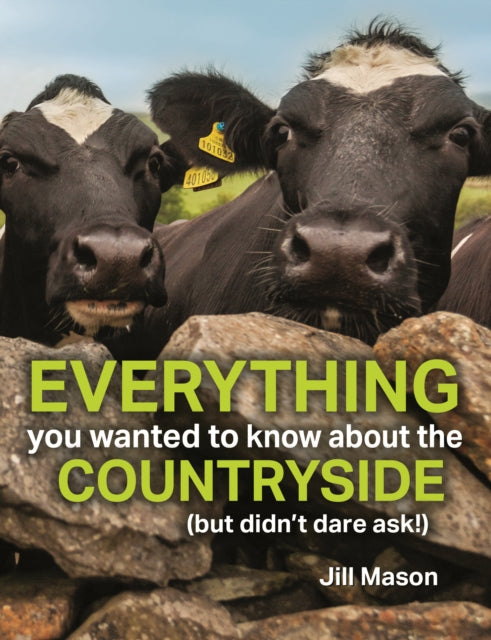
Jill Mason
Everything you Wanted to Know about the Countryside: (but didn't dare ask!)
Everything you Wanted to Know about the Countryside: (but didn't dare ask!)
💎 Earn 106 Points (£1.06) on this item.
YOU SAVE £8.76
- Condition: Brand new
- UK Delivery times: Usually arrives within 2 - 3 working days
- UK Shipping: Fee starts at £2.39. Subject to product weight & dimension
Bulk ordering. Want 15 or more copies? Get a personalised quote and bigger discounts. Learn more about bulk orders.
Couldn't load pickup availability
- More about Everything you Wanted to Know about the Countryside: (but didn't dare ask!)
Jill Mason's new book provides an invaluable account of the British countryside, its livestock, crops, and wildernesses, covering topics such as egg production, hogget, heather burning, grazing, self-sufficiency, genetically modified crops, gilt pigs, forest, mountain, wetland, and coastline ownership, and the future of British farming.
Format: Hardback
Length: 320 pages
Publication date: 08 September 2022
Publisher: Merlin Unwin Books
How many eggs does a hen lay in its lifetime?
A hen can lay anywhere from 150 to 300 eggs in her lifetime, depending on the breed of chicken and the conditions in which she is raised. Some breeds, such as Leghorns, are known for their high egg production, while others, such as Brahmas, are known for their large size and meat production. The average hen lays about 250 eggs per year.
What is a hogget?
A hogget is a young sheep that is between one and two years old. It is typically smaller than a mature sheep and has a softer, more tender meat. Hoggets are often used for meat production, but they can also be raised for wool or as pets. Hoggets are typically slaughtered at around 12-14 months of age.
What is the point of burning heather on moorland?
Burning heather on moorland is a traditional practice that has been used for centuries to manage the land and promote the growth of new vegetation. The burning of heather removes dead vegetation, which can help to prevent the spread of disease and improve the quality of the soil. It also provides a source of food for wildlife, such as birds and mammals.
How does grazing help the environment?
Grazing is a natural process that involves the grazing of animals on grasslands and other natural habitats. Grazing helps to maintain the health of the land by promoting the growth of new vegetation, reducing the amount of erosion, and improving the quality of the soil. It also provides a source of food for wildlife, such as birds and mammals.
Can Britain be self-sufficient in food production?
Britain is not currently self-sufficient in food production. The country imports a significant amount of food, particularly meat and dairy products, from other countries. However, there are efforts being made to increase food production in Britain, such as through the development of sustainable farming practices and the promotion of local food production. It is estimated that Britain could become self-sufficient in food production by 2050 if these efforts are successful.
What is a genetically modified crop?
A genetically modified crop is a crop that has been genetically altered to produce a desired trait, such as resistance to pests or disease. Genetically modified crops have been controversial, with some people arguing that they are safe and others arguing that they are harmful to the environment and human health. Genetically modified crops are currently used in a variety of crops, including corn, soybeans, and cotton.
When is a pig a gilt?
A pig is a gilt when it is a female pig that has not yet given birth to a litter of pigs. Gilt pigs are typically slaughtered at around 12-14 months of age.
Who owns the forests, the mountains, the wetlands, and the coastline in Britain?
The ownership of the forests, the mountains, the wetlands, and the coastline in Britain is complex and varies depending on the type of land and the location. Forests are owned by the government, while the mountains, the wetlands, and the coastline are owned by private individuals and organizations. There are also a number of protected areas in Britain, such as national parks and nature reserves, that are owned by the government and are protected from development.
What is the future for British farming?
The future for British farming is uncertain. While there are efforts being made to increase food production and reduce the impact of farming on the environment, there are also a number of challenges that need to be addressed, such as climate change, the cost of food production, and the impact of farming on rural communities. It is likely that British farming will continue to evolve in the coming years, with new technologies and practices being developed to meet the changing needs of the industry.
Weight: 1230g
Dimension: 198 x 253 x 27 (mm)
ISBN-13: 9781913159474
This item can be found in:
UK and International shipping information
UK and International shipping information
UK Delivery and returns information:
- Delivery within 2 - 3 days when ordering in the UK.
- Shipping fee for UK customers from £2.39. Fully tracked shipping service available.
- Returns policy: Return within 30 days of receipt for full refund.
International deliveries:
Shulph Ink now ships to Australia, Belgium, Canada, France, Germany, Ireland, Italy, India, Luxembourg Saudi Arabia, Singapore, Spain, Netherlands, New Zealand, United Arab Emirates, United States of America.
- Delivery times: within 5 - 10 days for international orders.
- Shipping fee: charges vary for overseas orders. Only tracked services are available for most international orders. Some countries have untracked shipping options.
- Customs charges: If ordering to addresses outside the United Kingdom, you may or may not incur additional customs and duties fees during local delivery.